

10 Eastern European Places That Feel Like a Secret You Weren’t Supposed to Find
Places That Must Be on Your Bucket List

Guest Article by Timeless Traveler.
There are still places in Europe that don’t feel discovered.
Not hidden, exactly. Just overlooked. The kind of places where things haven’t been smoothed out or repackaged for easy consumption. You notice it right away in the pace, in the people, and in the way life still feels lived-in instead of curated.
You don’t rush through places like this. You settle in, even if it’s only for a few days. And once you do, they stay with you.
1. Kotor, Montenegro
Kotor looks like it was carved out of the mountains and left exactly where it belongs. The Bay of Kotor is often described as Europe’s southernmost fjord, though it’s technically a submerged river canyon. Either way, the effect is the same, with towering mountains rising straight out of still, glassy water and enclosing the town in a way that feels almost protective.
The old town dates back to Roman times, but most of what you see today comes from centuries of Venetian rule between the 15th and 18th centuries. You can feel that influence in the limestone streets, the defensive walls, and the quiet squares that open up when you least expect them. It’s dense, but not overwhelming.
Start early and climb the fortress to San Giovanni. It’s steep, uneven, and a little unforgiving in the heat, but the view at the top gives you everything. Red rooftops below, the bay stretching out, and silence broken only by the wind. Back in town, step inside St. Tryphon’s Cathedral, then get lost in the backstreets.
If you stay overnight, Kotor changes. When the cruise ships leave, the noise fades. What’s left feels like the real version of the place.
2. Mostar, Bosnia and Herzegovina
Mostar is built around Stari Most, but the bridge is only part of the story. Originally constructed in 1566 during the Ottoman Empire, it stood for over four centuries before being destroyed in 1993 during the Bosnian War. Its reconstruction in 2004 wasn’t just symbolic. It was an attempt to reconnect something that had been broken.
Stand on the bridge and watch the divers. They wait for a crowd, collect a few bills, then jump into the cold Neretva River below. It’s a tradition that goes back generations, and it still feels raw, not staged.
The old bazaar streets nearby carry strong Ottoman influence. You’ll find copper workshops, handwoven textiles, and small cafes serving thick Bosnian coffee. Sit down for one. It’s not meant to be rushed.
For context, visit the War Photo Exhibition or the Museum of War and Genocide Victims. It’s not easy to take in, but it gives weight to what you’re seeing. Mostar is beautiful, but it doesn’t try to hide anything. That honesty is what makes it different.
3. Ohrid, North Macedonia
There’s something about that kind of age you can feel, even if you can’t quite explain it. The town moves at its own pace, and nothing really feels rushed.
Historically, Ohrid was a center of Slavic literacy and Orthodox Christianity. At its peak, it had over 300 churches, earning it the nickname “Jerusalem of the Balkans.” Many still remain, scattered along the hills above the lake.
The Church of St. John at Kaneo is the most photographed, and for good reason. It sits on a cliff overlooking the water, and the view feels almost too still to be real. Go early or late to avoid the crowds.
Walk through the old town, visit the Ancient Theatre, and take a boat out on the lake if you can. The water is clear, almost unnaturally so.
It’s not the kind of place you rush through. You just slow down and take it in.
4. Veliko Tarnovo, Bulgaria
Veliko Tarnovo doesn’t hide its past. It leans into it without trying too hard.
Once the capital of the Second Bulgarian Empire, the city is built across steep hills with the Yantra River winding below. Houses cling to the cliffs in a way that feels deliberate.
At the center is Tsarevets Fortress, the former stronghold of Bulgarian kings. Walk through its gates and you’ll pass remnants of walls, towers, and the Patriarchal Cathedral sitting at the highest point. It’s a reminder of what this place once was.
Below, the old town stretches out with narrow streets and small artisan shops. Samovodska Charshia is worth a visit for handmade goods and local crafts.
At night, the fortress is lit up during a sound and light show that tells the story of Bulgaria’s rise and fall. It’s dramatic, but it fits the setting.
The whole place feels elevated, in more ways than one.
5. Sibiu, Romania
Sibiu feels different as soon as you arrive.
Founded by German Saxons in the 12th century, the city developed with a sense of structure and order that sets it apart from others in the region. The old town is divided into Upper and Lower sections, connected by stairways and narrow passageways that feel almost hidden.
The main squares, Piata Mare and Piata Mica, are open, clean, and lined with pastel buildings that feel carefully maintained without losing their character.
Then there are the rooftops. Small windows shaped like eyes sit above the streets. Once you notice them, you start seeing them everywhere.
Visit the Brukenthal Palace, one of Romania’s oldest museums, and walk across the Bridge of Lies, which comes with its own folklore.
Sibiu feels calm, but not quiet. There’s life here, it just moves a little differently.
6. Bucovina, Romania
Bucovina isn’t really about one place. It’s more about the space between them.
The region is known for its painted monasteries, built in the 15th and 16th centuries under Stephen the Great. What makes them stand out is that the artwork extends to the exterior walls, with detailed biblical scenes painted in colors that have somehow endured centuries of weather.
Voroneț Monastery stands out for its deep blue, often called “Voroneț blue,” a color that hasn’t faded despite time. Sucevița and Moldovița offer their own variations, each telling stories through images.
Travel between them and you’ll pass through villages where life still feels rooted in routine. You’ll see farmers working the land, small homes with woodpiles stacked neatly, and a pace that doesn’t feel rushed.
There’s not much to do here in the usual sense. And that’s the point.
Bucovina rewards attention, not movement.
7. Gjirokastër, Albania
Gjirokastër is built from stone, and you feel it right away.
The town’s Ottoman-era houses climb the hillside beneath a fortress that dates back to the 12th century. It’s one of the most well-preserved towns in Albania and is now a UNESCO World Heritage Site.
Walk up to the castle. It’s massive, with open courtyards, old artillery, and views stretching across the Drino Valley. Inside, you’ll find exhibits that trace the region’s layered history.
Below, the old bazaar has been slowly restored. You’ll find handmade goods, small cafes, and local dishes that are simple but satisfying.
There’s a stillness here that doesn’t feel empty. It just feels real. Gjirokastër doesn’t try to impress you. It doesn’t have to.
8. Novi Sad, Serbia
Novi Sad sits quietly along the Danube, shaped by centuries under Austro-Hungarian rule. You can still see that influence in the architecture, the layout, and the way the city feels more open than others in the region.
Start in Liberty Square. The Name of Mary Church rises above it, while cafes spill into the open space below. People tend to stick around longer than they planned. Conversations just linger.
Cross the river and climb to Petrovaradin Fortress. Built in the 17th century to defend against the Ottomans, it now offers wide views over the Danube. The clock tower, with its reversed hands, was designed so fishermen could read the time from the river.
In summer, the EXIT Festival brings energy and noise. But outside of that, the city feels calm again.
It’s the kind of place where history and everyday life just exist side by side.
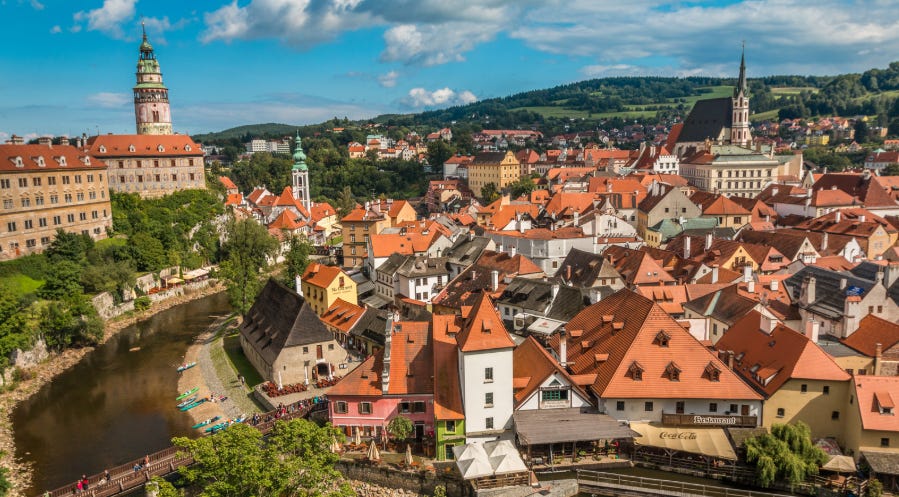
9. Český Krumlov, Czech Republic
Český Krumlov feels like it’s been preserved, not rebuilt.
The town grew around its castle in the 13th century and has remained largely unchanged since. The Vltava River loops around it, keeping everything compact and contained.
The castle complex is one of the largest in Central Europe. Walk through its courtyards, climb the tower, and take in the view of red rooftops, narrow streets, and the river cutting through it all.
During the day, it can feel crowded. That’s the trade-off for a place this well preserved. But stay overnight if you can. Early mornings and late evenings reveal a quieter version of the town.
That’s when it really feels like itself.
10. Ptuj, Slovenia
Ptuj is quiet, and it feels intentional.
It’s the oldest town in Slovenia, going back to Roman times when it was known as Poetovio. It once served as a major hub along important trade routes, but today that history shows up in smaller, more subtle ways.
The town is easy to walk through. The main square sits beneath Ptuj Castle, which houses collections of historical artifacts, from medieval weapons to musical instruments.
Walk along the Drava River. Sit in a cafe. Take your time.
If you visit during Kurentovanje, the town comes alive with traditional masks and costumes meant to chase away winter. It’s loud, strange, and deeply rooted in local culture.
But outside of that, Ptuj stays quiet. And that’s what makes it stick with you.
Conclusion
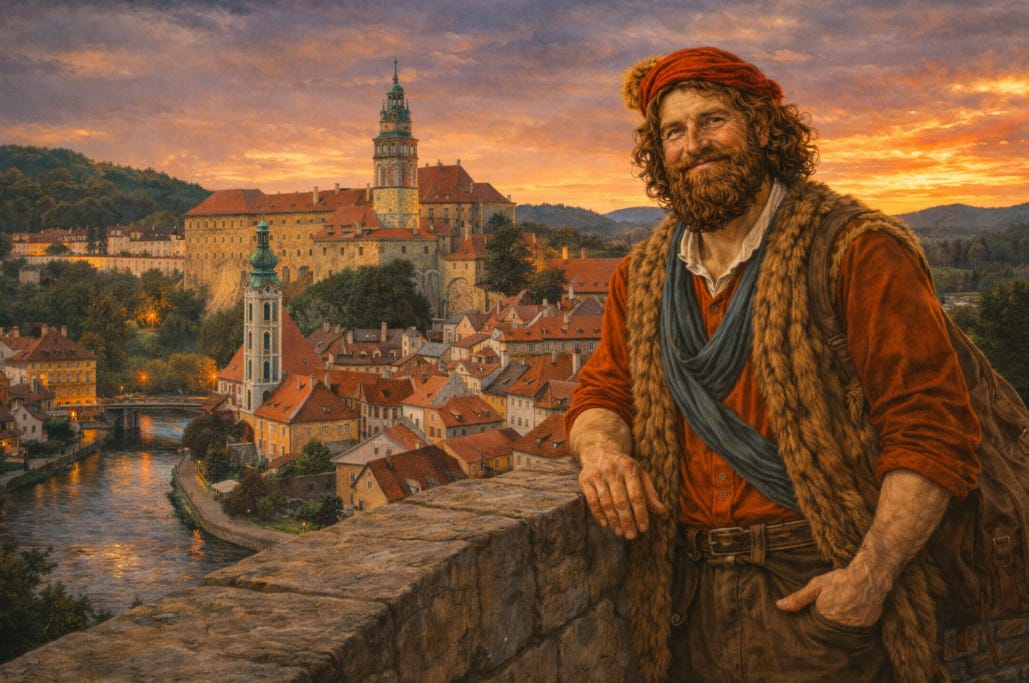
Some places are built to be seen. These aren’t. They don’t try to impress you right away, and you don’t fully understand them when you arrive. You have to slow down, walk a little longer, sit for a while, and pay attention. That’s when they start to open up. The history isn’t put on display, it’s just there in the streets, the buildings, and the people. And when you leave, it doesn’t feel like you visited a destination. It feels like you found something you weren’t supposed to. Those are the kinds of trips that have always stayed with me, and I think they would for you too.
About the Timeless Traveler….

Let's keep them in this way. The main challenge has always been when Westerners compared the Eastern Europe to the third world after 1989. It only proved that their history did matter.
"Bucovina rewards attention, not movement". These aren't destinations you optimize; they're places you have to consent to being slowed down by. That's a harder sell than a highlights reel, and you've made it beautifully.