


The modern world trains people to become easier to distract, easier to influence, easier to tempt, easier to discourage, and easier to break. That is why a serious reading life cannot be built only around information. Information tells you what is happening. Formation changes the person who meets what is happening.
One of the books on this list has been banned in prisons across 18 states. The 48 Laws of Power is feared because it gives people a language for power, hierarchy, manipulation, and control. The lesson reaches beyond prison walls. Most adults move through life without studying the forces that shape them: habits, power, money, suffering, and attention. Then they meet those forces in the hardest possible way. These books address five forces that shape an adult life: habits, power, money, suffering, and attention.
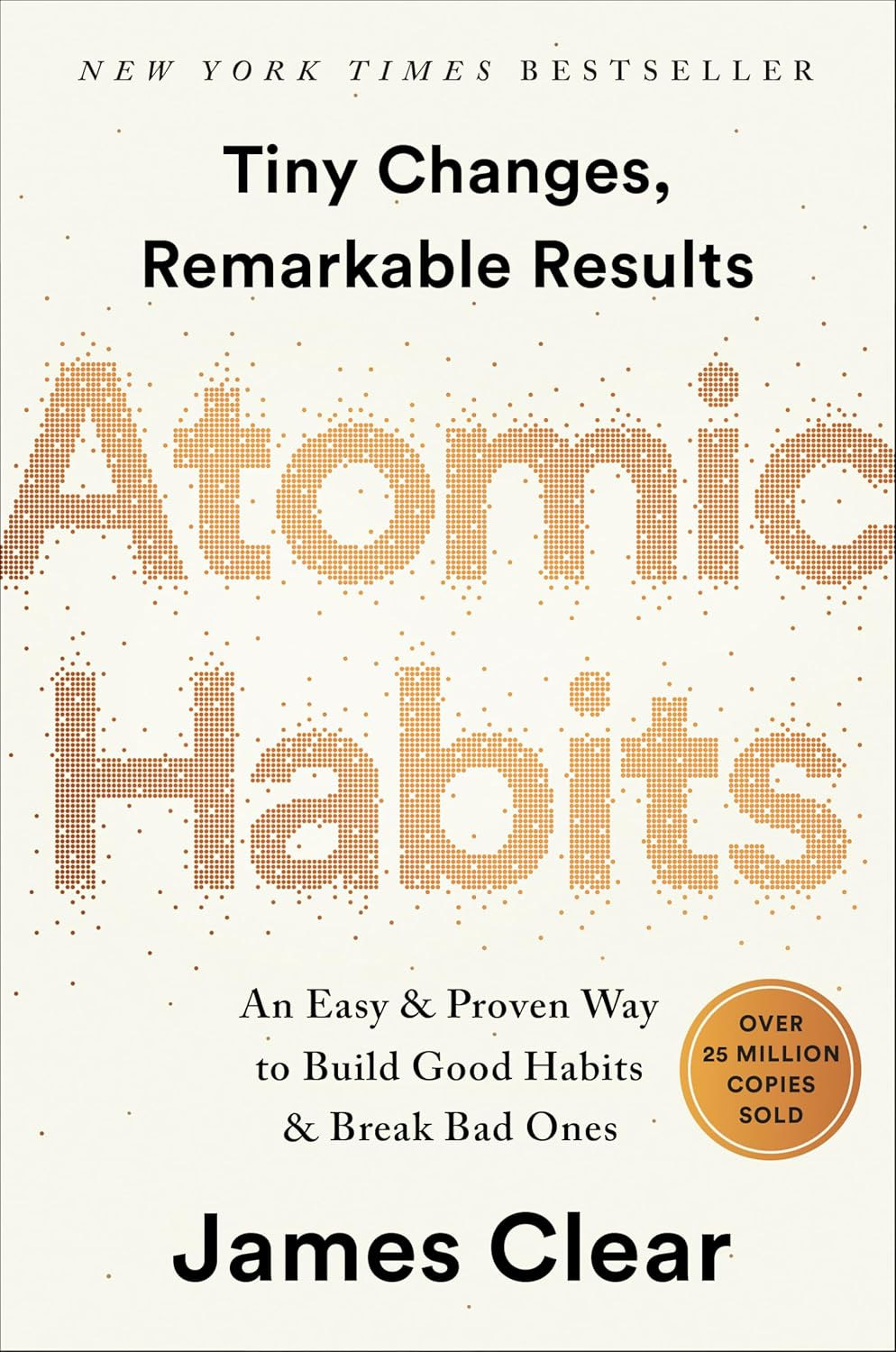
1. Atomic Habits by James Clear
Atomic Habits by James Clear begins with the smallest of these forces and shows why it may be the most decisive. Clear’s argument has become famous because it refuses the lazy romance of sudden transformation. He challenges the argument that people change by making a dramatic promise to themselves. Instead, he states that people change because they repeat small actions until those actions become part of their identity.
The book’s central claim can be reduced to one hard lesson: systems defeat intentions. A person can want discipline, wealth, health, knowledge, faithfulness, or courage, but desire alone has a short life. The structure around the desire decides whether it survives Tuesday afternoon. Clear’s line captures the whole argument:
“You do not rise to the level of your goals. You fall to the level of your systems.”
This matters because most people blame themselves too quickly. They think failed change proves weak character. Clear gives a more useful diagnosis. A bad system makes the wrong action easy and the right action costly. A good system reverses that pressure. Put the book on your desk. Remove the app from your phone. Prepare the gym clothes the night before. Attach a new habit to an old one. Make the first step so small that you stop negotiating with it.
That is why Atomic Habits deserves its wide reach. It gives ordinary people a practical grammar of change: cue, craving, response, reward. It shows how identity grows through repetition. It gives the reader a way to think about progress without lying to himself. The person who writes one page, walks ten minutes, saves a few dollars, or reads before bed may look unchanged for weeks. Yet repetition is doing its quiet work. The visible result arrives late because the identity forms first.
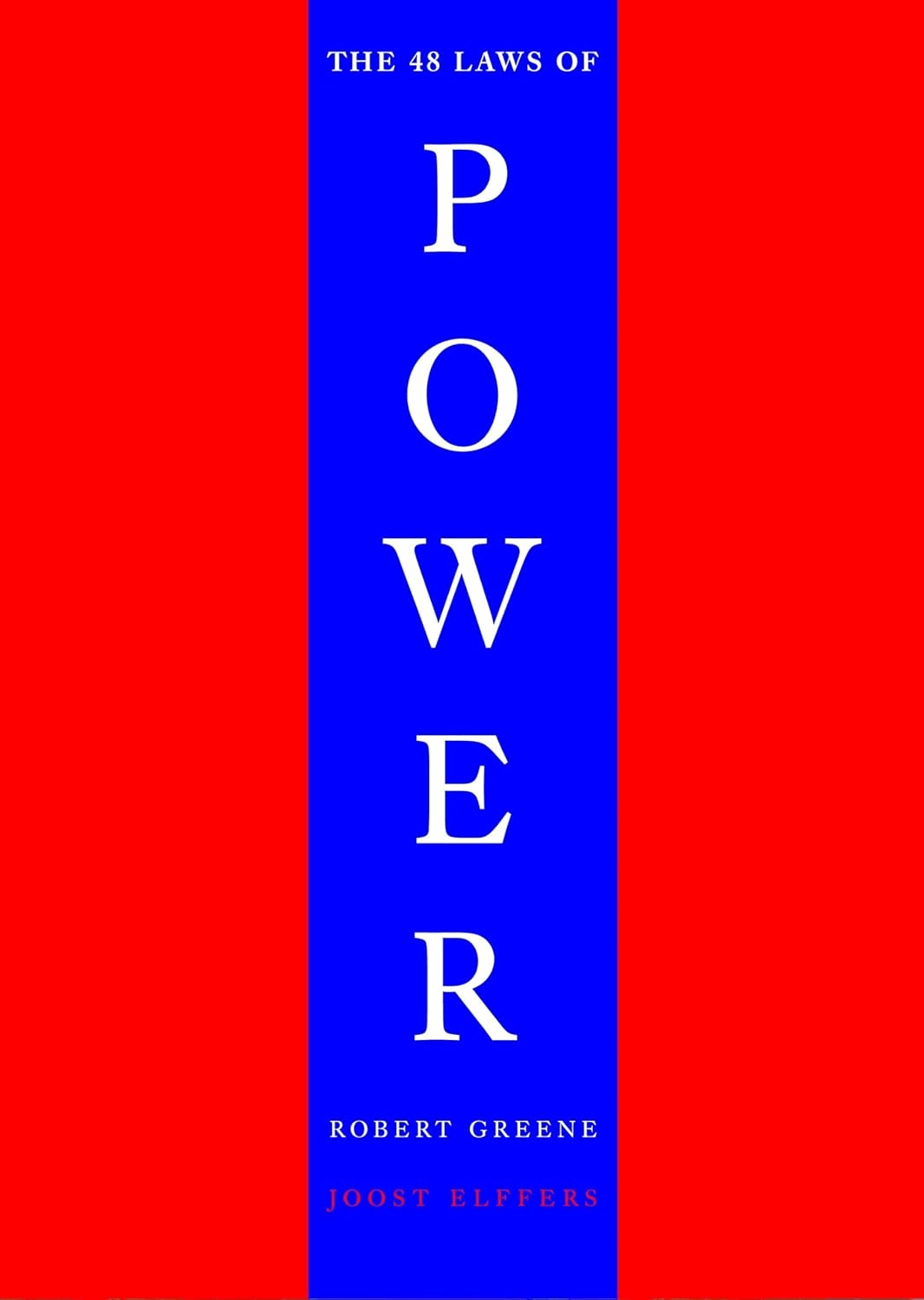
2. The 48 Laws of Power by Robert Greene
The 48 Laws of Power by Robert Greene enters a darker room. Where Clear studies habit, Greene studies hierarchy, perception, ego, leverage, and the social games people pretend they are above. The book remains polarizing because it names realities polite society prefers to hide. Some readers treat it as a manual for manipulation. But it is better to treat it as a map of danger.
Greene’s book should be read with moral judgment. It should never become a license to exploit people. Its value lies in awareness. Naive people often assume talent, honesty, and effort will speak for themselves. In many environments, they will not. Offices, institutions, courts, media circles, patronage systems, and elite networks all run on status signals as much as truth. People protect rank while superiors punish embarrassment. Rivals weaponize openness. Weakness can invite pressure and timing can change outcomes.
Law 1, “Never Outshine the Master,” gives the book’s basic lesson in human vanity. Nicolas Fouquet’s famous disaster under Louis XIV shows the danger of dazzling the wrong person. Fouquet’s party at Vaux-le-Vicomte displayed taste, money, and brilliance. It also made a king feel diminished. In power terms, that was fatal. Greene’s point reaches far beyond royal France. In any hierarchy, perception can matter as much as performance.
Law 3, “Conceal Your Intentions,” teaches discretion. This does not require dishonesty. It requires timing. The person who announces every plan invites resistance before he has built strength. The person who speaks too soon turns strategy into a public target. In business, negotiation, public life, and creative work, restraint often protects the work before it can protect itself.
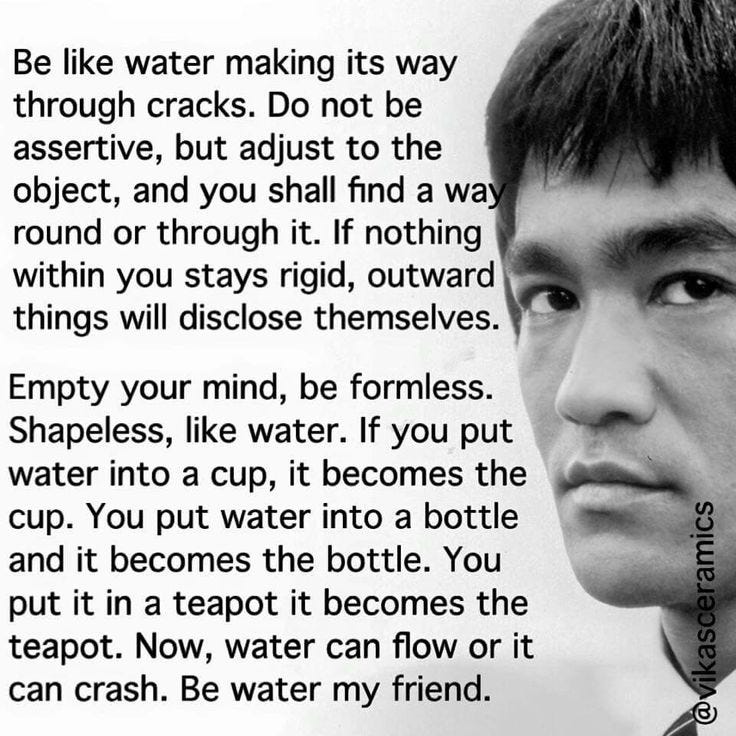
Law 48, “Assume Formlessness,” may be the most useful law for the present age. Rigid people become predictable. Predictable people become manageable. A changing world rewards those who adapt without losing judgment. Greene’s strongest lesson is the discipline of seeing power before power sees you.

3. The Psychology of Money by Morgan Housel
Morgan Housel’s The Psychology of Money moves the focus from controlling others to controlling yourself. Money reveals character because private choices eventually show up in public results. Housel’s great insight is that finance depends on behavior as much as numbers. A spreadsheet can show the plan, but patience, restraint, and emotional control decide whether someone can follow it long enough for the plan to work.
Ronald Read, the Vermont janitor and gas station attendant who built an $8 million fortune, gives the book one of its clearest examples. Read did not become wealthy through status, brilliance, or public recognition. He saved consistently, lived below his means, and allowed time to do what most people interrupt. His life unsettles modern assumptions because it shows that wealth often grows through patience rather than cleverness.
Housel separates being rich from being wealthy. Rich can be seen. Wealth often stays hidden. The car, watch, house, and vacation may signal spending, debt, or insecurity. Wealth means options, resilience, control over time, and freedom from panic. This distinction matters because consumer culture teaches people to convert money into proof. Housel teaches the opposite. Money’s highest use is the ability to stop serving every demand placed on your time.
The book also gives a sober view of risk. A good financial life does not require perfect predictions. It requires room for error. People fail when they build lives that can survive only under ideal conditions. Housel’s practical wisdom sits in this point. Save more than looks necessary. Avoid ruin. Respect uncertainty. Stop playing games that require constant luck. Let compounding work, then resist the urge to interrupt it.
These first three books deal with conduct in the ordinary world: habits, power, and money. They teach how to build the self, read the room, and manage resources. Yet they do not answer the hardest question. What happens when the room collapses, the resources vanish, and the habits cannot shield you from suffering?
That is where Viktor Frankl enters.
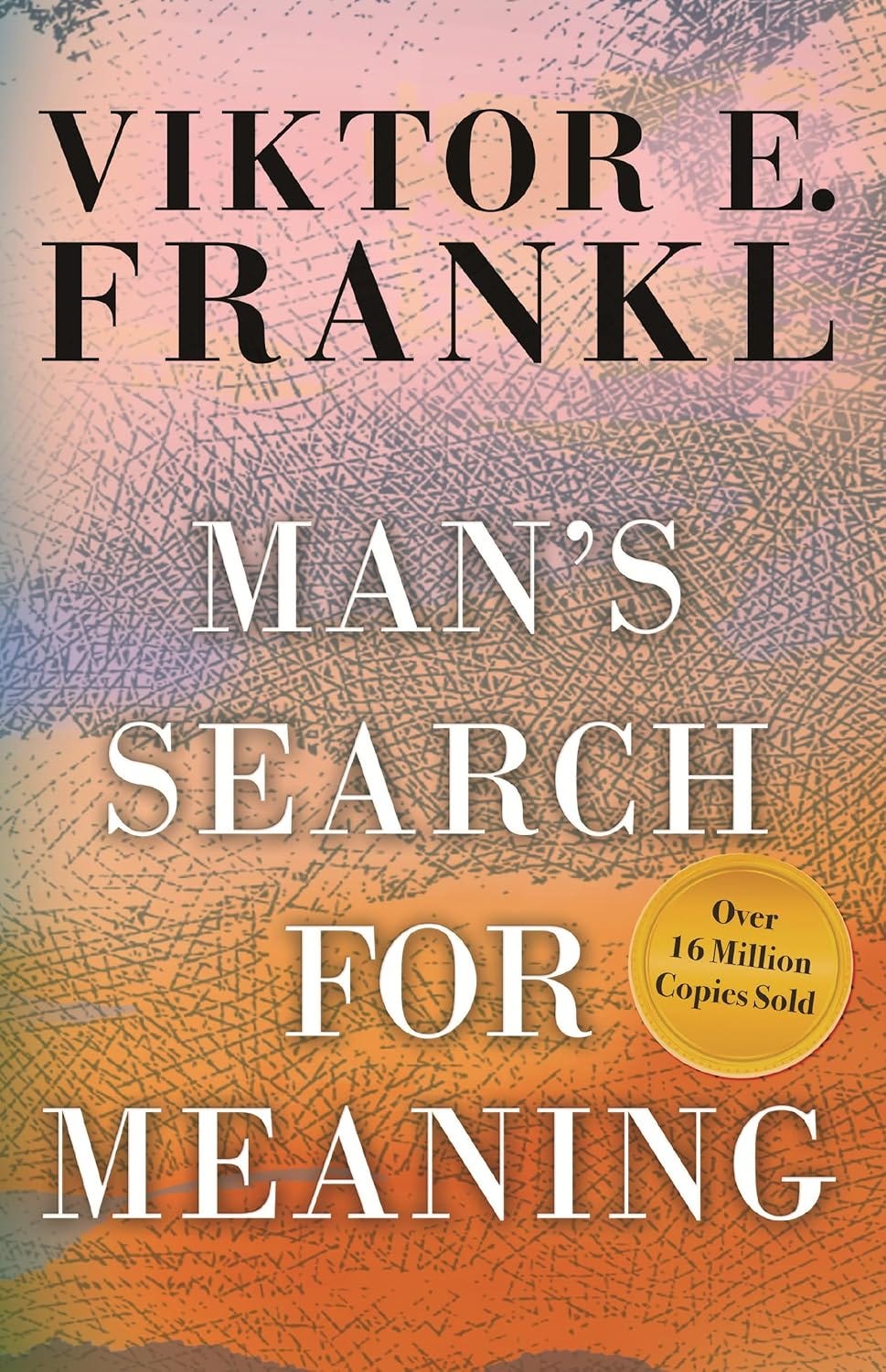
4. Man’s Search for Meaning by Victor Frankl
Man’s Search for Meaning by Viktor Frankl belongs in a different category from the others. It is not a productivity book nor a strategy book. It is survival literature joined to psychological insight. First published in 1946, translated into more than fifty languages, and read by millions, it endures because it asks a question every generation eventually faces: what remains when life strips a person of comfort, status, safety, and control?
Frankl’s answer became the foundation of logotherapy, his theory that the primary human drive is the search for meaning. He did not deny suffering. He refused to let suffering have the final word over the human person. In the camps, he saw people reduced by hunger, humiliation, disease, fear, and death. He also saw that some retained an inner freedom no guard could fully possess.
The central lesson is often expressed through Nietzsche’s line:
“He who has a why to live can bear almost any how.”
Frankl’s claim must be handled carefully. Meaning does not make suffering good. Meaning makes suffering bearable when suffering cannot be escaped. He writes as a man who watched despair at close range and still believed human beings could choose a response. Love, duty, faith, work, memory, and responsibility could give the sufferer a reason to endure another day.
This is why Man’s Search for Meaning belongs beside books on habits, power, and money. Those books help a person act well under normal pressure. Frankl helps a person remain human under extreme pressure. He reminds the reader that formation has a moral core. A person can win, earn, build, and optimize, yet still collapse if life loses meaning. The soul needs a reason. Without one, even comfort becomes fragile.

5. Deep Work by Cal Newport
Cal Newport’s Deep Work brings the list back to daily life, but with a sharper urgency. Newport’s book addresses fractured attention, one of the defining problems of modern knowledge work. People now spend much of their day in a state of partial focus. They answer messages, skim feeds, attend meetings, check notifications, and mistake busyness for value. The result is a mind trained to resist depth.
Newport’s argument is simple and severe. Valuable work requires sustained concentration. Sustained concentration requires protection. Protection requires deliberate choices that will feel unreasonable to people addicted to availability. Carl Jung built a place at Bollingen where thought could be free from distraction. His point of building a tower was that serious work needed a defended space where he could focus.
Deep Work also challenges the moral vanity of constant responsiveness. A person who replies instantly may appear useful, but usefulness can become a trap. The modern worker can spend years reacting without producing anything that carries weight. Newport draws a hard line between shallow work and deep work. Shallow work keeps the day moving. Deep work creates the thing worth keeping.
Conclusion
These five books belong together because each one deals with a moment when life asks for self-command. Atomic Habits begins with the daily actions that quietly shape identity. The 48 Laws of Power teaches you to see the hidden pressures in a room before you walk into them blindly. The Psychology of Money shows that wealth depends on patience, restraint, and behavior. Man’s Search for Meaning goes deeper and asks what keeps a person alive when comfort, safety, and control disappear. Deep Work brings the lesson back to daily life by showing why attention must be protected before any serious work can happen.
That is the arc of the list. First, learn how to build yourself. Then learn how people and power work. Then learn how to handle money without being ruled by it. Then learn how to endure suffering without losing yourself. Then learn how to protect the attention needed to do work that matters.
These books matter because life will test all five areas. It will test your habits when motivation fades. It will test your judgment when ambition, ego, and status enter the room. It will test your money when fear and desire start making decisions. It will test your spirit when suffering arrives. It will test your attention every day, quietly, through distraction.
Read these five books before experience teaches the same lessons with harsher methods. Life will still test your systems, your ambition, your money, your suffering, and your attention. The difference is that you will meet those tests with a mind already under training.
Become a Paid subscriber and support our research. As a paid subscriber, you will also receive two eBooks - 12 Lessons from 2000 years of Christian Theology (released February 2026) and The First Questions (released March 2026).


