

6 Places Around the World That Still Feel Like a Secret
Places that weren’t built for attention, and never needed it.


Guest Article by Timeless Traveler.
Most places today are easy to get to and easy to understand. You’ve seen them online, saved the photos, maybe even mapped out exactly where you’ll stand. By the time you arrive, it already feels familiar.
But every now and then, you come across a place that doesn’t follow that script.
Not because it’s hard to find, but because it hasn’t been shaped for attention. It moves at its own pace. It feels a little rough, a little unfiltered. Like it was built for the people who live there, not the people passing through.
These aren’t the kinds of places you build a whole trip around. They’re what you add when you’re already close. A short detour. Maybe an extra day. The stop you almost leave off, and end up remembering more than anything else.
They’re not hidden or unknown. Just not worn out.
Give them a little time and they start to feel like something you found on your own.
Monemvasia, Greece
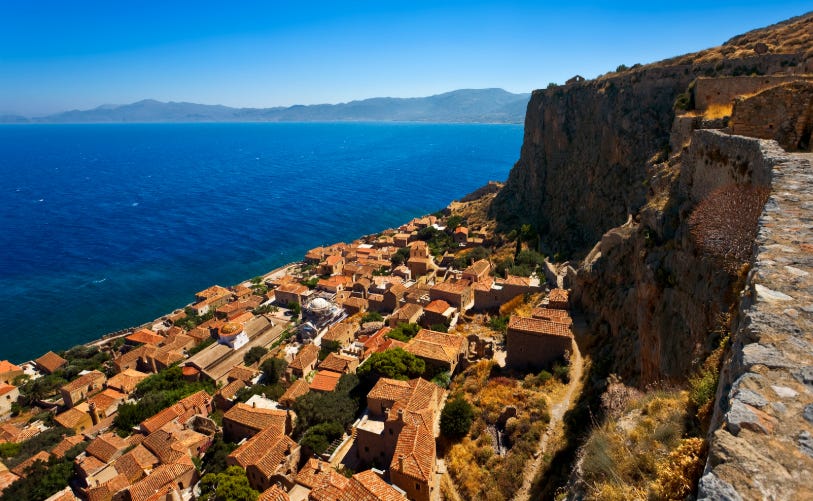
You don’t see Monemvasia until you’re almost there. The road curves, the sea opens up, and then the rock rises straight out of the water, like it was put there on purpose. The town is built into its side, hidden from the mainland for centuries, and you reach it by a single narrow causeway that still feels like a threshold.
Inside the walls, the streets narrow. Stone underfoot, salt in the air, no cars, just footsteps and the occasional voice from a doorway. It dates back to the Byzantine era and passed between empires, but no one ever fully reshaped it. You can still feel that history, not from signs or tours, just in the way the place feels.
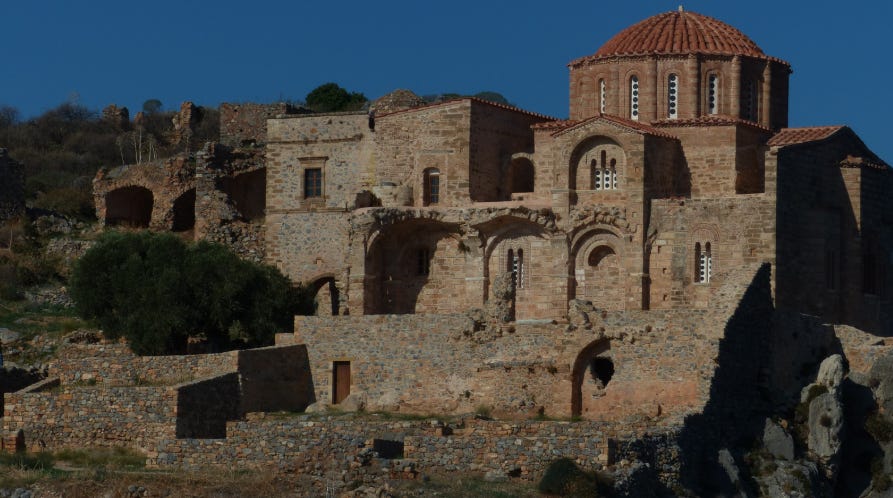
Climb up to the upper town if you’re up for it. The path is steep and uneven, but it’s worth it. The Church of Hagia Sophia sits high above the sea, and the view stretches farther than you expect. Or stay down below, find a table near the water, and let the day slow down a bit. Either way, Monemvasia isn’t trying to impress you. It just exists, and that’s enough.
If you’re already traveling through this part of the world, it’s closer than you might think.
If You’re Already Nearby…
If you’re already traveling through these regions, here’s how close they are:
Monemvasia, Greece
Base: Athens | ~4.5–5 hour drive
Civita di Bagnoregio, Italy
Base: Rome | ~1.5–2 hours
Ushguli (Svaneti), Georgia
Base: Tbilisi | ~8–10 hours total (via Mestia)
Albarracín, Spain
Base: Valencia or Madrid | ~2.5 hrs (Valencia), ~3.5 hrs (Madrid)
Piódão, Portugal
Base: Lisbon or Porto | ~3 hours
Kulusuk, Greenland
Base: Reykjavík, Iceland | ~2 hour flight
Civita di Bagnoregio, Italy
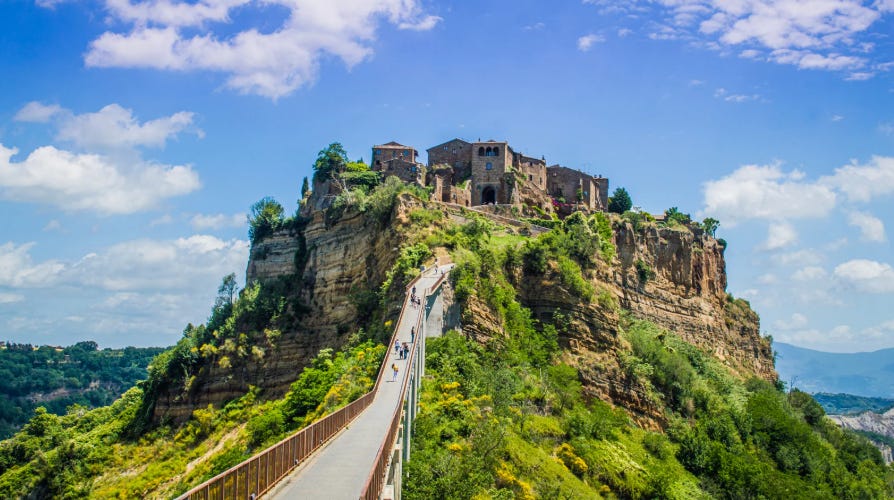
From a distance, Civita looks like it shouldn’t still be there. A small village perched on eroding cliffs, reached by a long pedestrian bridge that sways just enough to remind you how exposed it is. Locals call it “the dying city,” but that never quite fits. It’s not dying. It’s holding on.
Founded by the Etruscans over 2,500 years ago, Civita has been shaped as much by geology as by people. Wind and rain have been slowly wearing away the land beneath it, taking pieces of the town with them. What remains feels stripped down to essentials. Quiet streets. Stone houses. A handful of residents who chose to stay.
Walk through Piazza San Donato early, before the day-trippers arrive. It’s quiet, almost still. Then just wander. There isn’t much to do here, and that’s the point. Sit down for a simple meal, take your time, and let the place settle in. Civita doesn’t try to impress you. It stays with you.
Ushguli (Svaneti), Georgia
Getting to Ushguli is part of the experience. The road winds through the Caucasus, narrowing as it climbs, pushing further into a landscape that feels less traveled with every turn. By the time you arrive, the sense of distance has settled in.
Ushguli is one of the highest inhabited settlements in Europe, a cluster of villages defined by its medieval stone towers. Built between the 9th and 12th centuries, these towers weren’t decorative. They were protection. Family strongholds in a region where isolation meant survival depended on what you could defend.
Today, they still stand. Weathered, uneven, but present. Life here hasn’t been polished for visitors. Cows move through the roads. Laundry hangs between homes. People live here because they always have.


Walk toward the base of Mount Shkhara, the highest peak in Georgia, and you’ll understand the scale of it. Or step inside the Lamaria Church, where frescoes have faded but not disappeared. Ushguli doesn’t try to explain itself. You just take it in as it is.
Albarracín, Spain
Albarracín was set aside at some point and simply left alone, and it’s better for it. The town rises along a narrow ridge, wrapped in defensive walls that still trace the landscape, built during its time as a Moorish stronghold and later reshaped by Christian rule.
The color is the first thing you notice. Pink and terracotta tones, soft but striking, shifting with the light throughout the day. The streets are tight, irregular, shaped by necessity more than design. It doesn’t feel planned at all, more like it came together over time.
Climb the walls if you can. The path is uneven, the drop is real, and the view makes it worth it. Or stay in the old town, step into the Cathedral of El Salvador, and take in the quiet weight of it. Albarracín doesn’t take long to open up. You just have to slow down a bit.
Piódão, Portugal
Getting to Piódão takes a bit of intention. You head into the Serra do Açor mountains, following roads that narrow and twist until it finally comes into view. A village of dark stone houses stacked into the hillside, almost blending in with it.
There’s a reason for that. The materials came from the land. Stone from the mountains, wood from nearby forests. Built for function first, but over time, something else emerged. A kind of quiet harmony.
The blue doors and window frames stand out against the dark stone, especially as the light fades. It’s subtle, but it changes the entire vibe of the place.
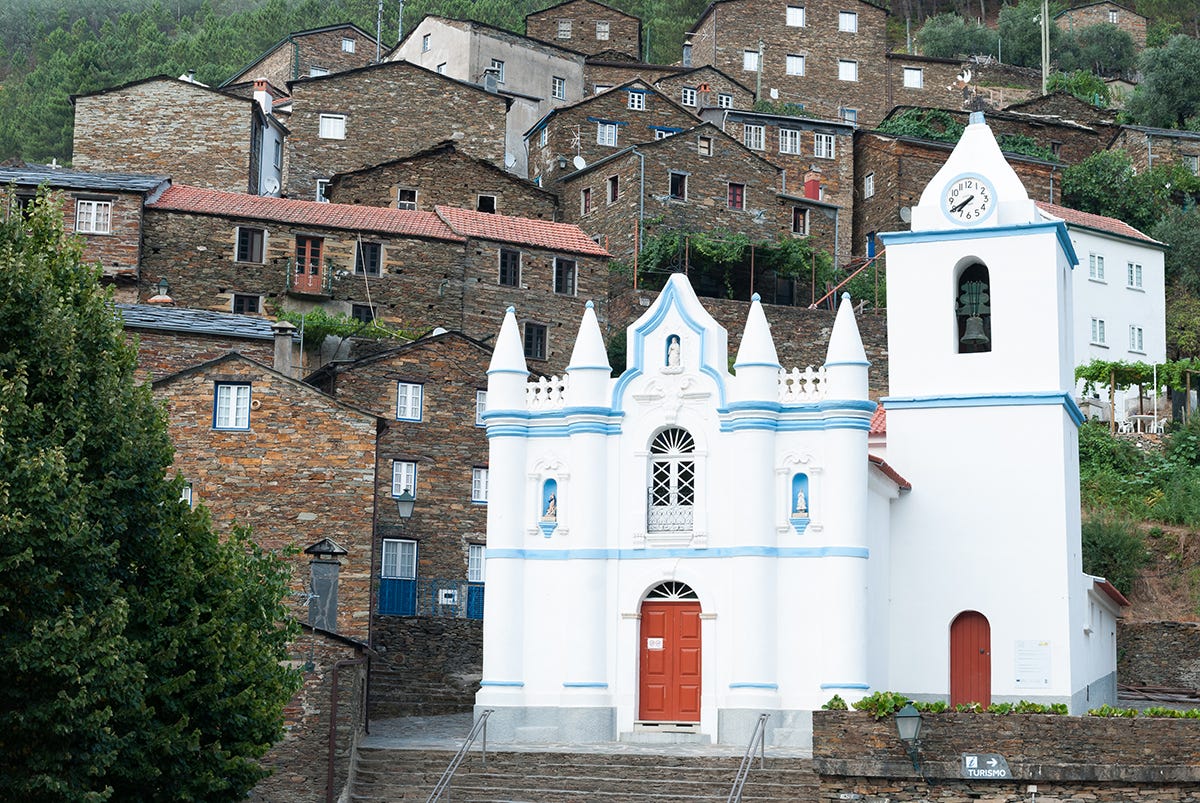
Walk without a plan. That’s enough here. Or step into the small Igreja Matriz (the main church of the town), simple and grounded like everything else. Piódão isn’t trying to draw attention. It’s just there.
Kulusuk, Greenland
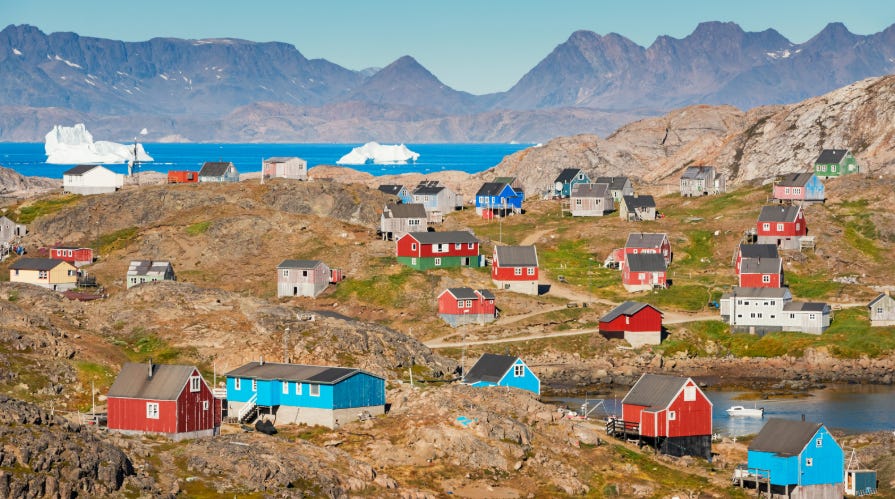
Kulusuk sits on the edge of the map. A small settlement on the eastern coast of Greenland, surrounded by water, ice and long stretches of silence. This isn’t somewhere you just pass through. You have to decide to come here.
Life here moves differently. Hunting, fishing, adapting to conditions that don’t bend for anyone. The brightly colored houses stand against the landscape not for style, but for survival. Visibility matters in a place like this.
Step outside at night if the sky is clear. The Northern Lights don’t feel like a show here. They feel like part of the environment. Or take a boat through the surrounding fjords, where icebergs drift slowly through the water.
Kulusuk isn’t comfortable in the usual way, and that’s what you remember.
One Last Thought
Spend enough time in places like these and you start to notice something. They weren’t built to stand out or draw a crowd. They grew at their own pace. Some held onto what was there before. Others changed, but not so much that they lost their character. None of them feel interchangeable.
You can feel it once you’re there. It is not flashy or trying to impress, it just feels right.
If you go, don’t rush it. Walk a little farther than you planned. Sit longer than you think you should and notice the small things most people pass by.
That’s usually when it starts to click.
About the Timeless Traveler….


All of this village have something in common . Walls cliffs and all sorts of natural barriers to keep the vandals out and they are of little strategic importance so the we're bypass by the hords today after a long peace in Europe they are an example of what isolation will do to the spirit