

8 Islamic Minds That Built a Civilization
The Ramadan Blueprint Series

When I wrote my Christmas series on twelve Christian theologians, I expected to find a tradition obsessed with doctrine and ritual. Instead, I found something far more human and far more universal: a civilization trying to answer the deepest questions people have always carried. Who are we? What is the soul? Why does suffering exist? What does redemption even mean? How do you discipline desire before it destroys you?
What surprised me most was this: the greatest Christian thinkers didn’t feel distant. They sounded strangely familiar, like men wrestling with the same inner battles we still fight today.
And that familiarity led me to something even more interesting. Many of the questions Christianity wrestled with were the same questions the Islamic world was wrestling with during the Medieval Ages, often using the same intellectual tools: Aristotle, Plato, logic, metaphysics, ethics, and the search for meaning behind existence itself.
Christianity and Islam didn’t develop in isolated mental universes. They were rival civilizations, yes. But they were also two vast intellectual worlds climbing the same mountain from different sides, trying to map reality, morality, and the human condition with seriousness and precision.
That is what this Ramadan series is about.
If the Christian theologians of my Christmas series shaped Western morality and civilization, then the Islamic philosophers of this Ramadan series shaped something just as powerful: the disciplined mind. The mind trained to think without arrogance, capable of seeking truth without fear, and strong enough to build a civilization without collapsing inward.
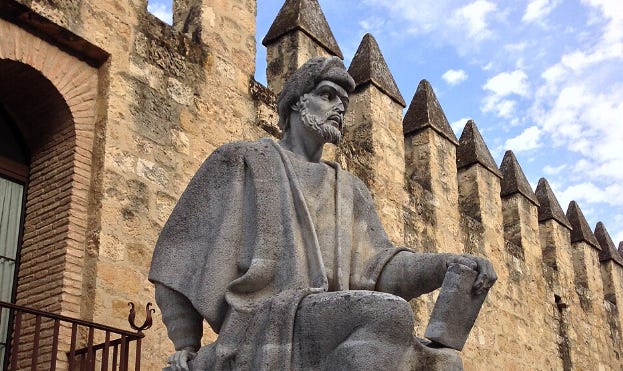
The parallels are hard to ignore. Thomas Aquinas and Ibn Rushd both defended the idea that reason and revelation could coexist without contradiction. Augustine and Al-Ghazali both understood that the human heart can deceive the mind, and that certainty is not purely intellectual. Christian mystics spoke of illumination, and Ibn Arabi spoke of reality as a field of signs that only the awakened heart can truly read. Even Ibn Khaldun’s warning about luxury feels like an echo of older moral warnings across the Christian tradition: that comfort can rot a people from the inside before any enemy ever arrives.
Different theology. Different conclusions.
But the same human struggle.
That’s why Ramadan feels like the perfect time to revisit these thinkers. Fasting is not only physical. It is philosophical. It forces you to confront desire, weakness, ego, impatience, and the quiet lies you tell yourself when no one is watching.
And that is exactly what these philosophers were trying to diagnose. They were writing because they understood something unsettling: when the mind loses discipline, the soul follows. And when enough souls lose discipline, an entire civilization begins to decay.
The modern world is suffering from a lack of inner order. So, in this eight-part series, I’m going to explore eight giants of Islamic philosophy and theology and extract one lesson from each. Lessons about the inner war on how to master hunger, pride, distraction, and the endless excuses the mind invents to stay undisciplined.
This series is a reminder. Not of what people were.
But of what they could become again.
The series begins this Sunday, February 22, 2026, with the man the West called Algazel - Al-Ghazali - a mind so brilliant it still wasn’t enough to silence the emptiness inside him, until he walked away from everything and rebuilt himself from the ground up.
