

Can a Good Person Survive a Corrupt Society?
What A Man for All Seasons and 1984 Reveal About Conscience, Betrayal, and the Cost of Staying True

The hardest test of character is not whether a person knows right from wrong. It is whether he can keep living by that knowledge when the surrounding world begins to reward betrayal.
That is the moral pressure at the center of Robert Bolt’s A Man for All Seasons and George Orwell’s 1984. Both works ask whether a person can remain good when the surrounding order rewards obedience, punishes honesty, and slowly makes inner compromise feel practical. Both answer that question through a man placed under pressure. Thomas More is asked to bend his conscience to the needs of the Tudor state. Winston Smith is asked to surrender his judgment to a regime that wants to control thought itself. The difference between them matters, but the core issue is the same. Goodness survives only if a person will not betray what he knows to be true.
Bolt make this point very vivid. Early in A Man for All Seasons, Richard Rich comes to More wanting advancement. He wants office, status, and entrance into the world of power. More sees the danger in him immediately. Rather than offer him a post at court, he gives him a silver cup and tells him to become a teacher. More is not merely being kind. He is trying to save Rich from the corrupting logic of ambition. He knows that some men do not want work that suits their character. They want power that flatters their vanity. Rich later proves More right when he sells his testimony for promotion. Bolt’s point becomes painfully clear. A corrupt society often advances by finding the men who are willing to exchange truth for rank.
That same pressure appears in More’s relation to Henry VIII. When Henry visits More at Chelsea, the king flatters and jokes before pressing and finally insisting. Henry approaches him as a ruler who expects loyalty from a trusted man. That is what makes the pressure morally serious. More is resisting a king, a friend, and an entire political environment that treats assent as a natural duty. A society begins to rot when honorable men begin justifying lies.
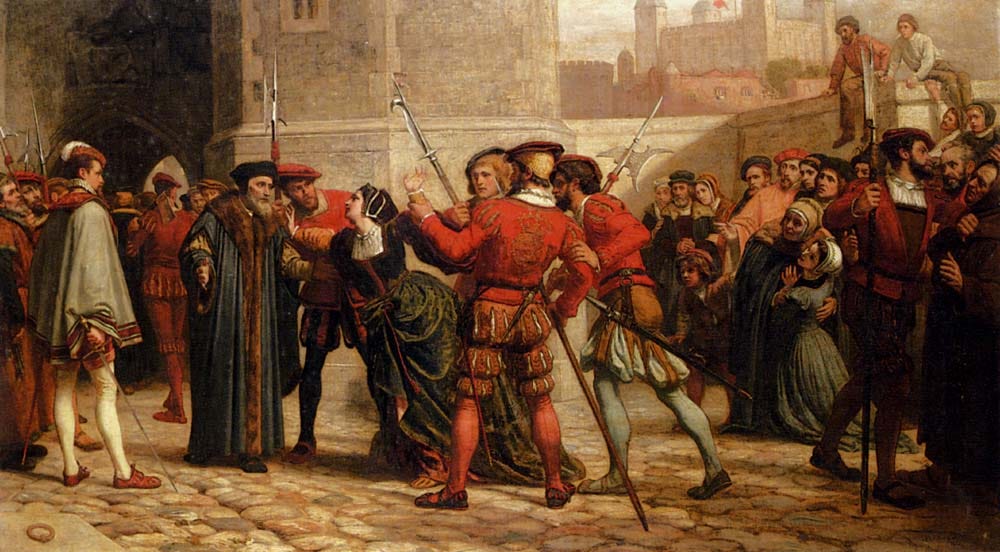
More does not chase martyrdom. He resigns the chancellorship, keeps silent, and stays within the law for as long as possible. He refuses to denounce Henry openly because he still hopes to live without speaking falsely. That silence is one of the most important acts in the play. It shows that goodness inside a corrupt society sometimes takes the form of disciplined refusal. More simply refuses to say what he does not believe.
The play reaches its moral center in the question of the oath. More explains that when a man takes an oath, he holds his own self in his hands like water. If he opens his fingers, he may never find himself again. This is one of Bolt’s best images because it shows why the issue is larger than Tudor politics. More is defending the unity of the self. A man who swears falsely is not only lying to others, but he is also teaching himself that his words no longer need to answer to his conscience. That is how corruption enters the soul. It teaches a person to speak against what he knows and then to live with the split.
Bolt deepens this through More’s relationships, especially with Norfolk, Alice, and Margaret. Norfolk cannot understand why friendship is not enough reason to comply. He wants More to give way for fellowship, for practical peace, for the sake of getting along in a dangerous world. That scene matters because Norfolk is not wicked. He is weak in the common social way. He thinks loyalty to persons can replace loyalty to truth. More knows it cannot.
With Alice and Meg, the strain becomes more painful. His refusal places the family under fear, financial loss, and emotional confusion. They do not always understand his silence. They suffer because of it. Bolt makes sure the reader sees that integrity is costly not only to the person who holds it, but to the people who love him. That is why the play feels real. More’s conscience brings fear and strain into his home.
Richard Rich provides the clearest counterexample. He begins as a man hungry for recognition and ends as a false witness. His betrayal at More’s trial is not just one bad act. It is the logical end of a character that has allowed ambition to outrank conscience. When Rich perjures himself, Bolt shows exactly how a corrupt society reproduces itself. It survives because men discover that lying is profitable. Rich receives office, title, and advancement. More receives death. That exchange is the political fact of corruption in its purest form. The society has begun to reward false witness more generously than truth.
Yet Bolt does not leave the question hanging. More loses the worldly contest, but he does not become inwardly divided. He goes to execution still in possession of himself. That is why A Man for All Seasons gives a real answer to the article’s central question. Yes, a good person can remain good by refusing the lie that would make him betray himself. More’s victory is moral. The state can kill him, but it cannot take his conscience.
Orwell’s 1984 asks the same question after the surrounding corruption has become total. Winston Smith also begins with an act of private resistance, but his world is far darker than More’s. More still lives in a society where law, religion, friendship, and moral language have recognizable form, even if power is twisting them. Winston lives in a regime that is trying to destroy the conditions that make conscience possible. That is why his first act matters so much. He buys a diary and writes in it.
“Down with Big Brother.”
The words are crude, frightened, and almost childish, but they matter because they are his. Winston writes them in a world where private thought itself is a crime. The diary scene shows that resistance begins in judgment before it becomes action. Winston still knows that the official language of Oceania is false. He still feels revulsion at the Party’s slogans, fabricated histories, and managed hatred. He works in the Ministry of Truth rewriting the past, and yet he knows the work is rotten. That inner knowledge is the remnant of goodness still alive in him.
Orwell then shows how difficult it is to preserve that remnant when the regime attacks every support that conscience needs. Winston cannot even date his diary with confidence because the past has been so thoroughly manipulated. Memory is part of moral life. A person needs continuity with the past in order to judge the present. Winston’s uncertainty about time reflects a society where reality itself has become unstable because power edits it daily. A good person finds it much harder to remain good when the surrounding order has turned truth into a moving target.
Winston’s relationship with Julia sharpens the point. Their affair is an act of resistance because it creates a private life beyond Party control. Their meetings in the countryside and in the rented room above Mr. Charrington’s shop are acts of moral disobedience as much as sexual rebellion. They are trying to live as persons rather than as functions of the state. They eat real food, speak freely, remember, desire, and imagine a life not entirely colonized by power. Orwell shows here that goodness inside corruption depends on protected spaces where truthful human feeling can survive.
That hope collapses because the Party has already entered those spaces. The room above the shop is a trap. Mr. Charrington is part of the Thought Police. O’Brien, who seems to offer Winston entrance into resistance, is another instrument of control. These betrayals show how far corruption has spread. In Bolt, More knows where the danger is. It sits in court, in office, in the king’s demand. In Orwell, the danger reaches into intimacy, language, and trust. The regime not only punishes dissent but also manufactures false refuge so that conscience can be lured out and broken.
The interrogation scenes with O’Brien state Orwell’s argument with terrible clarity. The regime is not corrupted away from some original moral purpose. Corruption is its purpose. O’Brien says power is the end. Persecution is for persecution. Torture is for torture. Power is for power. That confession removes every excuse. Winston is tortured to make him submit and to make him see the Party’s control as reality itself. The demand that he accepts that two plus two equals five is the perfect symbol of a state trying to occupy the human mind at its point of judgment.
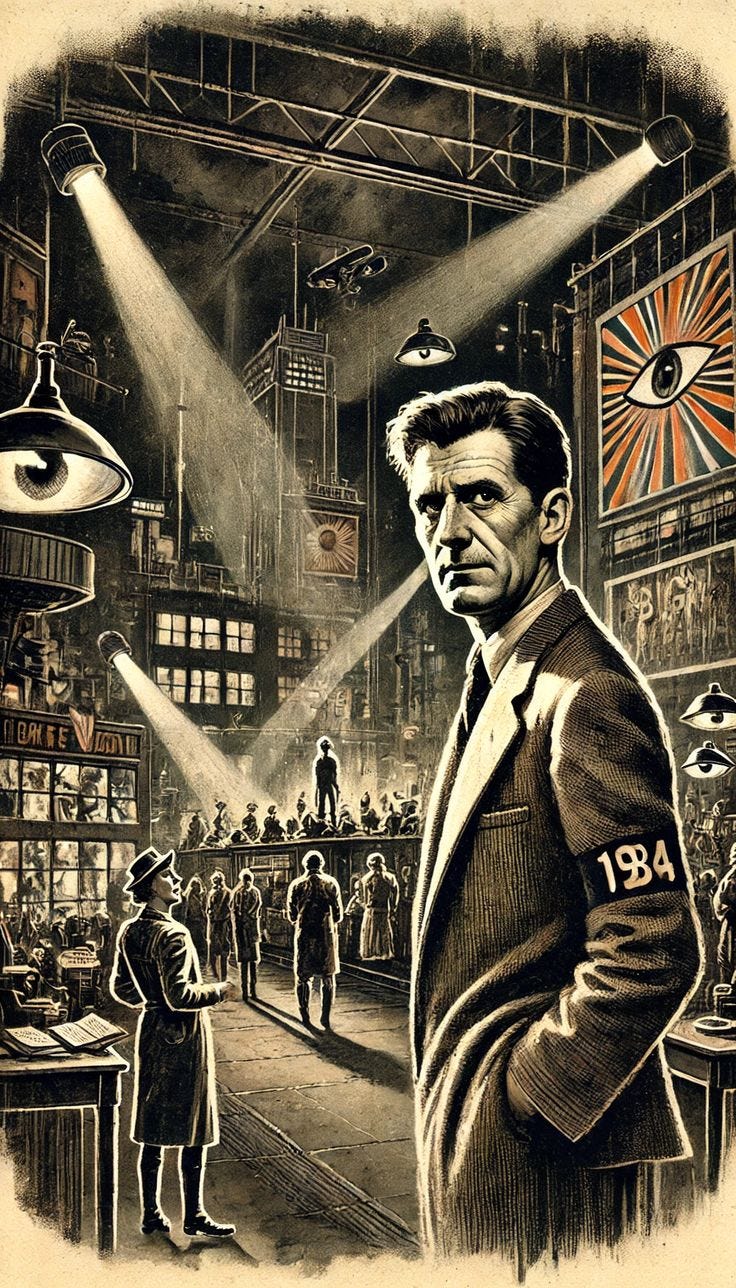
Room 101 brings the novel to its real climax because that is where Winston stops defending the part of himself that had resisted. Faced with rats, the thing he fears most, he betrays Julia and begs that the horror be done to her instead. Orwell chooses this scene carefully. The Party does not merely force Winston to obey; it forces him to hand over the last bond that had made his inner life human. After that, his collapse is complete. By the end he loves Big Brother. The line is horrifying because it marks the final victory of corruption. The state no longer surrounds the person as an enemy. It speaks through him as an internalized authority.
This difference between More and Winston gives the clearest answer to the original question. More confronts a corrupt society that still cannot take possession of his inner life unless he consents. Winston confronts a corrupt society designed precisely to break inner life until consent becomes manufactured. More dies before his conscience is conquered. Winston lives after his conscience has been dismantled. One book shows moral integrity surviving political pressure. The other shows political pressure turning into psychological occupation.
Taken together, the novels make the argument far more concrete than any abstract moral theory could. A good person remains good by keeping judgment, word, and conscience joined together. More does this when he refuses the oath, refuses public falsehood, and accepts the cost. Winston tries to do it when he writes the diary, preserves forbidden memory, loves Julia, and recoils from Party lies. He fails when terror breaks the connection between truth and self. That is the hardest lesson in the comparison.
Goodness is inward coherence under pressure. Corruption wins when that coherence is broken and a person learns to live divided.
That lesson still matters because many societies do not demand open villainy from ordinary people. They ask for smaller acts of participation. Repeat what you know is false. Stay silent when a lie is useful. Call fear realism. Call betrayal maturity.
Bolt and Orwell remain powerful because they show where that road leads. In one world, a man loses his life to keep his soul intact. In the other, a man keeps his life after losing the part of himself that made life worth living.
The question is no longer abstract at that point. It becomes painfully personal. What are you willing to lose in order to remain whole, and what will you become if you refuse that loss?

Check out the landmark book "Disciplined Minds" by Jeff Schmidt.
I have shared 1984 and Animal Farm with my grandchildren because they have silently been removed from schools. This type of literature is being silenced for the terrible reason of being too honest. The Memory Hole exists 😔