Can Happiness Survive Without Duty?
What happens when love, freedom, and happiness are separated from responsibility.

A man cheats on his wife with the family governess. When his wife discovers the affair, she locks herself in her room. Their children are left largely to themselves. The servants begin to argue. The household starts coming apart. And the man at the center of it all wakes up thinking mainly about how unpleasant the situation has become for him.
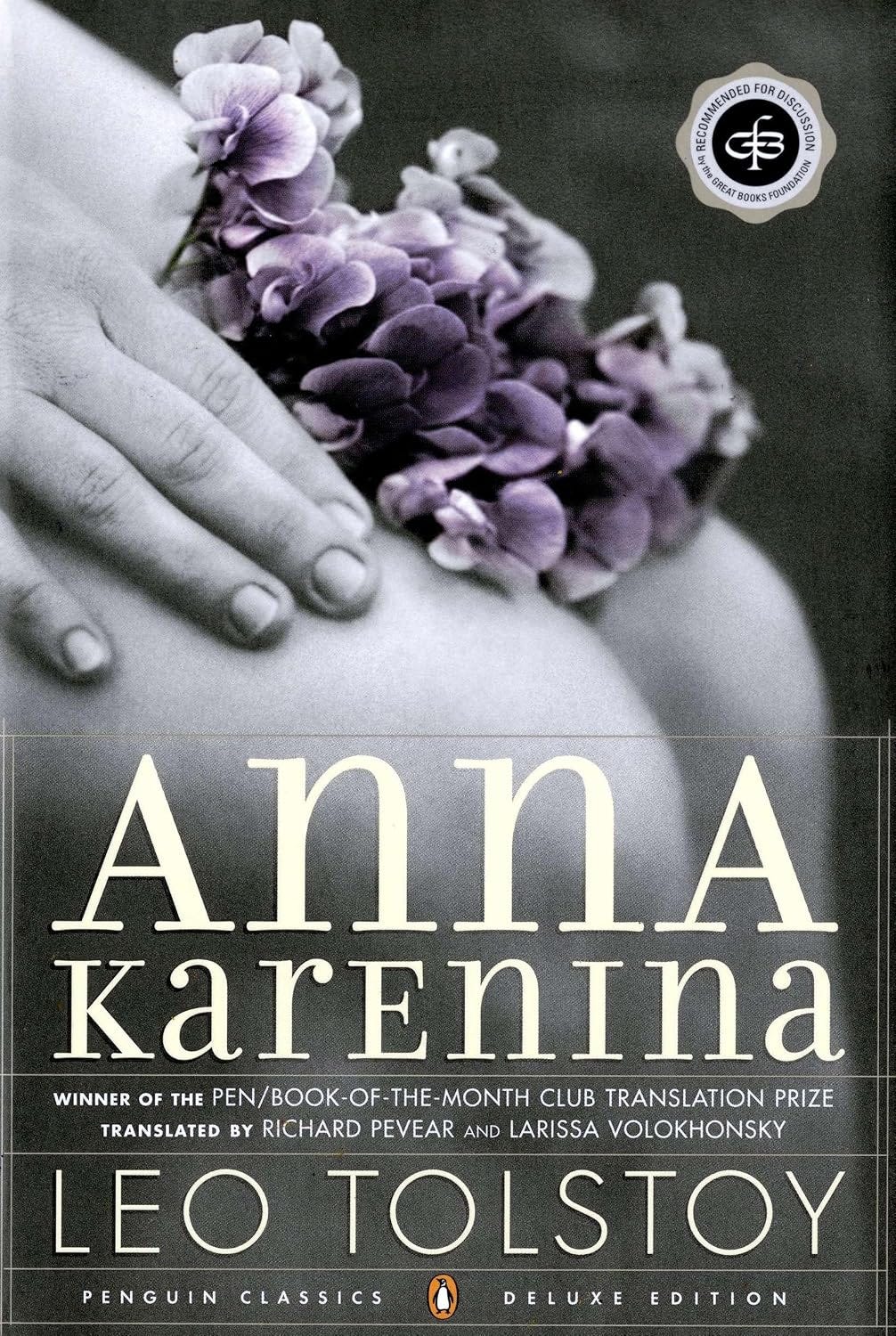
This is where Leo Tolstoy begins Anna Karenina.
“Happy families are all alike; every unhappy family is unhappy in its own way.”
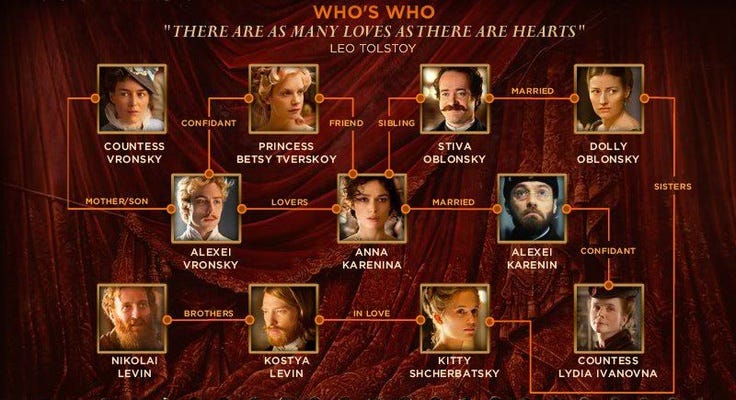
This is amongst the most famous sentences in literature. Stiva Oblonsky’s adultery has affected everyone living under his roof. Dolly suffers most, but the damage spreads through the children, servants, finances, and basic rhythms of the household.
Tolstoy begins with a simple fact about human life: our private choices rarely remain private. That idea runs through the entire novel. Anna wants love. Vronsky wants Anna. Stiva wants pleasure without disruption. Dolly wants to preserve her family. Kitty wants romantic happiness. Levin wants something harder to define: a life he can regard as good.
Behind all of them sits one question.
Can happiness survive when desire is separated from duty?
Stiva knows what he has done
Tolstoy could have made Stiva cruel. That would have made the moral problem easier. Instead, Stiva is charming. He is sociable, generous in manner, physically comfortable, politically fashionable, and remarkably good at being liked. Even people who know he has treated Dolly badly tend to remain sympathetic to him. His household nurse, firmly on Dolly’s side, still urges him toward reconciliation.
His moral failure comes with another unsettling feature: he understands perfectly well that he has done wrong.
After Dolly discovers the affair, Stiva admits to himself that the whole mess is his fault. Yet he also manages to think that somehow, he cannot really be blamed. His deepest regret concerns the discovery and its consequences. Tolstoy writes that Stiva cannot persuade himself that he repents of the affair itself. He mainly wishes he had concealed it better.
People rarely need elaborate philosophical systems to justify what they want. Often the process runs in reverse. Desire comes first. The explanation arrives afterward.
Tolstoy makes this explicit when describing Stiva’s politics. Stiva reads the opinions fashionable in his social circle and absorbs them almost as easily as he adopts the current style of coat. Ideas about marriage being outdated appeal conveniently to a man who finds marriage restrictive. Religious skepticism fits someone who finds religious obligation tiresome.
Tolstoy is describing a habit that remains familiar 150 years later.
We tell ourselves we reached a conclusion through reason. Sometimes we selected the conclusion because it gave permission to the life we already wanted.
One affair, many casualties
Stiva’s adultery introduces another major idea: moral actions create circles of consequence. The affair takes place between two adults. Its effects reach far beyond them.
Dolly bears the humiliation. Her children lose the stability of their home. Household employees become caught in the conflict. Financial decisions become harder because Stiva needs Dolly’s cooperation over the sale of property. Even reconciliation becomes morally complicated because Stiva realizes that money gives him another reason to repair the marriage.
Tolstoy refuses to calculate morality solely from the happiness of the person making the choice.
This becomes crucial when Anna enters the story.
She initially arrives as the defender of marriage. She comes to Moscow specifically to help Stiva and Dolly reconcile. She speaks to Dolly with such sympathy and emotional intelligence that Dolly decides to forgive her husband.
Then Anna meets Vronsky. The woman who has just argued for preserving one marriage begins moving toward the destruction of her own.
Tolstoy understood the irony perfectly. According to Sophia Tolstoy’s later account, her husband had been considering a novel about the fall of a woman in Petersburg society as early as 1870. She wrote that his aim was to tell the woman’s story “without condemning her.”
Tolstoy never asks us to choose between seeing Anna as a victim or holding her responsible for what she does. Her marriage is deeply unsatisfying, and the society around her is far more forgiving of adulterous men than adulterous women. Her love for Vronsky is also real. But so are the consequences of pursuing it. Kitty is hurt, Karenin is humiliated, Anna is separated from her son, and eventually her relationship with Vronsky becomes another source of anguish. Tolstoy lets us sympathize with Anna without asking us to excuse every choice she makes. That tension is what makes her feel like a person rather than a lesson.