Discipline Means Nothing Without Change
Lesson 8 of The Ramadan Blueprint Series - Muhammad Iqbal

Today the Muslims celebrate Eid ul-Fitr. Ramadan has ended. The fasting stops. The routines break. And for most Muslims, life quietly returns to what it was before. That is exactly the moment Muhammad Iqbal would challenge. Because he believed the real test of Ramadan begins after it ends.
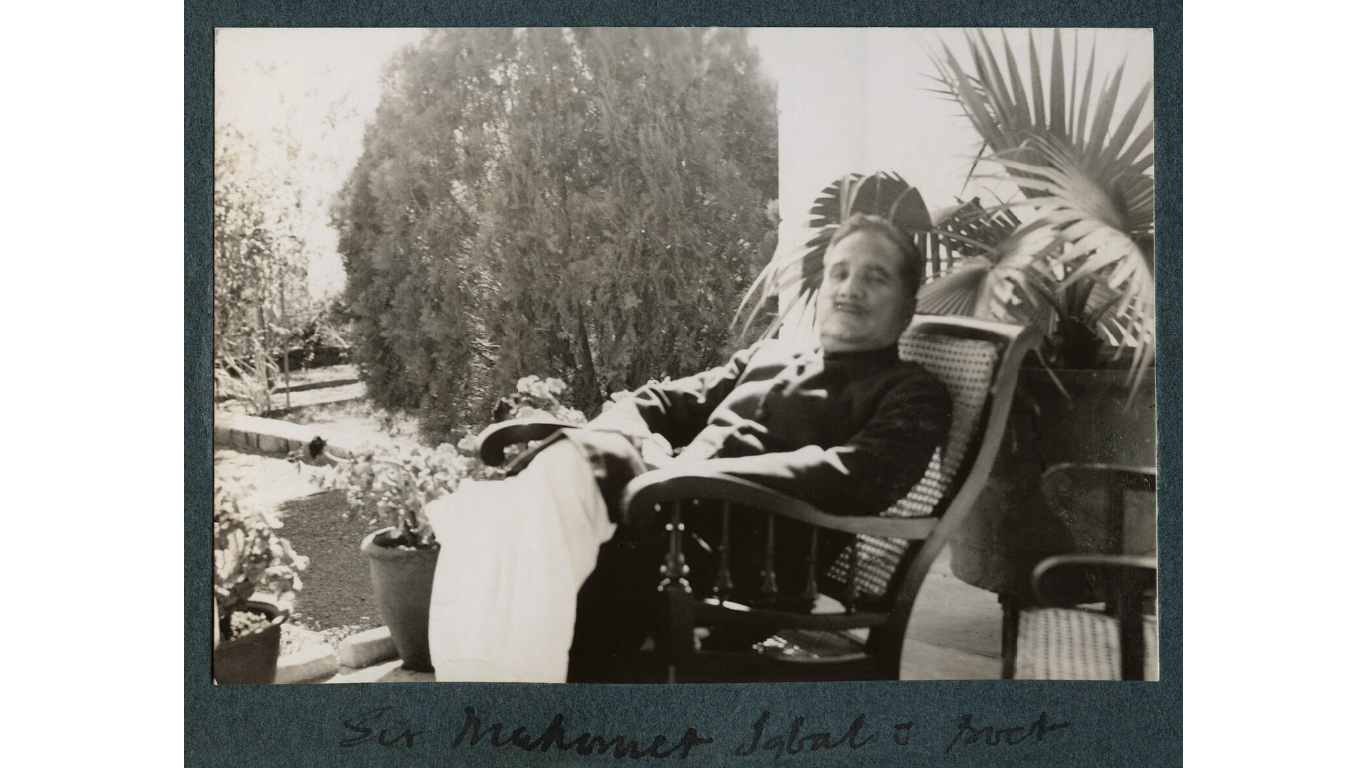
Muhammad Iqbal, the final figure in this series, was a poet, philosopher, and one of the most important Muslim thinkers of the modern age. Writing in a time of political collapse and intellectual confusion, Iqbal was not interested in preserving tradition as memory. He wanted to restore its power to shape people and rebuild a civilization that had lost confidence in itself. It is fitting that we end with him. Because this last gift is not about what you learned. It is about what you will become.
Iqbal was not writing in comfort. He lived in British-ruled India, watching a once-confident civilization reduced to imitation. He saw educated Muslims quoting European thinkers fluently, yet unable to explain their own tradition with the same clarity. He saw people defending religion in words but failing to embody it in life.
In one of his letters, he warned that borrowing ideas without rebuilding the self only produces dependency, not strength. And he lived that warning himself. He studied in Europe, absorbed its philosophy, but refused to become an echo of it. Instead, he returned with a harder question: why had those who once shaped knowledge become consumers of it?
That question became his life’s work.
In The Reconstruction of Religious Thought in Islam, Iqbal makes a sharp point. The Quran does not ask man to withdraw from the world. It asks him to observe it, understand it, and act within it. Nature and history are fields of responsibility. But that responsibility requires something most people avoid building.
The self. Iqbal calls it khudi. And he treats it like something alive.
Think of a man who fasts all of Ramadan, controls his appetite, disciplines his time, wakes before dawn. Then Eid comes, and within days he slips back into distraction, excess, and delay. Iqbal would not see this as a failure of knowledge. He would see it as a weak self that could not hold its form once the structure was removed.
Or think of someone who reads constantly. Books, threads, lectures. They know the language of purpose, discipline, faith. But when faced with a difficult decision, they hesitate, delay, or follow the crowd. Again, not a lack of ideas. A lack of inner structure.
This is where Iqbal is different. He does not praise knowledge on its own. He asks what it produces. For him, the self is built through pressure. Through choices that go against ease. Through taking responsibility when it would be easier to blame circumstances. The self grows when you act despite uncertainty. It weakens when you outsource your thinking or wait for perfect clarity.
That is his gift. The Gift of Rebuilding the Self.
He shifts religion from something you carry to something that shapes you. And he makes it uncomfortable. Because it forces you to ask: has anything actually changed in me?
Iqbal saw clearly that civilizations do not collapse because they lose books or scholars. They collapse when people lose the ability to turn belief into action. When prayer becomes routine but not transformation. When knowledge increases but courage does not.
He refused to let tradition become a museum. That is why he insisted on an independent attitude toward modern knowledge. Learn from the world, but do not disappear into it. Think critically, but do not lose direction.
You can see how this plays out today. People scroll for hours through content about discipline, purpose, faith. They save it. Share it. Agree with it. But their daily life remains unchanged. The gap between what they know and how they live keeps growing.
Iqbal would call that gap the problem. Not ignorance. Weakness of the self. He brings everything back to a simple reality. A person without an inner center is shaped by trends, pressure, and noise. A person with a developed self can resist, choose, and build.
That difference is not theoretical. It shows up in small moments.
Do you act when it is inconvenient?
Do you hold a standard when no one is watching?
Do you think for yourself when it costs you approval?
That is where the self is built.
Studying Iqbal changed how I look at consistency. I used to think discipline was about maintaining routines. He makes you realize it is about maintaining identity. About becoming someone who can carry conviction across different situations, not just controlled environments like Ramadan.
That shift is uncomfortable, because it removes excuses. You cannot blame distraction if you choose it. You cannot blame confusion if you avoid thinking. You cannot blame the world if you have not built the strength to face it.
Iqbal does not let you stay passive. And that is why he is the right ending.
You have seen humility from Al-Ghazali. Structure from Al-Farabi. Integration from Ibn Sina. Realism from Ibn Khaldun. Clarity from Ibn Taymiyyah. Courage from Ibn Rushd. Method from Al-Shafi‘i. Iqbal turns all of it into a question.
What kind of person are you becoming?
A tradition survives only when it produces people strong enough to live it.
This is Gift #8.
Ramadan is over. Now you find out what it actually changed.
This weekend, I’m sending something to my paid and founding subscribers. An 82-page e-book called First Questions, built from the Arc of Belief and Meaning Series.
Human beings did not begin by building cities or writing laws. They began by asking questions. Who created us? Why does the sun rise and fall? Why do we suffer? What happens after we die?
If these questions still sit with you, then this is for you. Upgrade to paid, and it will be delivered to you this weekend.