

Don Quixote and Sancho Panza: The Two Minds Within Us
Where dreams meet reality.

Every human being carries a Don Quixote and a Sancho Panza within: one imagines a nobler world, while the other asks who will pay for dinner and whether the dream is worth the bruises.
Miguel de Cervantes split these two sides of human nature into separate bodies. He then sent them down the same road, where they clash, suffer, argue, and gradually exchange qualities. By the end, each carries part of the other. What begins as a parody of chivalric romances becomes one of literature’s most profound studies of friendship, perception, and the price of living by ideals.
Published in two parts in 1605 and 1615, Don Quixote opens with Alonso Quixano, a minor country gentleman whose mind is overwhelmed by knightly tales. He sells acres of farmland to buy more books and sleeps so little that “his brain dried up.” He reinvents himself as Don Quixote de la Mancha, arms himself with rusted armour, names his exhausted horse Rocinante, and transforms a peasant woman called Aldonza Lorenzo into the incomparable Dulcinea del Toboso.
His mission is to revive knight-errantry, defend the weak, punish injustice, and restore honour to an ordinary world.
Sancho Panza, a poor labourer with a wife and children, joins for frankly material reasons. Don Quixote promises to make him governor of an island. Sancho mounts his donkey and follows a man he knows is mad because madness might still lead to land, money, status, and full meals. His practical concerns keep the pair connected to consequences even as his master charges toward illusions.
The famous windmill episode establishes their opposing ways of seeing. Don Quixote looks across the plain and finds more than thirty monstrous giants. He prepares to attack them and claim their spoils.
“What giants?”
Sancho sees windmills. He points out that the apparent arms are sails turned by the wind, but Don Quixote dismisses his warning and charges. A sail catches his lance, breaks it, and throws both knight and horse across the ground. Even then, Don Quixote protects his beliefs. The magician Freston, he explains, must have transformed the giants into windmills to deprive him of victory.
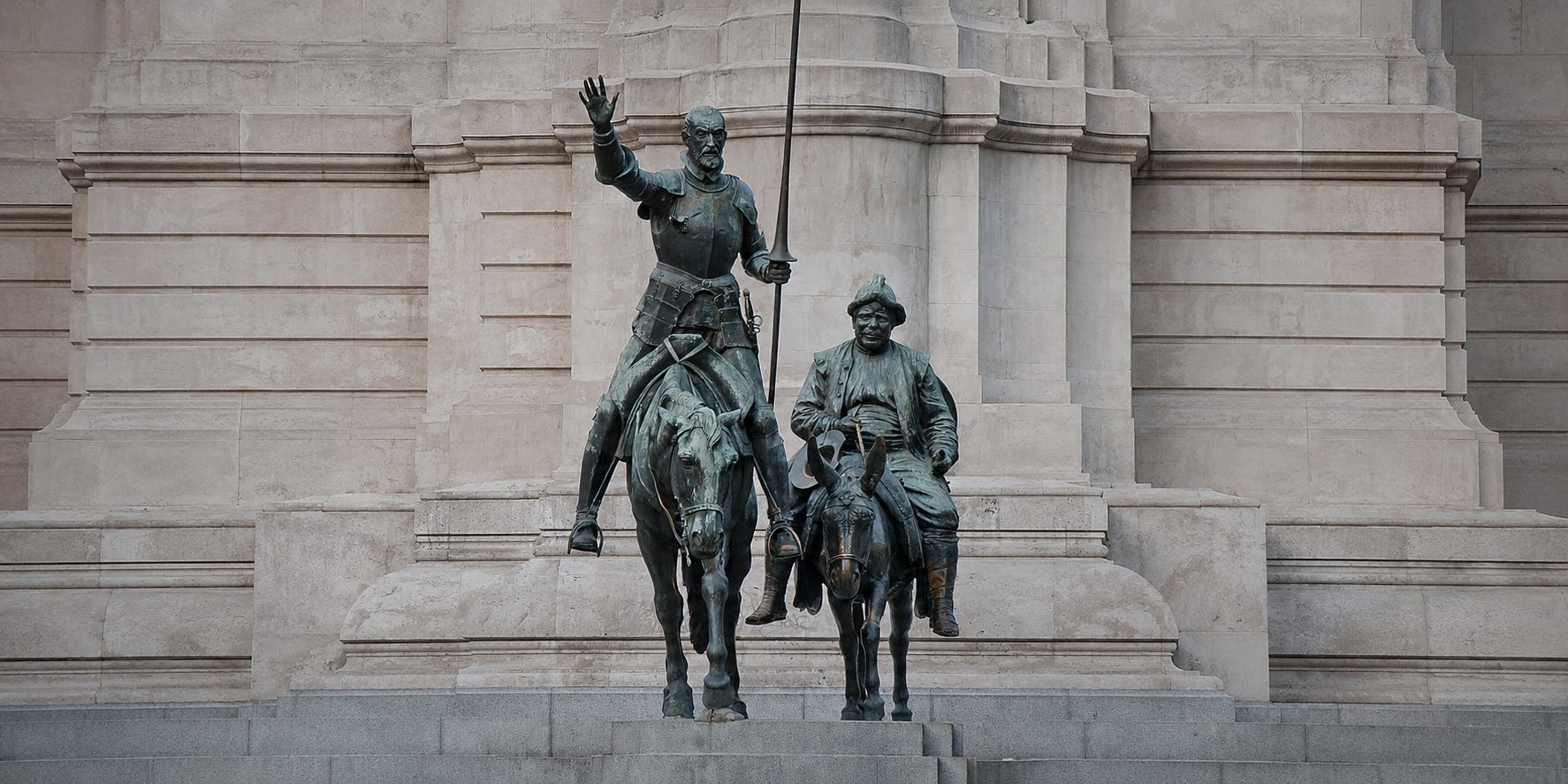
Cervantes exposes a permanent habit of the human mind. When facts threaten a cherished identity, people often invent a new explanation before questioning the belief itself. Failed predictions become proof of sabotage. Rejection confirms the cruelty of the world. Political defeat reveals the hidden strength of an enemy. Don Quixote appears absurd because his excuses are immediate and visible, but the psychological instinct remains familiar.
Sancho provides the corrective voice. He identifies the windmills, anticipates the injuries, and counts the missing teeth after Don Quixote attacks two flocks of sheep he believes are rival armies.
