

God Tests Us Through the Gifts We Fear Losing Most
Why Abraham’s sacrifice still unsettles Jews, Christians, and Muslims?

Abraham stands at the center of Judaism, Christianity, and Islam because each tradition sees in him the same disturbing fact. Faith begins when a person obeys God before the outcome makes sense.
His story does not begin with a system, a temple, a court, a nation, or a finished creed, but with a man called out of the Mesopotamian world associated with Ur and Haran, told to leave his country and kin, and sent toward a land whose meaning would unfold through promise, delay, family conflict, covenant, and sacrifice. Genesis gives him cattle, silver, gold, servants, altars, enemies, allies, a barren wife, an Egyptian slave woman, two sons, and one command that turns his whole future into a test. The Qur’an gives him the force of a prophet who argues against false worship, rejects the gods of his people, turns toward the Creator of the heavens and earth, and becomes the model of true monotheism, the sincere turning of the whole person toward the One God.
That is the first reason Abraham still matters. He appears before the later religious worlds are fully formed, and for that reason every later religious world has to explain how it belongs to him. Judaism looks back to him as father of the covenant people, the ancestor tied to circumcision, land, promise, Isaac, Jacob, and the birth of Israel. Christianity looks back to him as the man whose faith came before the Mosaic law, the ancestor through whom the nations enter blessing in Christ. Islam looks back to Ibrahim as the primordial submitter, the friend of God, the builder associated with the Ka‘ba, and the prophet whose surrender stands behind Eid al-Adha.
This makes Abraham more than a shared name. He becomes a pressure point. If Jews, Christians, and Muslims all claim him, then each claim reveals what that tradition believes matters most: covenant and peoplehood, faith and fulfillment, submission and pure worship. The same patriarch becomes a mirror in which each civilization sees its own deepest argument.
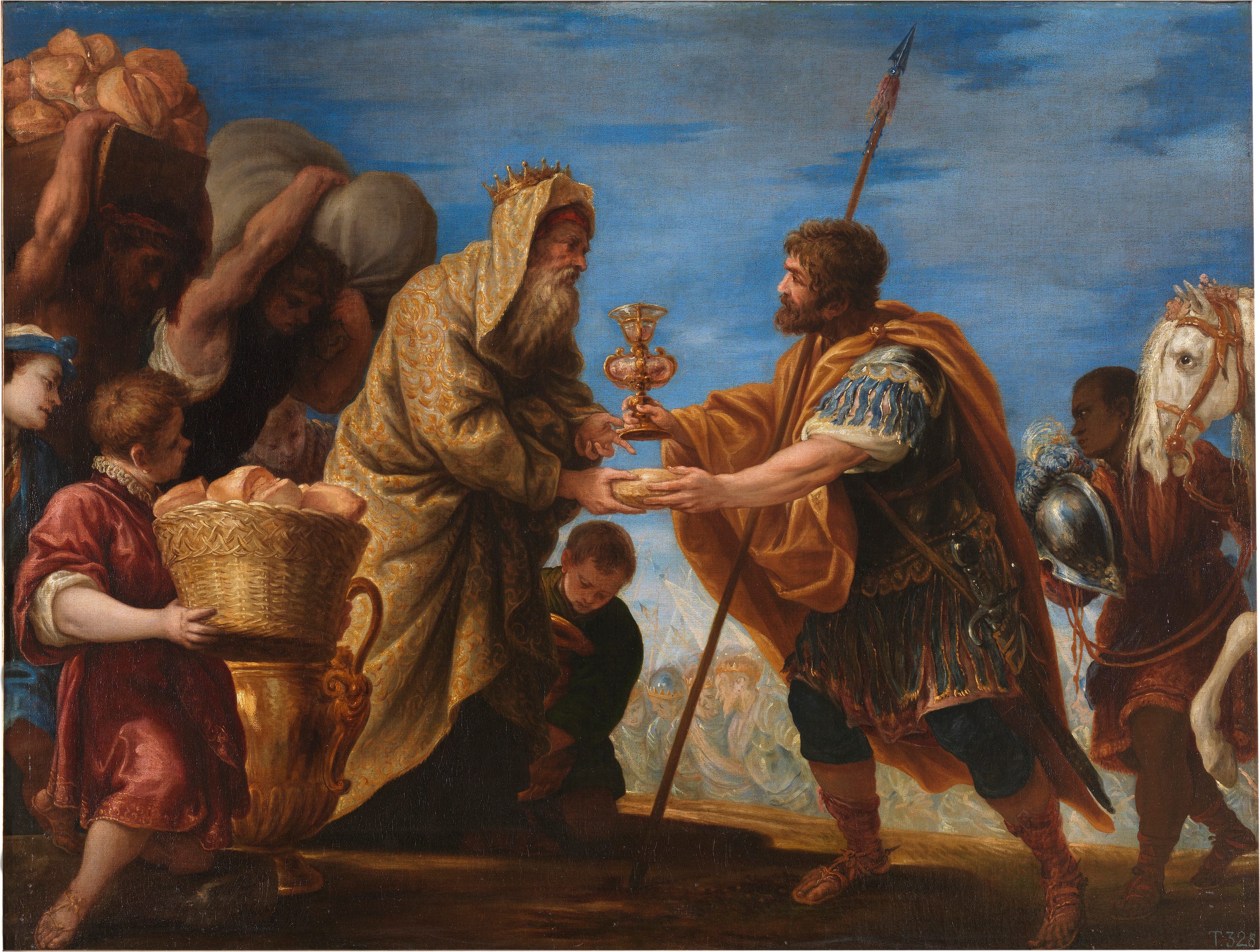
The Jewish problem begins with time. Abraham lives before Sinai, before Moses receives the Torah, before Sabbath law, dietary law, priestly order, and the later shape of Israel’s public worship. Genesis does not present Abraham as a later rabbinic Jew living before his age. Jon Levenson from Harvard Divinity School points out how strange the patriarchal narratives look beside later Israelite religion.1 Abraham builds altars in different places, deals with foreign kings without a simple idolater-versus-believer pattern, and leaves Ur without Genesis itself saying that he smashed his father’s idols or rejected a pagan household in the later legendary form.
Later Jewish interpretation answered that tension by bringing Abraham closer to Torah. Jubilees imagines Abraham learning ancient sacred knowledge before Sinai. The Mishnah says Abraham observed the whole law before it was given. Rashi reads Genesis 26:5 in a maximal way, treating Abraham as obedient to commandments, statutes, oral teaching, and even later safeguards of Jewish practice. Rashbam gives a more restrained answer, linking Abraham’s obedience to commands already revealed to him, such as circumcision, along with moral duties like hospitality, justice, and restraint. These readings show a tradition protecting continuity between the father and the house built by his descendants.
Christianity makes its own claim on Abraham by turning to the moment before law. Paul sees in Abraham a man counted righteous through faith, and that reading becomes central to his argument that Gentiles can become heirs of Abraham without becoming Jews through circumcision and full Mosaic observance. In Galatians, Abraham becomes the ancestor of those who trust God’s promise, and that move allows Christianity to present itself as the widening of Abraham’s blessing to the nations rather than a local inheritance locked inside one bloodline.
Yet Christianity also refuses to let Abraham become a symbol for belief without action. The Epistle of James points to the offering of Isaac and says Abraham’s faith was completed by works; the same passage calls him the friend of God, which means the title belongs to a man whose trust became obedience at the altar. This matters because it cuts through the lazy division that says Judaism has law while Christianity has faith. Abraham carries both trust and obedience, and any tradition that claims him has to face the fact that he believed God while doing what God commanded.
Islam enters the Abrahamic inheritance with a different claim. Ibrahim belongs to the earlier moment before Judaism and Christianity become distinct historical communities. The Qur’an presents him as the man who turns away from idols, rejects the worship of created things, and submits to the Creator alone. That is the force of hanif monotheism. Before Abraham can be claimed as Jewish, Christian, Arab, or tribal property, he appears as the sincere worshiper of one God.
That is why Qur’an 3:67 carries such weight in Islamic thought: Abraham was neither Jew nor Christian, but one who submitted his will to God and joined no partners with Him. Islam reads this as a return to Abrahamic monotheism, with Muhammad calling people back to the religion of Ibrahim rather than inventing a detached faith without roots in earlier prophecy. Ibrahim, in this sense, gives the religion a memory older than tribe, empire, and sectarian inheritance.
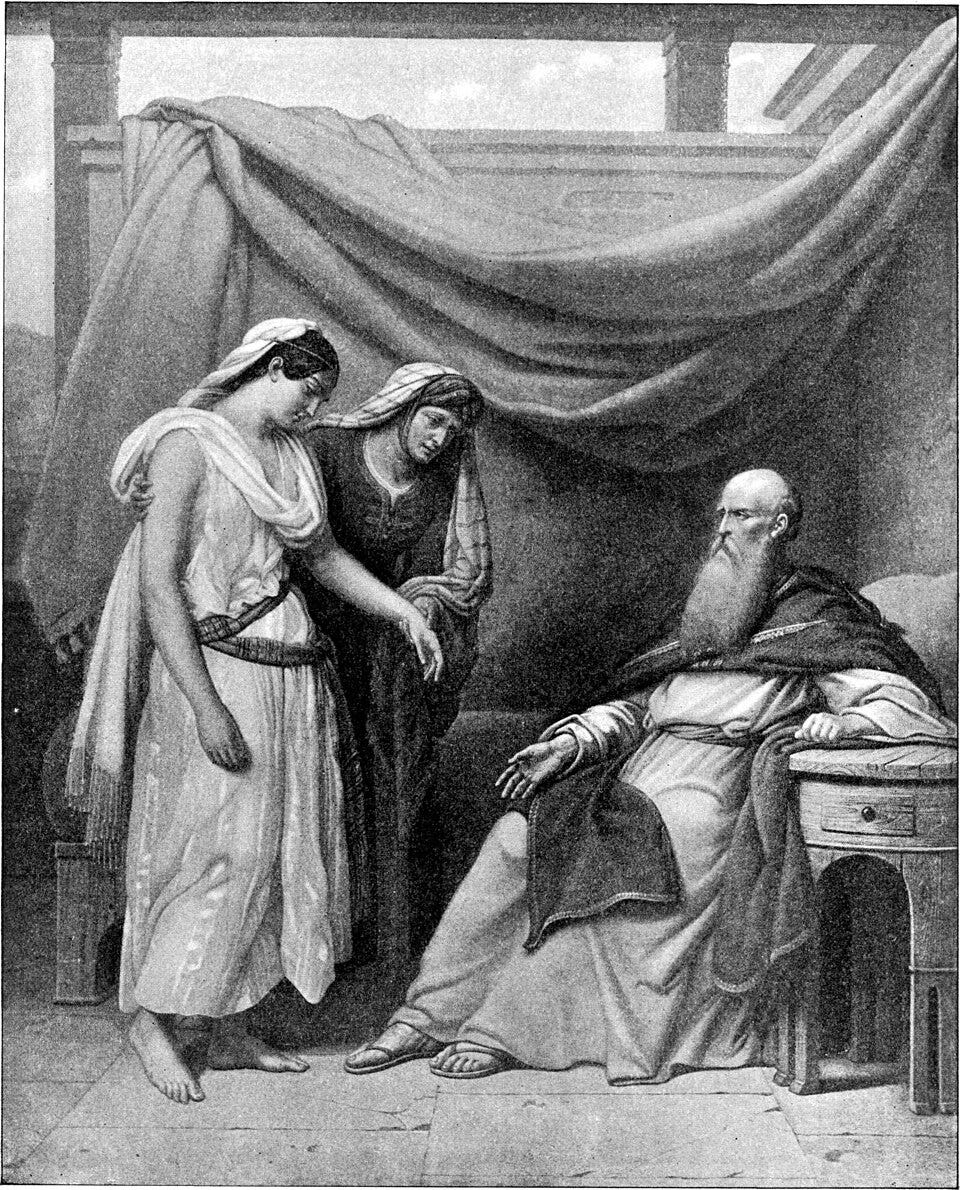
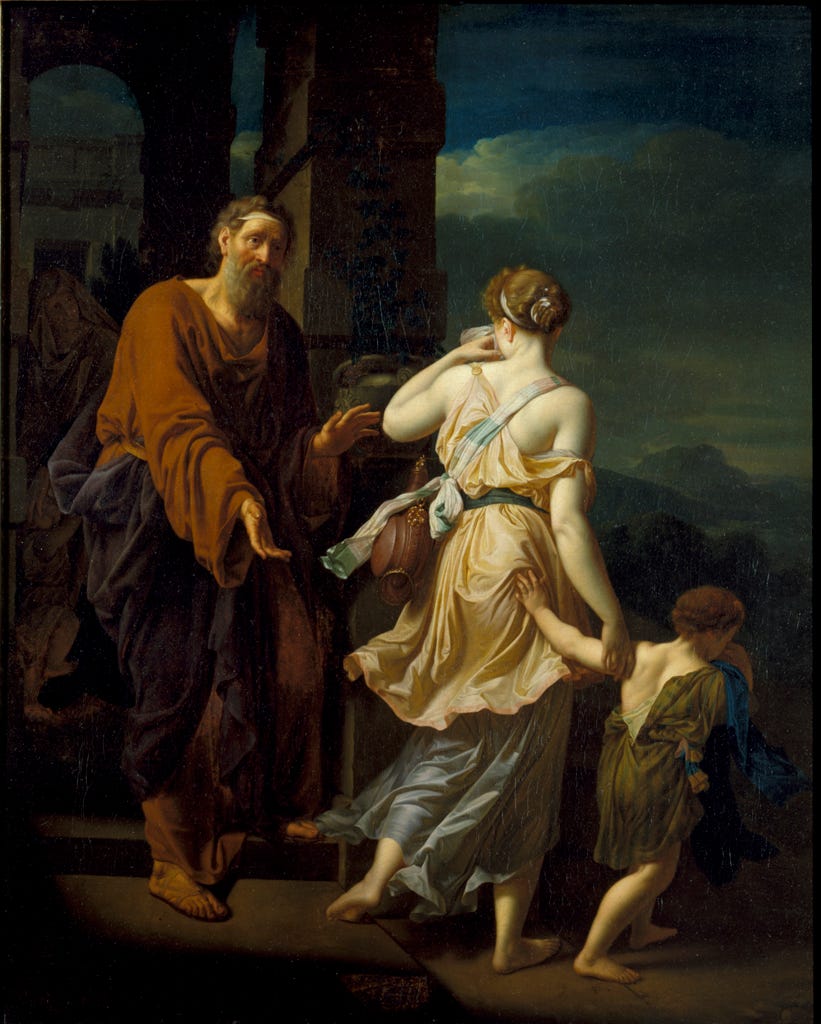
The dispute over Abraham becomes sharpest through the sons, because Isaac and Ishmael carry different lines of memory, blessing, and sacred history. Genesis gives covenantal priority to Isaac, the son of Sarah, while still giving Ishmael divine protection, fertility, and the promise of becoming a great nation. The text does not erase Ishmael; it blesses him, names his future, and keeps him within Abraham’s story, even as the covenant line passes through Isaac.
Genesis often works through chosen lines that unsettle ordinary inheritance. Isaac over Ishmael, Jacob over Esau, Judah among his brothers, and Joseph raised above the older sons of Jacob. The biblical pattern gives theological meaning to election, and election always creates a wound somewhere inside the family. Ishmael receives blessing, but Isaac receives the covenant line. Hagar receives divine attention, but Sarah’s son carries the named promise. Abraham loves both sons, but the story will not let both sons occupy the same covenantal place.
The Qur’anic picture changes the balance. Both Ishaq and Ismail appear as prophets, and the Islamic tradition gives Ismail a central role in the story of sacrifice and in the building of the Kaaba with Ibrahim. Muslim interpretation identifies Ismail as the son connected to the command of sacrifice in Qur’an 37:101–107, and that event develops into Eid al-Adha, while Ismail’s work with Ibrahim in building the Kaaba connects the family of Abraham to pilgrimage and worship in Mecca.2
This difference between Isaac and Ismail should be treated with care because it does serious theological work in both traditions. For Jews and Christians, the binding of Isaac threatens the covenant line promised through Sarah; for Muslims, the offering of Ismail binds sacrifice, submission, Mecca, pilgrimage, and the memory of Ibrahim into one ritual world. The point of comparison should never be reduced to which son wins, because each tradition places Abraham’s beloved son at the point where promise and obedience collide.
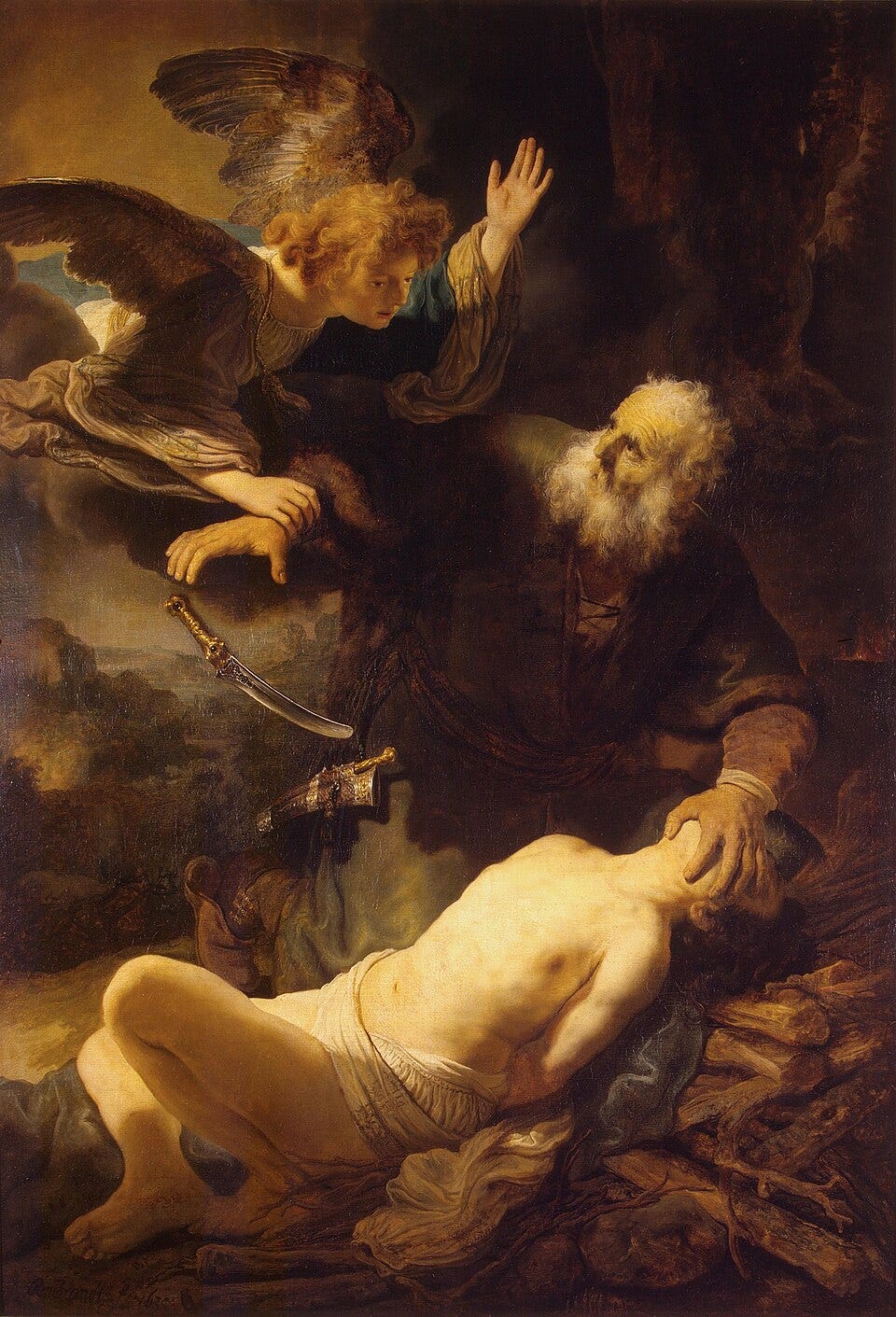
The sacrifice itself carries the hardest lesson in Abraham’s life. God gives Abraham the future through a son, then commands him to surrender the son through whom that future has become visible. The test pierces the place where religion often becomes comfortable. The believer receives a gift, begins to build life around it, starts to treat it as possession, and then discovers that the gift still belongs to God.
In the Jewish and Christian reading, Isaac embodies the impossible mercy of God because Sarah’s womb had long been barren and Abraham was already old when the promise came to life in the child. That is why Genesis 22 has such force. Abraham is not asked to surrender an extra possession from a large estate; he is asked to surrender the son whose birth proved that God could do what age, biology, and ordinary expectation said could not happen.
In the Islamic reading remembered at Eid al-Adha, Ibrahim’s obedience and Ismail’s submission become the center of the ritual act. The knife does not become the final word, because God provides the substitute; the son is spared, the ram is offered, and the believer learns that surrender to God ends in mercy rather than destruction. The ritual sacrifice of Eid al-Adha carries that memory into public life through prayer, slaughter, distribution, and care for the poor.
Eid al-Adha makes surrender visible: the believer does not merely admire Ibrahim’s obedience, but marks it through prayer, sacrifice, distribution, and the feeding of others, so faith passes from belief into responsibility. That is why Eid al-Adha judges the believer at the level of attachment: the animal is only the outward act, while the deeper question is whether a person can loosen his grip on wealth, pride, comfort, resentment, and the need to control what God has placed in his hands.
Abraham’s act also exposes a modern weakness with unusual precision. Many people want the comfort of faith without the discipline of surrender, the language of blessing without the loss of control, and the dignity of sacred inheritance without the burden of obedience. Eid al-Adha answers that weakness by placing the believer before Ibrahim, a man who did not merely speak about trust while protecting every private attachment from God.
This is where the title “friend of God” becomes demanding rather than sentimental. Isaiah 41:8, James 2:23, and Qur’an 4:125 all preserve the memory of Abraham as God’s friend, and the Islamic study also connects that title to righteousness and obedience. Friendship with God does not make Abraham casual before God; it marks the closeness of a servant whose life has become transparent to divine command.
The title “friend of God” should unsettle every community that claims Abraham. Judaism honors him as the father of covenant, but his life begins before Sinai, with a man who accepts circumcision in his flesh, leaves the settled world of his fathers, and trusts a promise while he still has no land, no nation, and no child through Sarah. Christianity honors him as the father of faith, but James does not leave that faith in Abraham’s mind; he takes the reader to Moriah, where Abraham’s trust becomes visible in the son placed on the altar. Islam honors Ibrahim as Khalil Allah, the friend of God, but Eid al-Adha loses its force when it becomes only meat, family visits, and inherited custom; the day begins with a father ready to give back the son he loves, and it asks every believer what he is still refusing to place before God.
The family of Abraham also forces a serious view of religious difference. The three traditions meet around Abraham while still carrying real differences over blessing, lineage, land, community, and dialogue.3 Abraham does not solve every conflict between Judaism, Christianity, and Islam, and he should not be used as a quick tool for smoothing over deep disagreements. The traditions differ over covenant, law, Christ, prophethood, scripture, land, Isaac, Ismail, and the meaning of final revelation. A serious Abrahamic conversation begins by naming those differences clearly, then asking what kind of moral responsibility falls on communities that all honor a man remembered for hospitality, obedience, prayer, and surrender.
That responsibility becomes urgent because Abraham’s family has often been invoked in ways that deepen rivalry instead of discipline. The claim “we are the children of Abraham” can become a badge of superiority unless it is joined to Abraham’s own conduct: leaving false security, receiving strangers, pleading for mercy, accepting command, and returning the beloved gift to God’s ownership.
Abraham unsettles every inherited claim because his life places faith where people usually protect themselves most: home, blood, future, and control. He leaves Ur and Haran before a settled homeland exists, trusts God’s promise while Sarah remains barren, fathers Isaac and Ishmael whose descendants will carry sacred memory in different directions, and then walks toward sacrifice with the son through whom the future has finally become visible.
That is why Judaism, Christianity, and Islam keep returning to him. Abraham does not give them a comfortable ancestor to possess; he gives them a test of whether covenant, faith, and submission can survive when God asks for the gift a person most fears losing.
Eid al-Adha remembers that test with the force of an action. Ibrahim’s hand rises, the son is spared, the substitute is given, and the believer learns that surrender to God ends with mercy, not emptiness. The animal is sacrificed, but the deeper offering is the illusion that love, wealth, children, status, and tomorrow belong to us absolutely. Abraham’s story ends with provision, life, and a future returned by God. That is the hard mercy at the center of Eid al-Adha: what we place before God stops ruling us, and what God returns comes back as trust.
Levenson, Jon D. “Abraham Among Jews, Christians, and Muslims: Monotheism, Exegesis, and Religious Diversity.” ARC: The Journal of the Faculty of Religious Studies, McGill 26 (1998): 5–29.
Boulaouali, Tijani. “The Historical, Theological and Spiritual Commonality Between the Monotheistic Religions: A Comparative Approach Between the Biblical Abraham and the Quranic Ibrahim.” International Journal of Islamic Thought 26 (December 2024): 157–168. https://doi.org/10.24035/ijit.26.2024.310
Hanock, Edward Everson, and Bobby Kurnia Putrawan. “Abraham’s Legacy: Togetherness of Christian and Islamic Faith.” Jurnal THEOLOGIA 33, no. 1 (June 2022): 19–34. https://doi.org/10.21580/teo.2022.33.1.10575
