

Homo Deus: Godlike Tools, Readable Man, and the Lost Art of Knowing Ourselves
Insights from Yuval Harari's Homo Deus: A Brief History of Tomorrow

The greater danger is a future where human beings become fully readable, predictable, and manageable. Yuval Noah Harari’s warning cuts deeper than the fear of intelligent machines.
The old world understood power through visible things. A king wore a crown and commanded armies on the battlefield. An empire built roads, collected grain taxes, defended borders, and punished rebellion in public. A factory floor demanded workers’ bodies for fixed shifts. A modern state counted voters, built schools, deployed police, staffed courts, and mobilized citizens through bureaucracy. Power first learned how to command the body.
The coming form of power slips into the pocket. It works through the phone you check throughout the day, the Netflix feed that studies your pauses, the watch that tracks your heart rate and sleep, the school app logging your child’s assignments and attention, the bank algorithm flagging purchases, and the assistant that finishes your sentence before you do. It studies the hour you are most likely to click, the headline that makes you angry, the visual pattern that keeps you scrolling, the product you almost bought, the article you almost shared, and the version of reality you may accept after enough repetition.
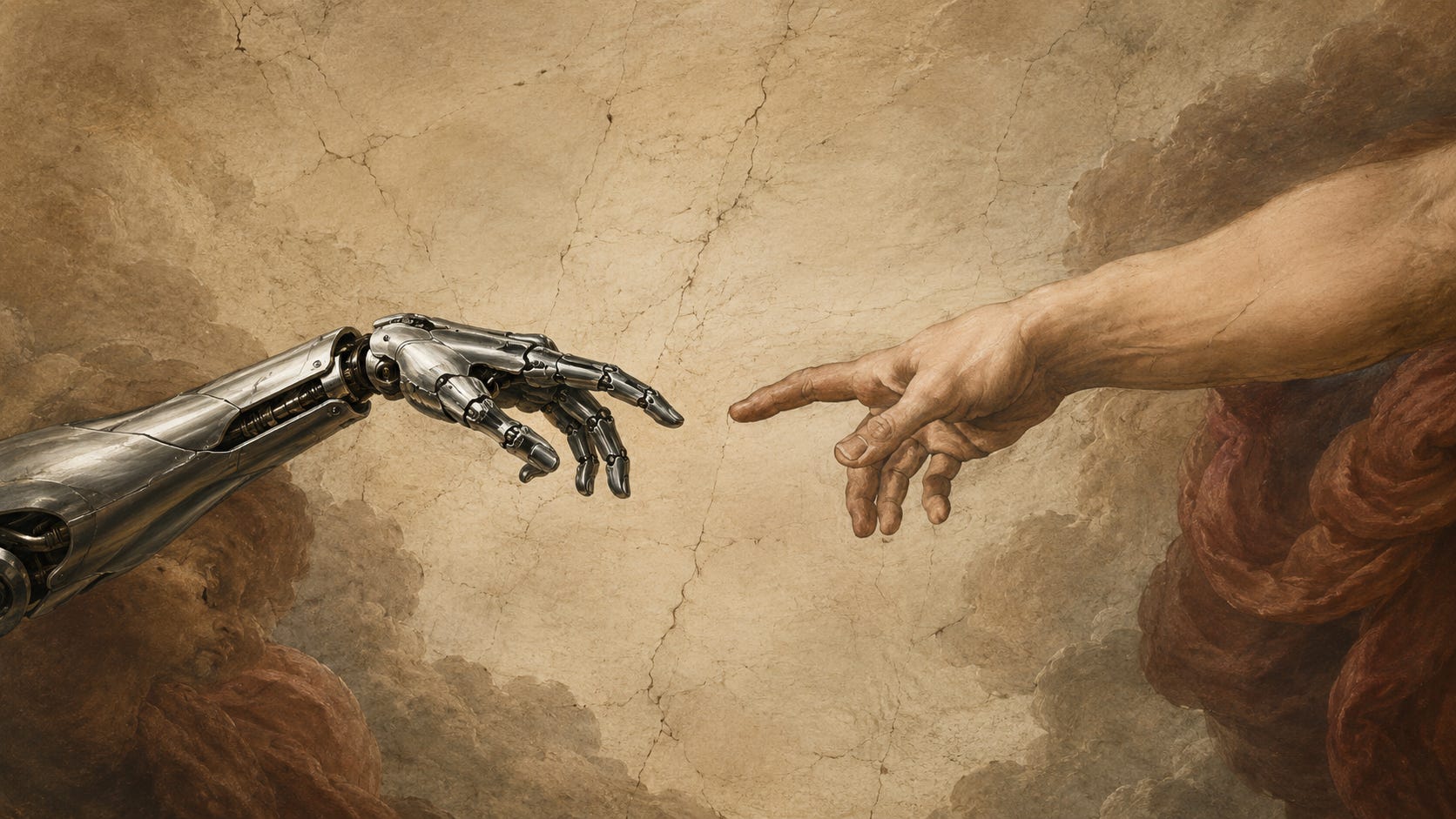
This intimate power is the central terror of Yuval Noah Harari’s Homo Deus. The book is often described as a work about artificial intelligence, biotechnology, and the future of humanity. That description is accurate, yet too small. Harari is examining what happens when humans acquire godlike tools while losing authority over the systems that interpret and shape them.
The book flows directly from Sapiens. In that earlier work, Harari argued that shared myths allowed one species to dominate the planet. Money, empires, religions, corporations, laws, and nations all depended on the human ability to believe in common stories. In Homo Deus, he turns from the past to the future and asks what this myth-making animal will seek after reducing the old emergencies of survival.
For most of history, human beings lived under three ancient threats: famine, plague, and war. These forces shaped politics, religion, family life, agriculture, trade, and imagination. A failed harvest could destroy a village. A disease could empty a city. A war could end a dynasty. Harari’s claim is that modern science and political organization weakened the absolute power of these threats, especially in the developed world, and opened the way for a new human agenda.
That agenda has three ambitions: immortality, happiness, and divine power.
The first ambition is immortality. Harari does not mean that every person will live forever in a simple sense. He means that modern medicine has started to treat death as a technical failure.
Older civilizations often treated death as fate, divine decree, or sacred limit. In Homer’s Iliad, Achilles weighs a short, glorious life of deeds against a long, obscure one. Undying fame (kleos) arrives through battle and story, not biological extension. Religious traditions placed eternity in the afterlife, i.e. judgment, paradise, or reunion with the divine, treating earthly death as a sacred boundary set by fate or God.
Harari watches modern medicine reframe death as a technical failure, e.g. cells that senesce, organs that fail, tumors that metastasize, hearts that stop. Projects like Alphabet’s Calico lab and telomere-targeting gene therapies treat it as an engineering problem. Brain-computer interfaces promise mind augmentation or upload. Death becomes optional; longevity a research program. The old fear of mortality, once forging meaning within limits, becomes a solvable challenge.
The second ambition is happiness. Ancient civilizations often tied eudaimonia or happiness to virtue, salvation, honor, contemplation, family, worship, or duty. Aristotle called the good life a life of formed excellence, lived across time and tested through action.
“Activity of the soul in accordance with virtue.”
That definition asks a person to become worthy of happiness through habit, discipline, courage, temperance, justice, and practical wisdom. Stoic thinkers such as Epictetus and Marcus Aurelius sharpened this further. They taught that human beings must learn the difference between what they control and what they suffer. The point was through discipline and inner command.
Modern life often treats happiness differently. It explains mood through chemistry, psychology, productivity, therapy, stimulation, and emotional regulation. Dopamine, serotonin, anxiety, trauma, attention, and desire become part of the public vocabulary. A person no longer asks only, “How should I live?” He also asks, “How can my mood be improved?”
That shift gives enormous authority to medicine, corporations, platforms, and governments. Whoever can shape attention, anxiety, pleasure, loneliness, desire, and mood can influence the inner life of a society. Social media already shows the pattern. Variable rewards, notifications, likes, short videos, and infinite scrolls train the mind to expect stimulation. The platform does not need to love or hate the user. It only needs to keep him engaged.
