

How to Walk Through a Cathedral
Why Most Visitors Miss the Real Experience

The first time I walked into the Duomo in Florence, I behaved exactly like every other tourist. I pushed through the doors with the crowd, stopped for a moment, looked up at Brunelleschi’s enormous dome, took a photograph, and kept moving.
For several minutes the experience felt strangely ordinary. The building was impressive, of course, but it felt distant, almost too large to grasp. Visitors moved in quiet streams across the marble floor. Cameras clicked. Guides whispered explanations to small groups.
Then something unexpected happened. I stopped near the center of the nave and simply listened. Somewhere near the altar a choir began to rehearse. The voices rose slowly into the enormous space beneath the dome. Instead of fading quickly, the sound expanded. It climbed the walls, circled under the vaults, and lingered in the air long after the singers stopped.
In that moment the cathedral suddenly made sense. The building was not simply meant to be seen. It was meant to be experienced slowly, with the body moving through space while light, sound, stone, and silence unfolded step by step.
Most visitors never discover this because they enter cathedrals in the wrong way. They rush inside before understanding what they are about to encounter.
The journey should begin outside.
Before you step through the doors of any cathedral, stand in front of the façade and look carefully. The exterior of the building was designed as a kind of introduction, preparing visitors for the world they were about to enter.
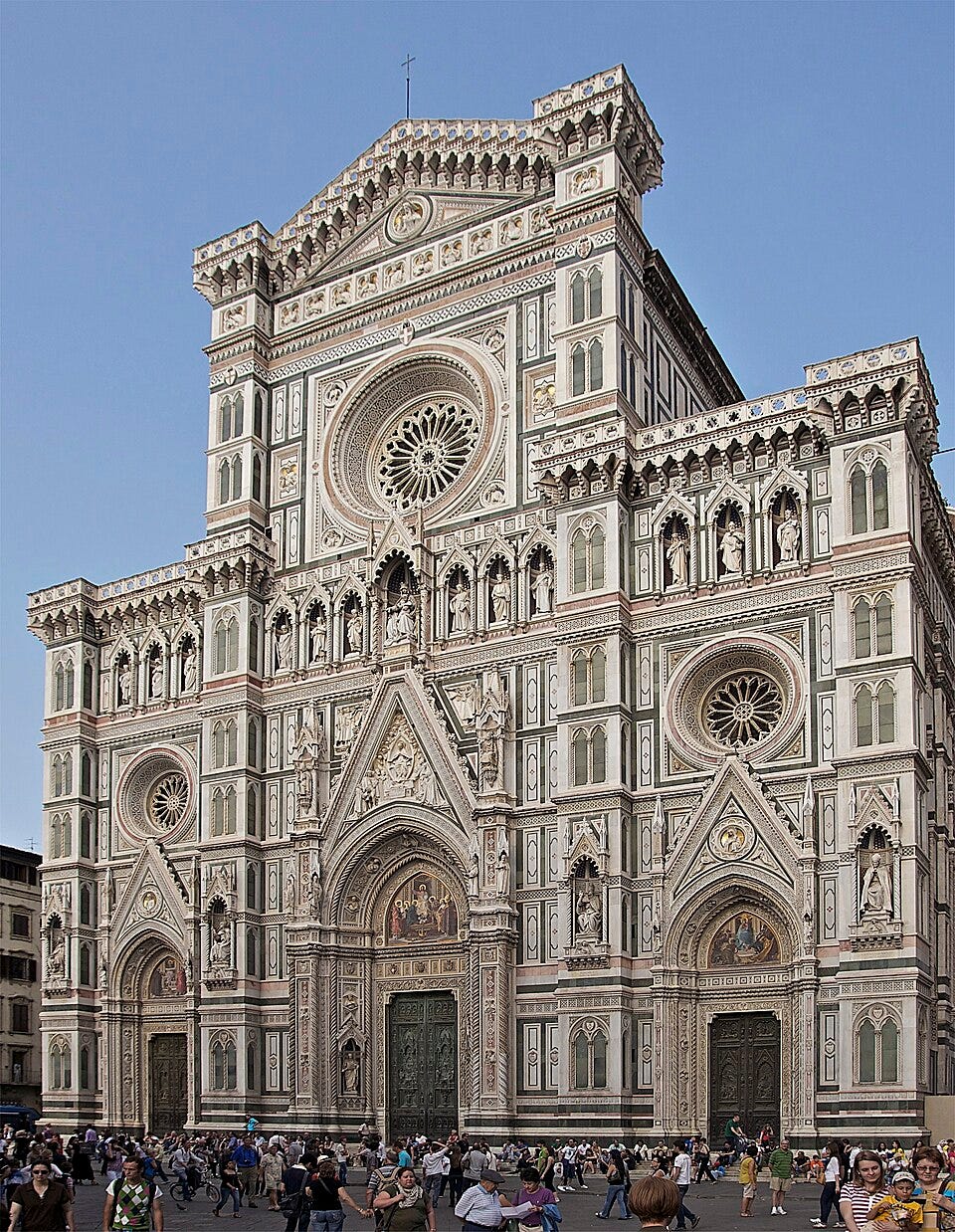
Florence reveals this beautifully. The façade of Santa Maria del Fiore is wrapped in panels of green, white, and pink marble arranged in precise geometric patterns. Statues of saints and prophets stand above the entrances. The entire surface feels like a monumental tapestry of stone. This decorative facade was not meant to overwhelm visitors. It was meant to slow them down.
Medieval cathedrals were approached deliberately. Pilgrims arriving from distant towns often spent time studying the sculptures and carvings before entering. The façade functioned almost like the opening page of a book.
French cathedrals demonstrate this idea on an even grander scale. At Reims Cathedral, where French kings were crowned for nearly a thousand years, the façade contains more than two thousand sculpted figures. Angels, saints, and biblical scenes fill the surface of the building like an enormous story carved in stone. Among them stands the famous “Smiling Angel,” whose calm expression has welcomed visitors for centuries. Standing in front of Reims, you realize the building is already communicating before you step inside.
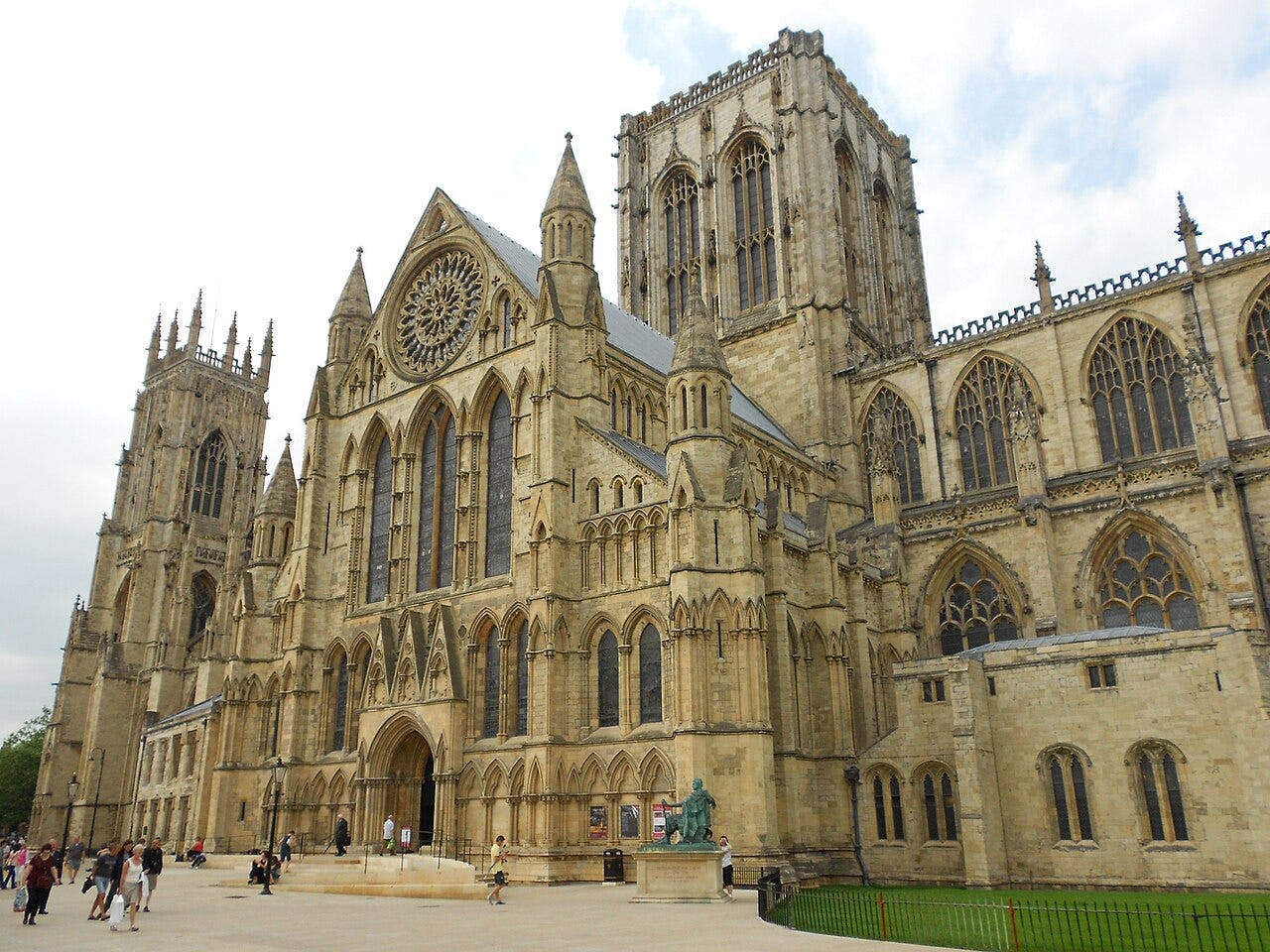
English cathedrals express the same principle through a different visual language. At York Minster the vast Gothic façade rises like a screen of towers, arches, and statues. Lincoln Cathedral once dominated the medieval skyline so completely that travelers could see it from miles away across the countryside.
The exterior announces that you are approaching something significant, something sacred. Only after observing the façade, should you cross the threshold.
When you step inside, the first lesson reveals itself immediately.
Height.
Cathedrals are designed to alter the way the body experiences space. The pillars rise like trees, the vaults stretch overhead, and the entire structure pulls your eyes upward before you even realize it.
Florence expresses this through Brunelleschi’s dome. Completed in 1436, it remains one of the greatest engineering achievements of the Renaissance. More than four million bricks arranged in a complex herringbone pattern rise above the cathedral, forming a structure that supports itself without the massive wooden scaffolding builders once believed was necessary. Standing beneath it, the human body suddenly feels small.
French Gothic architecture pushes this effect even further. At Amiens Cathedral the nave vaults rise more than forty meters above the floor, making it the tallest completed Gothic interior in France. The vertical lines of the columns lead the eye upward toward the ceiling, almost forcing visitors to tilt their heads back.
The architecture teaches you where to look.
Become a paid subscriber to continue reading…
The first lesson of a cathedral begins with the façade and the experience of height.
But once you begin moving deeper into the building, the cathedral reveals a much richer sequence of discoveries. Light, geometry, sculpture, music, and silence unfold one after another, transforming the building into a carefully designed journey through space and meaning.
The rest of this guide explains how to recognize those elements and why medieval builders believed they could shape the human imagination.
