

How Tolkien Turned World War I Into Myth

Before Tolkien sent Frodo into Mordor, he had watched young men vanish into the mud of the Somme.
J.R.R. Tolkien reached France in June 1916 as a twenty-four-year-old second lieutenant in the Lancashire Fusiliers. His battalion arrived near the Somme in rain and mud. On 14 July, two weeks into the great offensive, his unit went into action. By late October he had trench fever. On 8 November he was evacuated to England. The illness probably saved his life. By 1918, all but one of his close friends from the Tea Club and Barrovian Society were dead.
That grief never left him. It went into Middle-earth.
Tolkien never wrote a simple code for the First World War. He rejected allegorical readings with force because he wanted the story to breathe on its own terms. Still, the trenches entered his imagination at a level deeper than plot. The torn earth, stagnant water, bodies in the mud, long exhaustion, jokes made under pressure, and the loyalty that kept men walking when hope had almost disappeared all reappear in Middle-earth. They shape the landscapes and the friendships. Above all, they shape the burden carried by Frodo and the stubborn love shown by Sam.
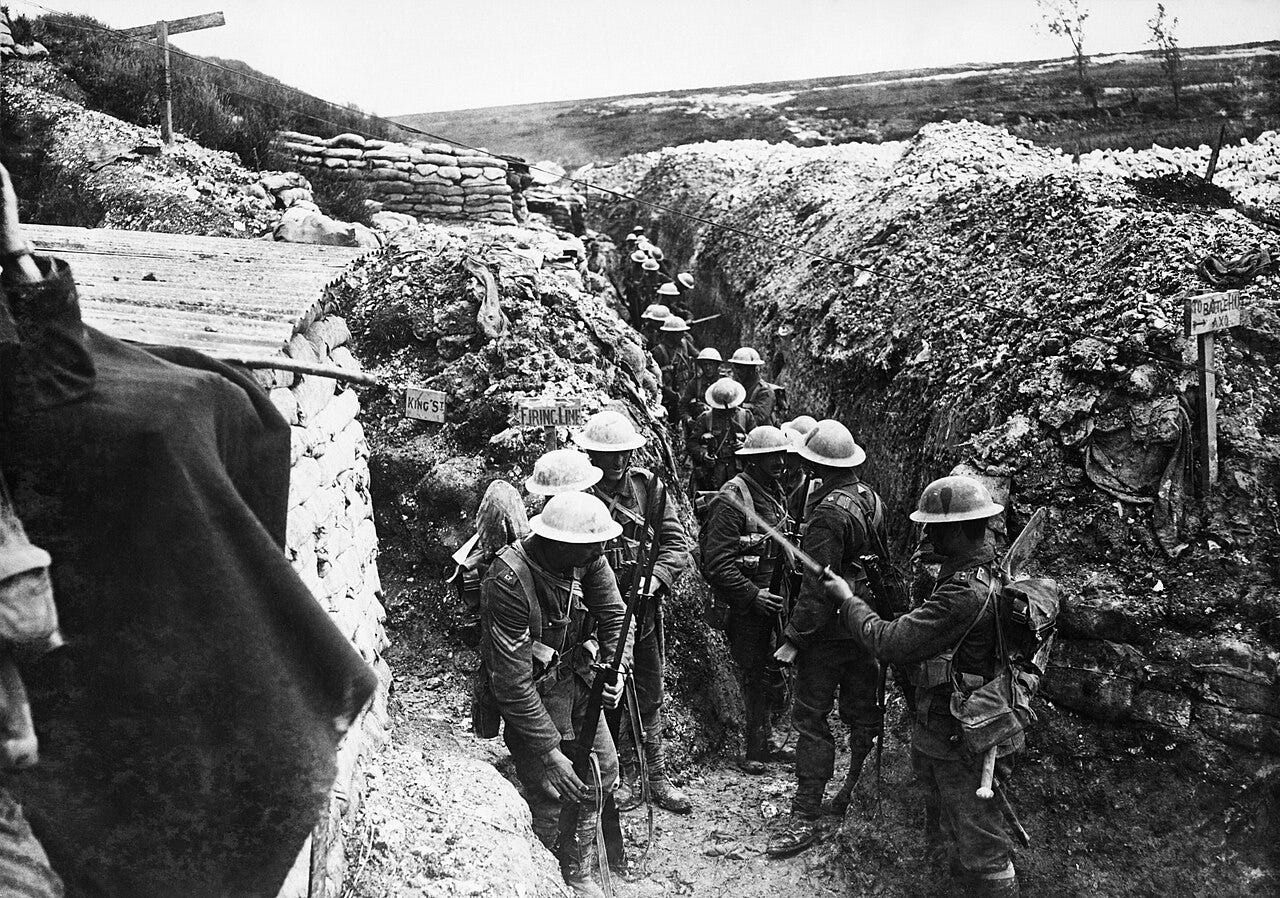
The clearest visual echo appears in the Dead Marshes. Frodo, Sam, and Gollum cross a sick landscape where dead faces stare up from the water. In a 1960 letter, Tolkien acknowledged that the marshes and the approaches to the Morannon “owe something to Northern France after the Battle of the Somme.” He immediately added that they owed more to the stories of William Morris, a 19th-century English writer and medievalist. Tolkien was transmuting memory through myth, and myth gave him a language large enough to hold both mud and meaning.
The Somme battlefield and the Dead Marshes share the same wounded quality. Nature itself seems violated. Water-filled craters reflect a broken sky. The living and the dead feel too close. Tolkien understood that some victories leave the victor permanently altered. By the end of his journey, Frodo can no longer clearly remember the Brandywine, Woody End, or the sound of the Water running through the mill at Hobbiton. The Ring’s corruption has crowded out the very images that once sustained him.
