


Passover begins with escape, but escape is only half the story. A people can leave bondage and still carry bondage in the mind. That is why Baruch Spinoza belongs at the end of this series. He was born in Amsterdam in 1632 to a Portuguese Jewish family that had escaped religious persecution and carried the memory of exile into a new life in the Dutch Republic. The world around him offered safety compared with Iberian persecution, but it also demanded loyalty, conformity, and caution.
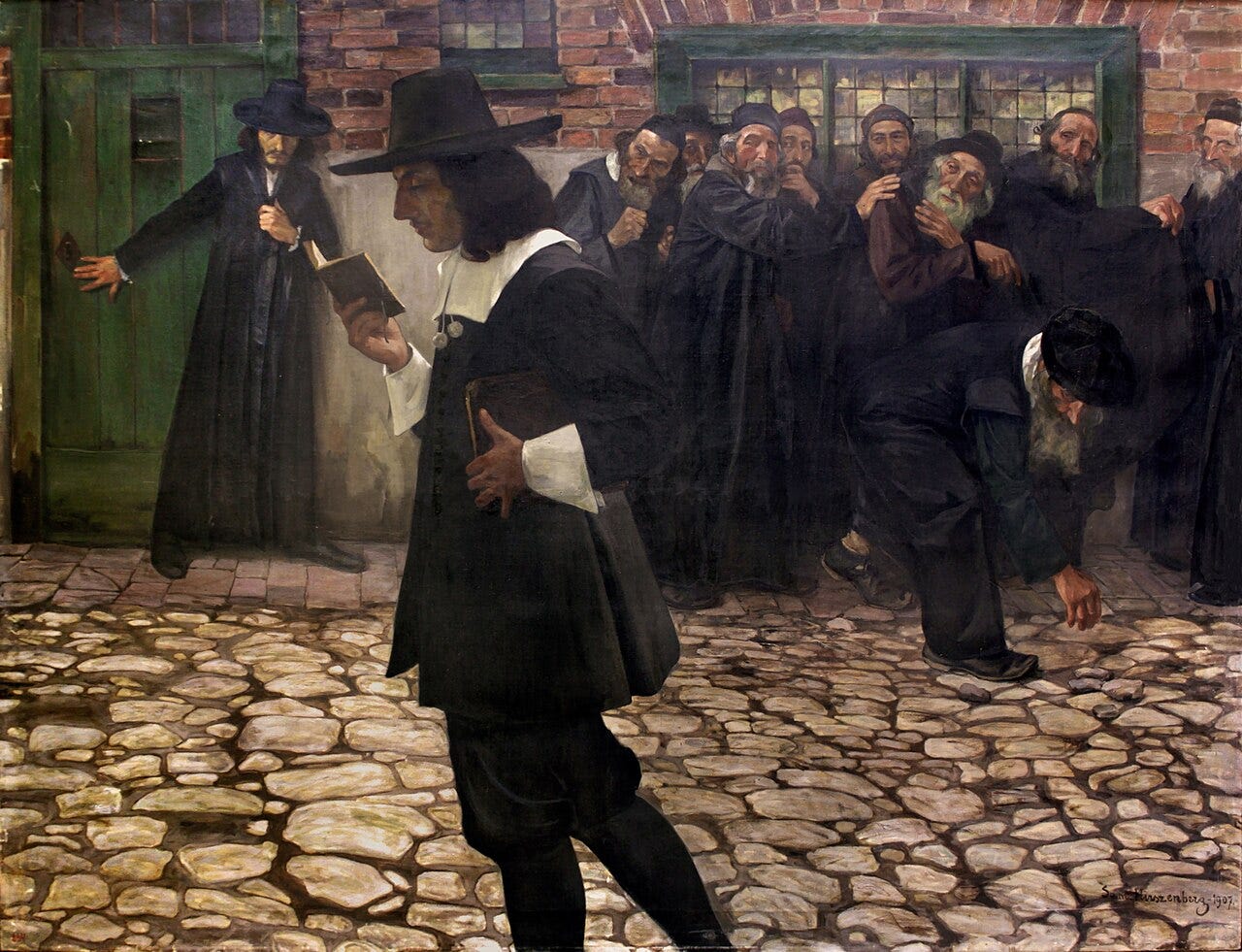
Spinoza’s own life broke sharply against those demands. In 1656, at only twenty-four, he was excommunicated by the Amsterdam synagogue for beliefs judged dangerous. Before that break became final, community leaders even tried to keep him outwardly compliant with a stipend. He refused. A fanatic later tried to kill him. He left, supported himself by grinding lenses, and devoted his life to thought. The Ethics was written by a man who had already learned that freedom is costly, and that public belonging can become another kind of prison when truth is made subordinate to fear.
What makes Spinoza so useful for Passover is that he pushes the story inward. The Pharaoh he exposes is both political and psychological. In the Ethics, his first great claim is that there is one reality, one infinite substance, which he calls God or Nature. The world is not a collection of isolated egos with their own private truths. Everything exists within a larger order.
His second claim is just as sharp. Human beings imagine themselves free because they are conscious of their desires but ignorant of the causes that produce them. He says that feeling something strongly does not prove mastery, depth, or moral authority. Much of what passes for freedom is only unexamined impulse. A person says, “I chose this,” while remaining blind to appetite, envy, imitation, fear, resentment, and habit. Spinoza’s starting point is severe, but it is honest. He refuses to call a person free simply because that person can move. Freedom begins much later than movement.
His third major idea is that every thing tries to keep itself going. A plant reaches for sunlight. An animal looks for food and safety. A person tries to protect his life, health, dignity, and place in the world. Spinoza thinks this is not a random habit. It is built into what each thing is. Human beings do it too. We move toward what helps us stay alive, remain stable, and grow stronger.
Then Spinoza adds a fourth point that feels almost unbearable in its accuracy: we do not desire things because we have judged them good. We judge them good because we desire them. That sentence explains more about moral confusion and cultural decline than many shelves of modern commentary. A society loses taste when it reverses the order of judgment. It stops measuring desire by a standard and starts calling desire the standard. Once that happens, craving begins to pass for authenticity, appetite for identity, and intensity for truth. Spinoza saw that trap long before modern consumer culture perfected it. His warning belongs directly to any age that cannot rank pleasures, cannot restrain impulses, and cannot distinguish between what flatters life in the moment and what strengthens it over time. Taste collapses when desire becomes sovereign.
The fifth major teaching in the Ethics is Spinoza’s view of the passions. By passions, he means emotions like anger, envy, fear, pride, jealousy, and false hope that can take hold of a person and drive his actions. Spinoza wanted to study these emotions carefully, not treat them as mysteries. He believed that when a person is ruled by passion, he is not fully in control of himself. He is being pushed by feelings whose causes he does not clearly understand. That is what bondage means for Spinoza. It is an inner kind of slavery. He does not say emotion is bad or that human beings should become cold machines. His point is that confused emotions make us easier to control, easier to mislead, and less able to think clearly. That idea feels very modern. Public life often runs on outrage, fear, impulse, and display. Spinoza’s answer is simple but demanding: understand what is moving you. Once you see why an emotion has taken hold of you, its power begins to weaken.
His sixth and highest teaching is freedom itself. Freedom for Spinoza does not mean the right to do whatever impulse suggests. It means living from adequate ideas rather than being pushed around by inadequate ones. It means greater self-possession, greater lucidity, greater inner form. As understanding grows, the person moves toward fortitude, a word Spinoza loads with courage, steadiness, and generosity. The mature person no longer feeds on flattery or panic. He gains room to act rather than merely react. He becomes harder to deceive, including by himself.
In the later parts of the Ethics, Spinoza says the highest kind of freedom comes when a person understands reality more clearly and stops seeing himself as the center of everything. He calls this the intellectual love of God. What he means is a deep peace that comes from seeing life truthfully and understanding your place in a larger order. This changes how a person lives. He becomes less ruled by panic, pride, and the need to please others. He also becomes easier to live with, because he no longer needs to control every situation or prove himself all the time. Spinoza tried to live this way himself. He turned down honors that could limit his independence, refused the Heidelberg professorship, and did not want the Ethics published as a monument to his own name. His life was meant to match his philosophy.
That is the lesson I take from Spinoza at the end of Passover. Escape is not the same as freedom. A people can cross the sea and still carry slavery inside them. A man can praise freedom while living as a servant of appetite, ego, and fear. Spinoza forces the real question: once the chains are gone, who is in control of your life?
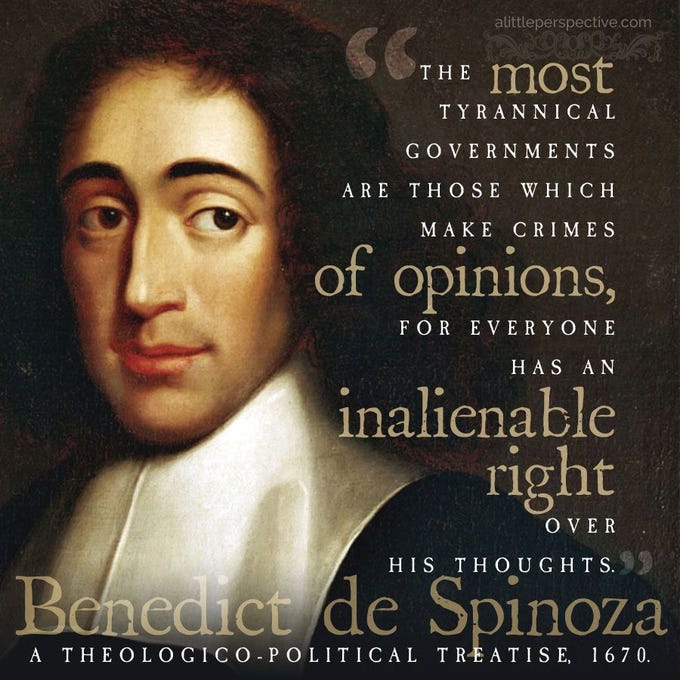
His answer is blunt. Freedom means ruling yourself. It means refusing to let every desire become a command. It means learning to tell the difference between pleasure and good, between impulse and judgment, between noise and truth. Civilizations survive when they teach that discipline. They decay when they treat every craving as identity and every impulse as something holy. Spinoza leaves behind a harder and better vision of freedom: a person who sees clearly, chooses carefully, and does not live at the mercy of his passions. Passover remembers deliverance from outer bondage. Spinoza reminds us that inner bondage can last much longer.
Passover began with an escape, but this series has been about what comes after escape. Moses, Hillel, Rabbi Akiva, Saadia Gaon, Judah Halevi, Maimonides, and Spinoza all understood the same truth: liberation alone does not save a people. Without memory, discipline, truth, and self-command, freedom rots from within. That is the lasting force of Passover. It is not only the story of chains being broken. It is the story of a people being asked whether they are capable of becoming worthy of freedom.

I love this!
Bondage of false freedom.
Thank you.