


A civilization reveals its standards by what it builds, what it destroys, and what it learns to tolerate. Its architecture reveals the moral condition of its people.
That is the hard claim behind John Ruskin’s The Seven Lamps of Architecture. Published in 1849, the book appeared during the high confidence of Victorian Britain, when railways spread across the country, factories changed labor, iron and glass promised a new architectural age, and London was growing into the capital of an industrial empire. Ruskin looked at this world and saw a civilization gaining technical power while losing the moral habits that once made architecture worthy of love. The Seven Lamps named seven principles that good architecture must serve: Sacrifice, Truth, Power, Beauty, Life, Memory, and Obedience.
“If men lived like men indeed, their houses would be temples.”
John Ruskin
Ruskin had written a judgment textbook about buildings. His examples came from the architecture he knew and loved: northern French Gothic, Venetian Gothic, Tuscan and Venetian Romanesque, and the medieval churches whose stones still carried the marks of worship, craft, and time. He had little patience for buildings that imitated nobility while hiding cheapness beneath surfaces. He opposed the habit of treating architecture as a matter of fashion, because fashion belongs to the present moment while architecture to him shaped memory across generations.
His first lamp, Sacrifice, begins with a demanding idea: a building becomes architecture when people give more than utility requires. A wall can hold weight while a roof can keep rain out. Ruskin’s point begins after those needs are met. Why carve a stone capital at the top of a column when most people will never inspect it closely? Why fill a cathedral with stained glass, sculpture, and patterned stone when a plain structure could hold the same congregation? For Ruskin, the answer was sacrifice. The extra labor proved that the builders believed the structure answered to more than comfort.
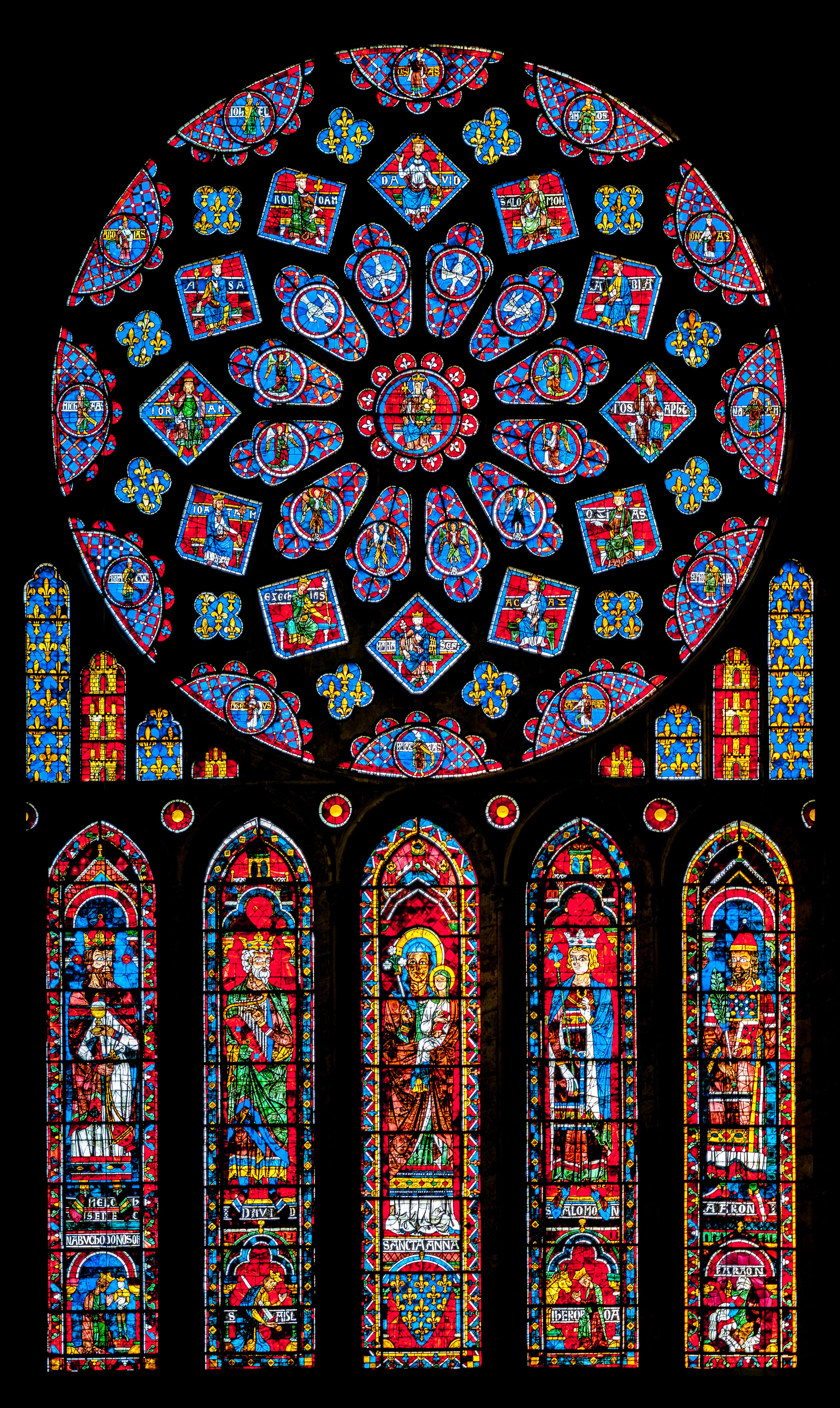
Chartres Cathedral makes this argument visible. Its medieval stained glass does not simply decorate the church. It records a society that brought theology, work, money, and public memory into one structure. The cathedral’s windows include scenes funded by nobles, guilds, confraternities, and trades. Bakers, shoemakers, furriers, drapers, masons, stonecutters, wine-growers, carpenters, and water-carriers appear in the lower panels. Their trades funded sacred images, and their labor entered the church’s visual memory. That is sacrifice in Ruskin’s sense: ordinary work lifted into a shared act of devotion.
Ruskin’s idea cannot be reduced to expense. A billionaire’s tower can cost more than a chapel and still carry less moral seriousness. Sacrifice concerns what a society chooses to honor with effort. At Chartres, tradesmen paid for glass that outlived them. At Amiens, builders raised one of the great achievements of High Gothic architecture in the thirteenth century, with prodigious sculpture and a vast interior made to discipline the eye upward. UNESCO notes that Amiens Cathedral was mainly built between 1220 and 1288 and became a major influence on later Gothic architecture. That matters because Ruskin’s sacrifice depends on duration. It asks a generation to spend itself on something it will not fully possess.
The second lamp, Truth, cuts even harder. Ruskin hated architectural deceit because he believed buildings teach people how to see. A false material is not a harmless trick. A fake stone surface hiding cheap brick trains the public to accept appearance without substance. While a painted vault pretending to be carved teaches the eye to accept imitation as achievement. Ruskin wanted buildings to declare their materials honestly and show how they stood. The serious Gothic Revival made “truth to materials” and honest construction central parts of its argument.
This principle speaks directly to modern buildings covered in veneers, panels, and simulated finishes. A lobby can look expensive while depending on materials designed to imitate other materials. A luxury apartment can sell the image of permanence while using thin cladding that will stain, loosen, or date quickly. Ruskin would have seen the problem at once. The issue begins with materials but ends with character. When public space becomes comfortable with false surfaces, a culture becomes comfortable with false value.
For paid subscribers: the rest of this essay follows Ruskin into the real buildings, carvings, windows, stones, and preservation fights behind the seven lamps. The question now becomes harder: what did Ruskin actually see when he looked at architecture, and why did those examples convince him that buildings reveal the moral condition of a people?
