

Secular Law Doesn’t Exist
Article 4 of The Arc of Belief and Meaning

Does law come from Man or from God?
Every legal system we live under today began with a belief that order comes from something higher than human power. Long before courts and constitutions, people thought law came from God, the gods, or a moral force above kings and mobs.
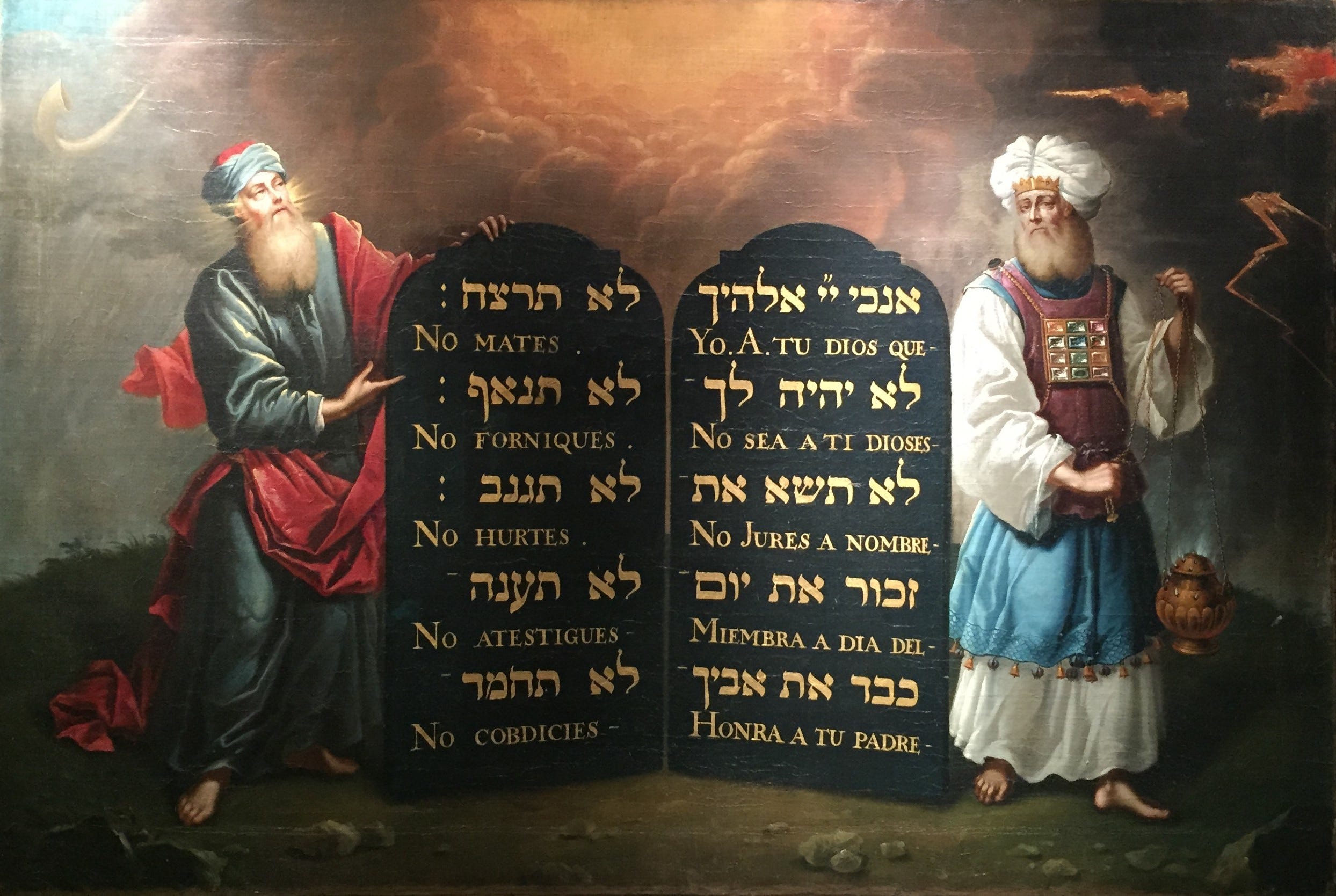
Hammurabi carved law into stone. Moses carried it down a mountain. Jesus moved it into the human heart. The Quran built it into daily life. Our idea of law grew out of sacred stories.
In this article, I trace how every major idea behind modern law was first born inside religion and myth. And even now, when we say law is secular, we still argue using moral ideas we inherited from religion. That is the truth we rarely admit.
Human Rights Are Sacred Law in Disguise
Modern law claims human rights are self-evident. That every person has inherent dignity. That all humans are equal before the law. That no one may be treated as property or expendable life. None of that comes from science. Nature does not assign dignity. Evolution does not produce moral worth. Biology does not explain why a human life should be treated as sacred rather than useful. Those ideas did not arise from atoms. They arose from belief.
Long before the Enlightenment, civilizations grounded human worth in sacred order. In Egypt, a person’s heart was weighed after death. In Hindu thought, karma made every action morally meaningful across lifetimes. In Confucianism, humans were seen as morally cultivable beings with inherent worth. In Stoicism, all humans shared participation in the Logos. In the Abrahamic traditions, humans carried divine imprint. Across cultures, dignity was assumed to exist because reality itself was moral.
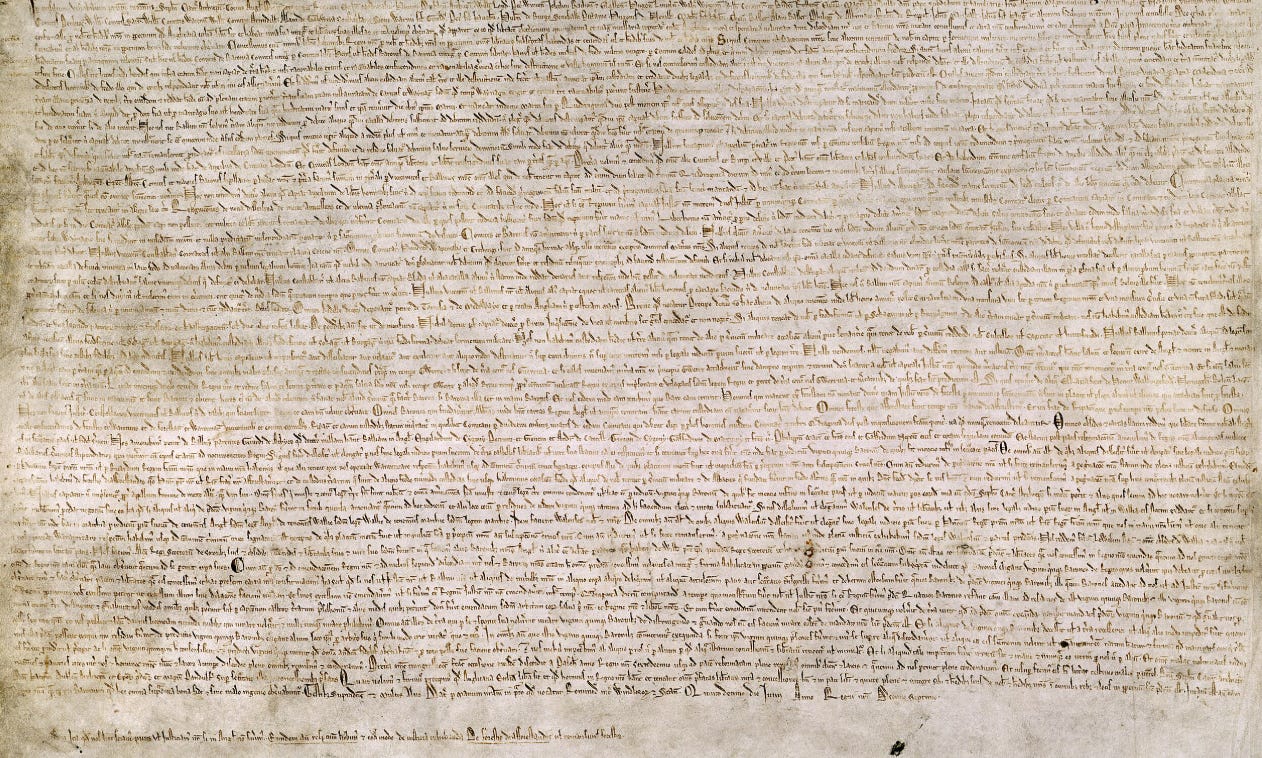
The Magna Carta shows how this sacred logic entered legal form. It opens by placing England under God. It guarantees the freedom of the Church before it protects the rights of nobles. It assumes the king is bound by a higher law he did not create. That idea came from sacred authority. Modern human rights law keeps the structure and drops the theology.
It still speaks of “inherent dignity” and “inalienable rights,” but offers no secular explanation for why those things exist. Without sacred worth, rights become political favors, granted and revoked by states. The Universal Declaration of Human Rights only makes sense if humans are more than material objects. It is sacred law wearing legal language.
To make that truth visible, not theoretical, we need to look at what every civilization has always criminalized. When you strip away legal jargon and modern categories, all crime across history falls into the same five moral types. And every one of them started as sacred law.
Crimes of Violence
This is harm to the body or to life itself. Murder, assault, rape, kidnapping, and torture. These are the oldest crimes in human history. In ancient Egypt, violence was wrong because it broke the order of the universe. Egyptian law was built on a sacred idea called maat, which meant truth, balance, and justice. The gods were believed to have established maat at the beginning of time, and society stayed stable only as long as people lived in harmony with it. To commit murder or assault was not just a crime against a person. It was a rebellion against the structure of reality itself.
Law existed to restore maat on earth. The king was not just a ruler. He was a god-king, the son of the sun god, charged with keeping maat alive in society. His laws were believed to be the will of the creator god made human. Judges were called “priests of Maat” and wore symbols of the goddess to mark their office. Courts were moral spaces, not technical ones. Even the gods, in Egyptian myth, had to appear before a court to settle disputes. Violence, then, was a sacred violation, not just a legal one.
Modern law still treats murder as the highest crime. We just no longer say why.
Crimes of Theft and Property
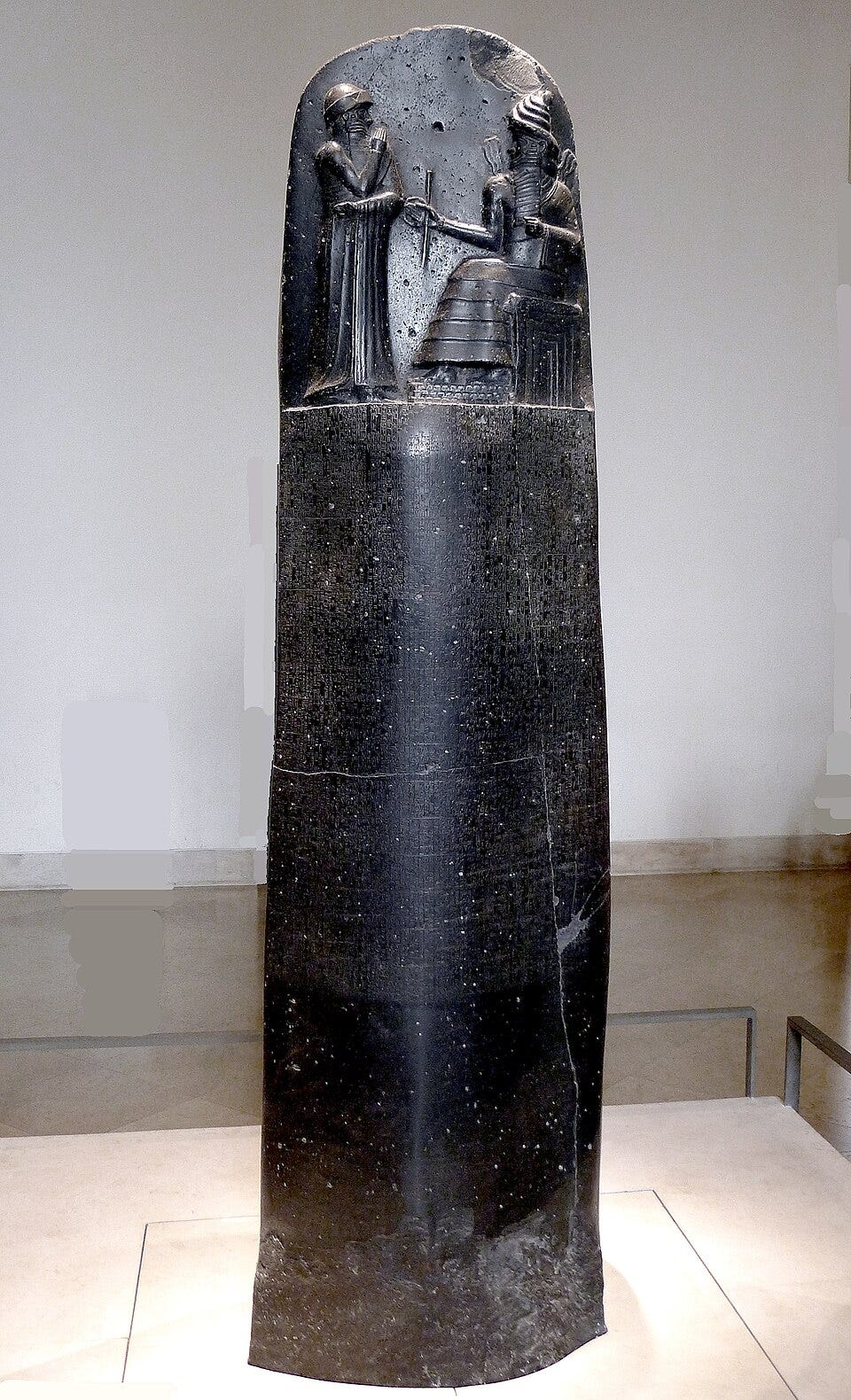
This is taking what isn’t yours. Theft. Fraud. Burglary. Embezzlement. Robbery. Property damage. These crimes appear wherever humans built stable societies. In ancient Babylon, theft was treated as a serious moral offense. Under the Code of Hammurabi, stealing from a palace or a temple was punished by death. Selling or receiving stolen goods could also bring the death penalty. Ordinary theft demanded heavy repayment. If a man stole from the state or a temple, he repaid thirty times the value. If he stole from a private citizen, he repaid ten times. If he could not pay, he was executed. Theft was not treated as a small economic problem. It was treated as a threat to social order.
Hammurabi did not claim to invent these laws. His code opens with him receiving authority from the sun-god. He says the gods chose him to bring justice and stop the strong from oppressing the weak. Property mattered because order mattered. Stealing was breaking trust and disrupting the moral structure of society.
Modern law still treats theft and fraud as crimes because ownership, promises, and trust are treated as morally real. That logic did not come from markets. It came from sacred law, carved into stone long before it was written into contracts.
If secular law truly existed, this is where the story would end. Violence and theft could be explained as practical rules for social stability. But the deeper categories of crime make no sense unless law is still acting as a moral and sacred authority.
If you want to see why modern law still runs on ancient moral logic, continue reading.
