

Seven Ways to Rebuild Your Local Community
The future of society begins on your street.

Every civilization eventually confronts a simple question: who will take responsibility for the street, the school, the park, the market, and the people closest to home?
Modern life has given us access to events across the world while steadily reducing our contact with the people living nearby. We can follow an election on another continent, argue about national politics throughout the day, and order almost anything without speaking to another person. Yet many people could not name the family living two doors away.
The consequences reach far beyond loneliness. The World Health Organization reported in 2025 that one in six people worldwide experiences loneliness and linked it to more than 871,000 deaths annually. The problem affects every age group, with especially high rates among teenagers, young adults, and people in lower-income countries.
In the United States, the share of people who socialized or communicated with others on an average day fell from 38 percent in 2015 to 30 percent in 2025, according to the Bureau of Labor Statistics. Over the same period, people spent more time playing games or using computers for leisure.
A society pays a price when daily human contact disappears. Trust weakens because people increasingly encounter one another through headlines, political categories, and social media disputes. Problems that could have been addressed through a conversation become complaints directed at distant institutions. Streets become collections of private homes rather than shared places with a common life.
Yet the desire to reconnect remains alive. Between September 2022 and September 2023, more than 75.7 million Americans volunteered through an organization. During the same period, 54.2 percent helped neighbors informally by running errands, lending tools, house-sitting, or exchanging other favors, up from 51.7 percent in 2019.
The value of local participation is also being recognized internationally. As of June 2023, the World Bank supported more than 350 community-driven or locally led development projects across 98 countries. These programs reflect a growing recognition that people who live with a problem often understand its causes and possible solutions better than distant officials.
The recovery of community begins when people regain the habit of participation.
Why Local Involvement Matters
Throughout history, communities have depended on institutions that brought people into regular contact: markets, places of worship, public squares, libraries, schools, workshops, festivals, clubs, and local councils. These spaces helped people develop relationships across differences in age, occupation, income, and background.
Their value extends into public health. The U.S. Surgeon General’s advisory on social connection found that poor social relationships are associated with a 29 percent higher risk of heart disease and a 32 percent higher risk of stroke. A broad review of 148 studies found that stronger social connection increased the odds of survival by 50 percent. The Surgeon General has compared the mortality risk associated with insufficient social connection to smoking up to 15 cigarettes a day.
Local participation also restores a sense of agency. The OECD surveyed people in 30 countries and found a major trust gap. Among those who believed they had a voice in government decisions, 69 percent expressed trust in their national government. Among those who felt they had no say, only 22 percent did.
People develop trust partly through the experience of being heard and seeing their participation produce visible results. Local institutions provide more opportunities for that experience because the distance between action and outcome is smaller. A resident can attend a planning meeting, organize support for a library program, help restore a neglected park, or persuade a school to address a problem.
Community participation also helps institutions understand local conditions. World Bank research shows that well-designed local participation can improve basic services and, in some circumstances, economic outcomes. Success still depends on honest leadership, capable institutions, and careful implementation, but local knowledge gives public decisions a stronger connection to the people they affect.
Rebuilding community therefore carries personal, civic, and cultural value. It improves individual lives while preserving the habits that allow free and resilient societies to function.
The following seven steps offer practical ways to rebuild local community, beginning with the people and places closest to you.
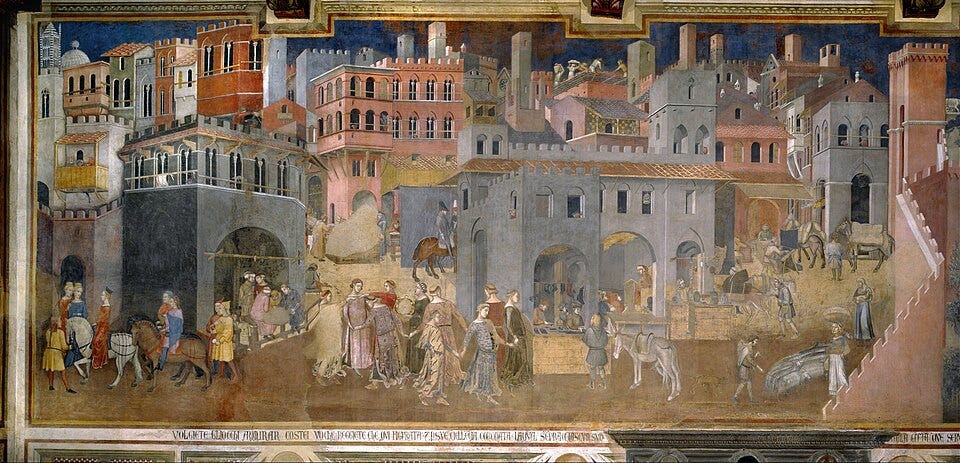
1. Begin by Knowing Your Neighbors
Strong communities usually begin with repeated, ordinary contact.
Learn the names of the people living near you. Greet them at the mailbox, entrance, elevator, market, or sidewalk. Check on an elderly neighbor who has disappeared from view. Offer to collect someone’s mail, carry groceries, water plants, or watch a child for a few minutes.
These actions may appear small, but trust rarely begins with a grand project. It grows when people repeatedly demonstrate that they notice one another.
A neighborhood gathering can deepen those relationships. Organize a shared meal, cleanup, walking group, weekend coffee, or seasonal event. Keep the first gathering simple. Its purpose is to give people a reason to meet again.
Even a monthly porch coffee can create a regular place for neighbors to exchange information, offer help, and gradually build trust. More than half of Americans already assist neighbors informally. A community begins to form when those occasional favors become lasting relationships.
