

The First Lesson of Civilization Was Served at the Table
How manners taught humans hierarchy, restraint, generosity, and belonging?

Before a child learned law, theology, or politics, he learned who received the first piece of bread.
That lesson could happen in a palace, a farmhouse, a monastery, a Chinese banquet hall, a Bedouin tent, a Romanian kitchen, or a medieval great hall lit by rushlights. The food changed. The table changed. The lesson did not. Sit here. Wait your turn. Serve the guest. Do not grab. Do not insult the host. Do not shame the cook. Do not take the best piece unless it is offered. Do not speak over the elder. Do not leave before the ritual is complete. Long before civilization trained people through courts, armies, schools, and parliaments, it trained them through meals. Before manners became etiquette, they were a way to keep hunger from turning into conflict.
This is why table manners matter more than modern people think. They were never just small rules for polite company. They were daily rehearsals in how to live with others. Every meal carried a hidden curriculum. A person learned where he stood, what he owed, how much he could take, when to speak, when to yield, and how to turn food into fellowship instead of conflict. Civilization begins when the hungry body learns it cannot simply lunge at what it wants.
The first lesson of the table was place. Before anyone tasted the food, the room had already spoken. A person knew his rank by where he was asked to sit, how close he was to the host, whether he faced the room or sat with his back exposed, whether he reached the salt, whether he was served from the first platter or waited for what remained. Dining codes turned status into geography.
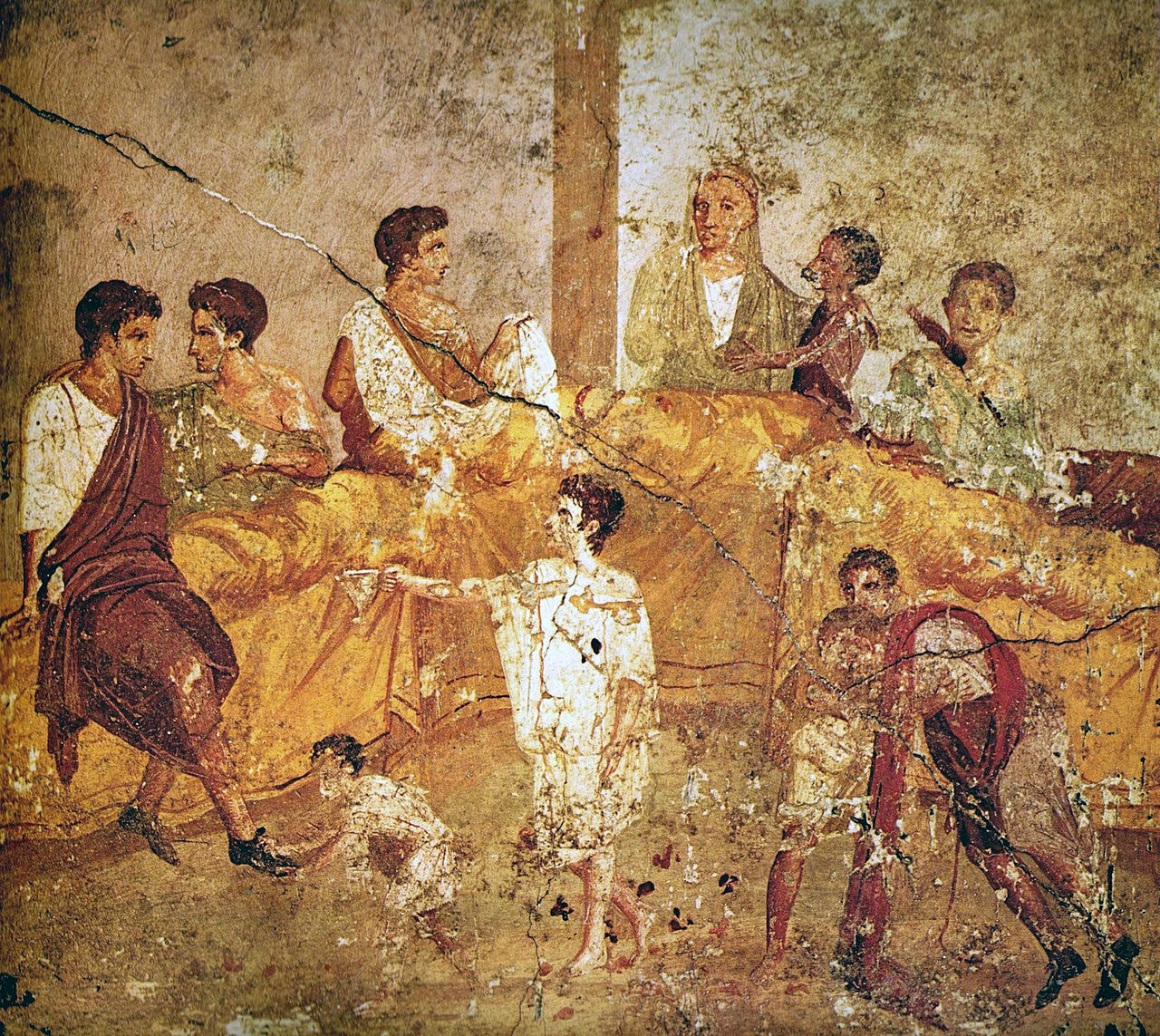
In a Roman triclinium, rank was built into the furniture. The formal dining room usually had three couches arranged around a small central table, leaving one side open so servants could enter with food and wine. The couches had names: the highest couch, the middle couch, and the lowest couch. Guests reclined rather than sat upright, and the best positions were not random. A man’s place showed his relationship to the host, his social importance, and the honor being given to him that evening. The Roman dinner party looked relaxed from a distance: wine, conversation, garlands, lamps, servants moving through the room. Yet everybody in that room had been placed. The banquet was a social diagram with cushions.
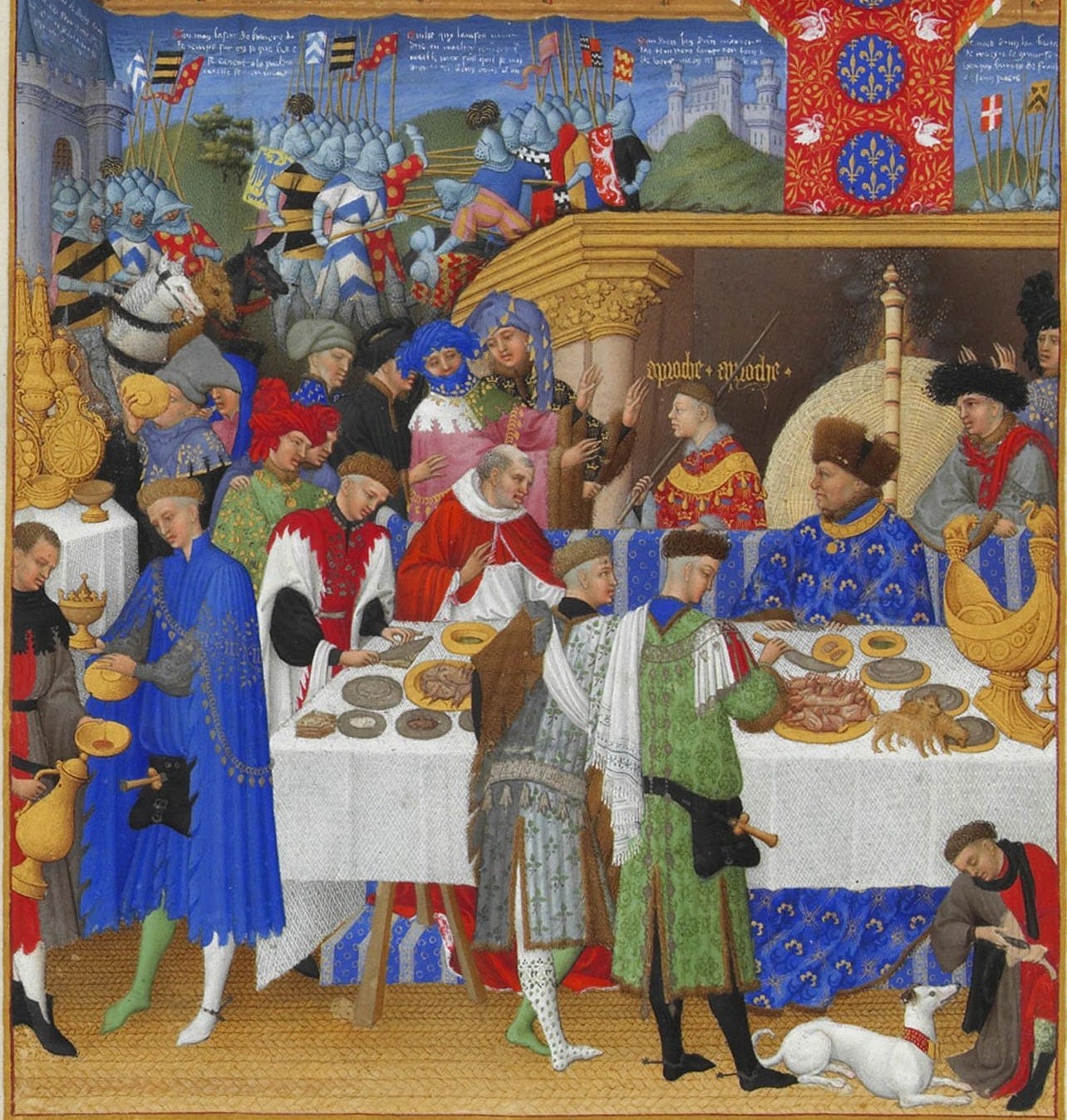
A medieval great hall made the lesson more visible. The lord, his family, and the most important guests sat at the high table on a raised dais at the upper end of the hall. They did not sit scattered among everyone else. They faced outward, looking down the room. Below them sat retainers, household officers, lower-ranking guests, servants, and dependents at long tables running through the hall. The lord’s seat was a statement. In many halls, he sat near the fire, the best light, the best dishes, and the salt. The phrase “above the salt” came from this world, where important guests sat near the expensive salt cellar, while lesser guests sat farther down the hall, “below the salt.” Rank had a taste. It decided who sat near warmth, who reached the seasoning, who shared dishes with whom, and who waited while better portions moved elsewhere.
Chinese dining culture trained the same instinct with different furniture. The round table might suggest equality, but the seating order still carried rank. In ancient Chinese seating customs, the seat to the left was treated as the most honorable, followed by the seat opposite, while the seat on the host’s right held the third level of importance. Guests were not expected to drift into any chair they liked. They were guided into place after everyone arrived. The meal began before the chopsticks moved. It began when the host decided who deserved honor, who represented seniority, and who needed to be placed where the room could recognize them.
