

The Longing Never Goes Away
Twelfth Day from C. S. Lewis (Twelve Days of Christmas Gift Series)

Before we begin, a simple wish. Merry Christmas to you and to those you’re sharing this season with. Whether today feels full or quiet, joyful or heavy, Christmas arrives the same way it always has. An invitation to pause and pay attention. Over the past twelve days, this series has tried to do just that.
This series began with a simple problem: most people don’t know who they are anymore. That’s why it started with Paul the Apostle. Paul’s gift was a new humanity. That it is never too late to change. He taught that your worth doesn’t come from winning, status, or approval. You don’t earn your value. You step into it. That idea alone has changed more lives than most modern self-help books ever will.
Next came Origen of Alexandria, who taught us how to slow down. His gift was spiritual interpretation. Origen believed that life has layers. If you only read the surface, you miss the meaning. He warned against rushing, skimming, and taking everything at face value. In a world addicted to speed, Origen teaches patience.
Then came Athanasius. His gift was courage against consensus. Almost everyone around him said he was wrong. Powerful people told him to back down. He refused. Athanasius shows that truth doesn’t depend on votes. Sometimes being right means standing alone.
Gregory of Nyssa followed and challenged another lie we tell ourselves. That growth ends. His gift was endless ascent. Gregory believed that becoming better never stops. You don’t “arrive.” You keep moving. That matters when people feel stuck or discouraged.
Augustine then turned the focus inward. His gift was the inner life. He taught that what you love shapes who you become. If you love shallow things, your life becomes shallow. If you love deeper things, your life deepens too. It’s simple. And it’s hard to escape.
Maximus the Confessor raised the stakes. His gift was integrity without compromise. He lived what he believed, even when it cost him his safety and his voice. Maximus shows that beliefs aren’t real unless they change how you act under pressure.
Anselm of Canterbury came next. His gift was faith seeking understanding. He believed that faith and thinking belong together. Asking questions doesn’t weaken belief. It strengthens it. Anselm gives people permission to think without fear.
Hildegard of Bingen followed with a surprise. Her gift was wonder as wisdom. She believed wonder keeps the soul alive. When life becomes dull and mechanical, wonder reminds us that reality is bigger than our routines.
Thomas Aquinas then restored trust in reason. His gift was reason as devotion. Thinking clearly was not cold or arrogant. For Aquinas, it was a way of honoring truth. Clear thinking was an act of respect.
Teresa of Ávila came near the end for a reason. Her gift was the inner castle. She taught that real change begins inside. If the inner life is chaotic, everything else falls apart. Silence matters. Attention matters.
Then came Chesterton. His gift was joyful sanity. He showed that cynicism isn’t wisdom. Joy can be serious. Seeing the world clearly doesn’t mean seeing it darkly.
And after all of this, one question still remains.
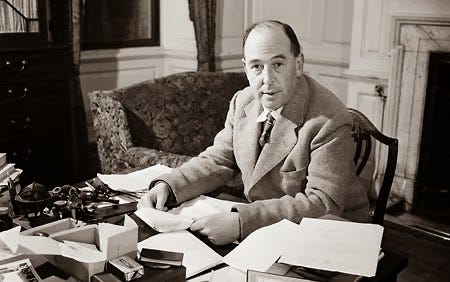
If life is ordered better, thinking is clearer, and the inner world is steadier, why does the longing not go away?
That lingering question is the reason C. S. Lewis closes the series. His gift is longing for eternity. And so, we come to Day 12 of the 12 Gifts of Christian Theology.
Lewis starts where most people feel confused but rarely stop to think. Even when life is good, something still feels missing. You can have friends, work you enjoy, moments of happiness, and still feel a quiet ache underneath it all. Lewis didn’t try to explain that ache away. He took it seriously.
For a long time, Lewis thought that longing was a mistake. He assumed it was just emotion or imagination. But the more he paid attention, the stranger it became. Hunger points to food. Thirst points to water. Tiredness points to rest. Every deep desire has something real on the other end of it. So, Lewis asked a dangerous question. What if this longing points to something real too?
Lewis’s answer was simple. If nothing in this world fully satisfies us, maybe we weren’t made for this world alone. That doesn’t mean the world is bad. Lewis loved ordinary life. Friendship. Laughter. Beauty. But he warned against asking these things to give us what they cannot. When we turn good things into ultimate things, they collapse under the weight.
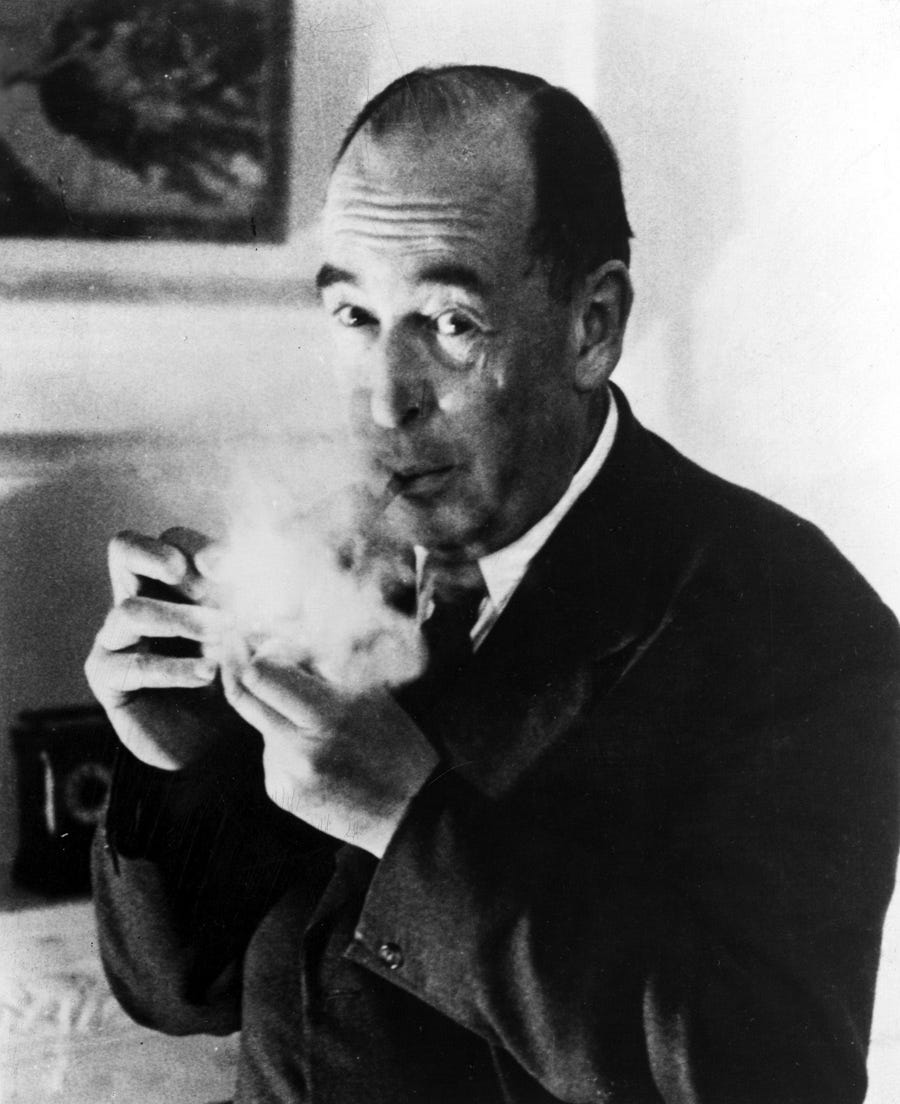
In The Four Loves, Lewis shows how even love can break us if we demand too much from it. In The Great Divorce, he imagines people clinging to small comforts instead of stepping into something greater. In The Screwtape Letters, he exposes how distraction keeps us from ever facing the deeper question. Across all of his writing, Lewis returns to one truth. The ache is not your enemy. It is a signpost.
This is why Lewis belongs at the end of the series. After identity is restored, truth defended, love ordered, reason trusted, wonder recovered, and the inner life rebuilt, the longing still remains. Lewis teaches us not to panic about that. Not to numb it. And not to worship it. Longing is not meant to be filled by comfort, success, or even good beliefs. It is meant to point beyond them.
Lewis doesn’t tell us to escape the world. He tells us to live in it without mistaking it for heaven. Joy matters. Beauty matters. Love matters. But they matter most when they are treated as signs, not destinations.
So, what changes in the coming year?
First, I stop trying to silence longing. When restlessness shows up, I don’t rush to forget about it with productivity or distraction. I let it speak. I ask what it’s pointing toward instead of trying to make it go away.
Second, I stop asking good things to save me. I enjoy friendships without demanding they complete me. I work without expecting work to give me meaning. I rest without turning comfort into a goal. Lewis teaches that good things stay good only when they’re not asked to be ultimate.
Third, I practice attention instead of escape. Less numbing. Fewer reflex distractions. More quiet moments where desire can surface honestly. Not to obsess over it, but to let it orient me. Longing becomes a guide, not a problem to fix.
And finally, I hold the year with patience. No rush to arrive. No panic about unfinished growth. If the ache is still there, that doesn’t mean failure. It means direction.
That is the final gift. Gift #12 is learning to live with longing without being ruled by it. To let it pull you forward, not inward. This series doesn’t end with closure. It ends with orientation. And that may be the most faithful way to step into the year ahead.
That is why C. S. Lewis closes this series. Not with answers that shut desire down, but with a direction that keeps it honest.
Hope you enjoyed the series. We welcome feedback via messaging or using the survey link below. By mid-January 2025, paid subscribers will receive a complete e-book edition bringing together all twelve gifts in one place.

A very thoughtful series, and a generous gift; to be revisited throughout the year. Thank you. Happy Christmas and A Merry New Year.
Man this is a beautiful piece. Thanks for posting it, especially today.