

The Real Meaning of the Christmas Tree
The Origin Beyond History

Article by Justi Andreasen, author of Reclaiming the Biblical Worldview
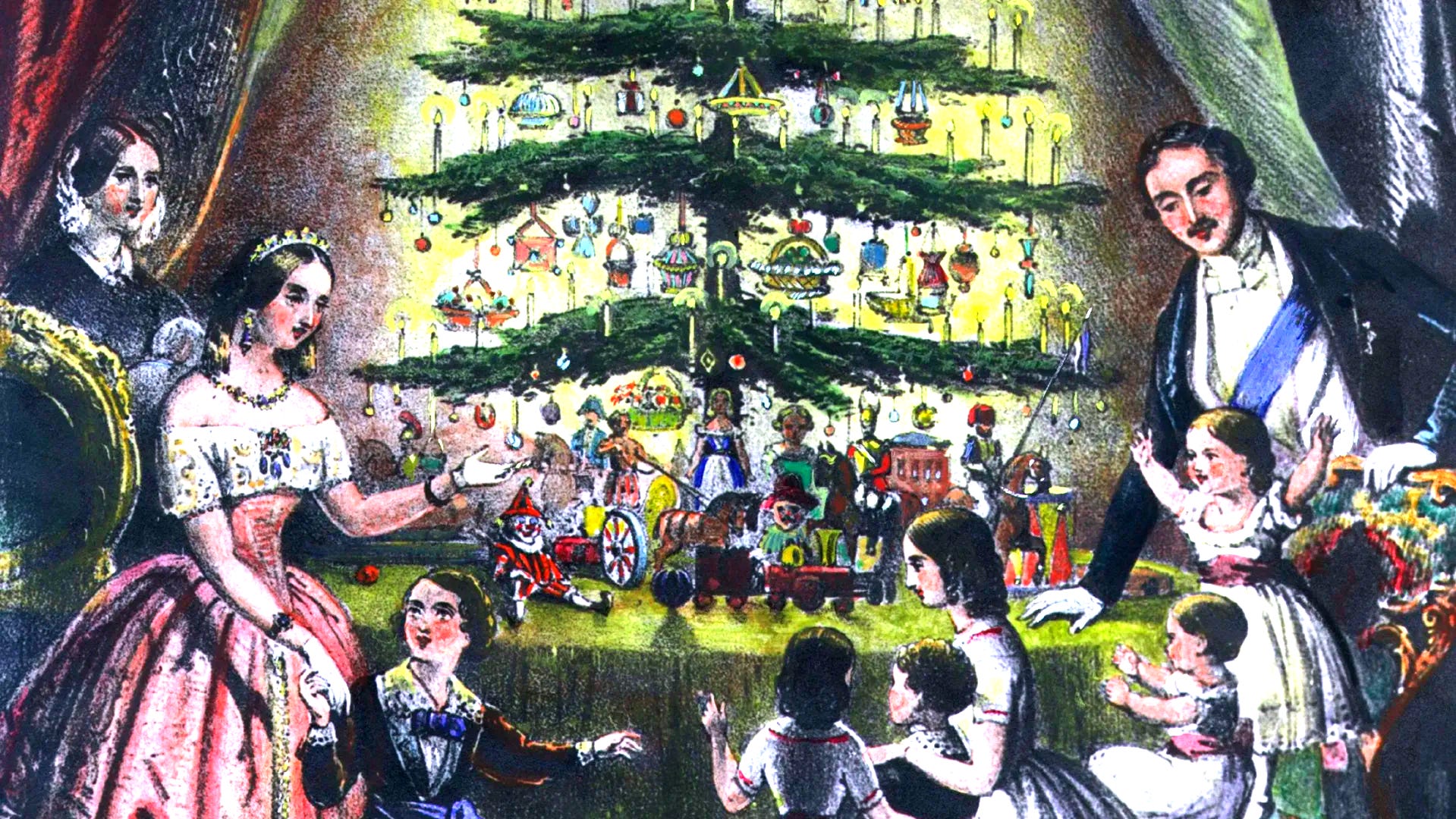
Every December, the debate resurfaces.
Christians argue about whether the Christmas tree is pagan. Historians trace it to sixteenth-century Germany. Purists reject it as a later addition to Christian tradition. Skeptics point to pre-Christian winter solstice celebrations and evergreen worship.
These arguments miss the point entirely. The question isn’t where the Christmas tree came from historically. The question is what the Christmas tree means. As we shall see, its symbolism reveals an origin far higher than Germany or paganism.
The Christmas tree takes part in archetypal patterns so fundamental that every culture independently recognized them. These patterns don’t have human inventors. They’re woven into the structure of reality itself.
Once you see what the Christmas tree actually symbolizes, you realize it isn’t something anyone could have invented. It’s something reality itself made visible, and we simply recognized it.
What People Get Wrong About Origins
The historical origin debate treats symbols like inventions as if someone sat down and decided to bring a tree indoors and decorate it, and this practice then spread culturally.
But symbols don’t work that way. Symbols emerge when humans recognize patterns in reality and create practices that participate in those patterns. According to symbolic theologian Jonathan Pageau, the power of a symbol isn’t in its historical origin but in its correspondence to truth. This essay circles around his interpretation of the Christmas tree and explores its consequences.
If, centuries before Christianity, Northern Europeans brought evergreen branches into their homes during winter as signs of life in the dark months, they weren’t inventing something arbitrary. They were recognizing something real about how winter, evergreens, light, and renewal relate to each other.
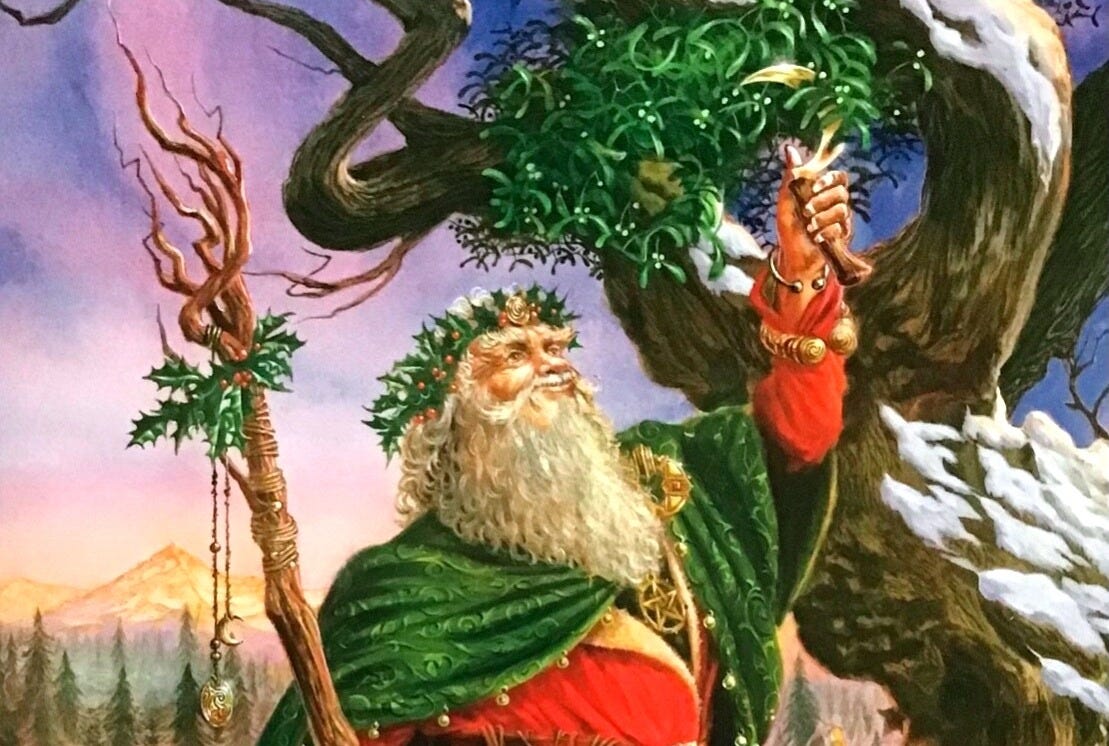
If Christians later adopted similar practices, they weren’t stealing from pagans.
They were recognizing the same patterns and understanding them more deeply through the lens of Christ. The question isn’t who did it first. The question is who understood most fully what they were doing.
And the Christmas tree, properly understood, tells us something profound about the Incarnation that no historical origin story captures.
The Tree at the Center of Everything
Trees appear at every crucial moment in the biblical narrative, and this isn’t accidental.
The Tree of Life stands at the center of Eden, offering eternal participation in divine life. The Tree of Knowledge of Good and Evil represents the boundary between human and divine authority. The Cross is called a tree, the instrument of death that becomes the instrument of life. The final vision of Revelation features the Tree of Life restored, its leaves healing the nations.
Why trees?
Because trees are the visible image of the connection between heaven and earth. Roots sink into the dark ground below. Branches reach toward the sky above. The trunk bridges the two realms.
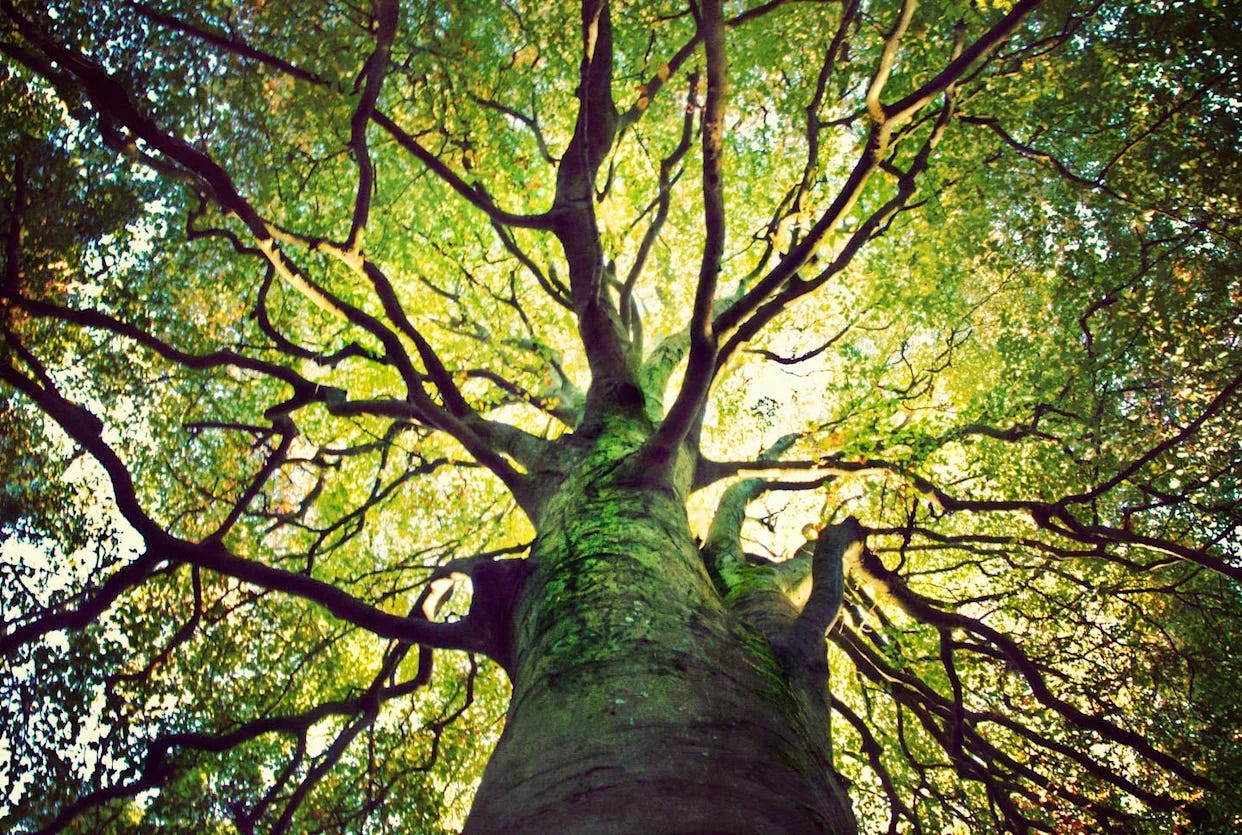
This is the cosmic axis, the pillar that holds reality together by uniting what has been separated. Every culture recognized this pattern. The Norse had Yggdrasil. Ancient cultures placed sacred trees at temple centers.
The pattern repeats because it corresponds to something real.
Heaven and earth are the fundamental cosmic division. Spirit and matter. Order and potential. Light and darkness. These realms are separated, but they must connect for creation to flourish.
The tree is the natural symbol of this connection. It takes part in both realms.
The Christmas tree is just one symbol in a much larger pattern - showing how light enters darkness, how ascent follows descent, and how meaning takes shape.
The same pattern shapes:
Your seasons
Your struggles
Your calling
Your sense of the sacred
If you want to learn to read that pattern for yourself, subscribe below.
Why Evergreen Matters
The Christmas tree is an evergreen. This detail is crucial. Winter represents death, dormancy, and the withdrawal of life. Deciduous trees lose their leaves and appear dead. The world becomes cold and dark. Life retreats.
But the evergreen remains alive. It retains its vitality when everything else has surrendered to winter’s death. It stays green when the world turns gray and brown.
The evergreen testifies that life persists even in the realm of death. That something eternal endures through the cycle of temporal dying. That death doesn’t have the final word.
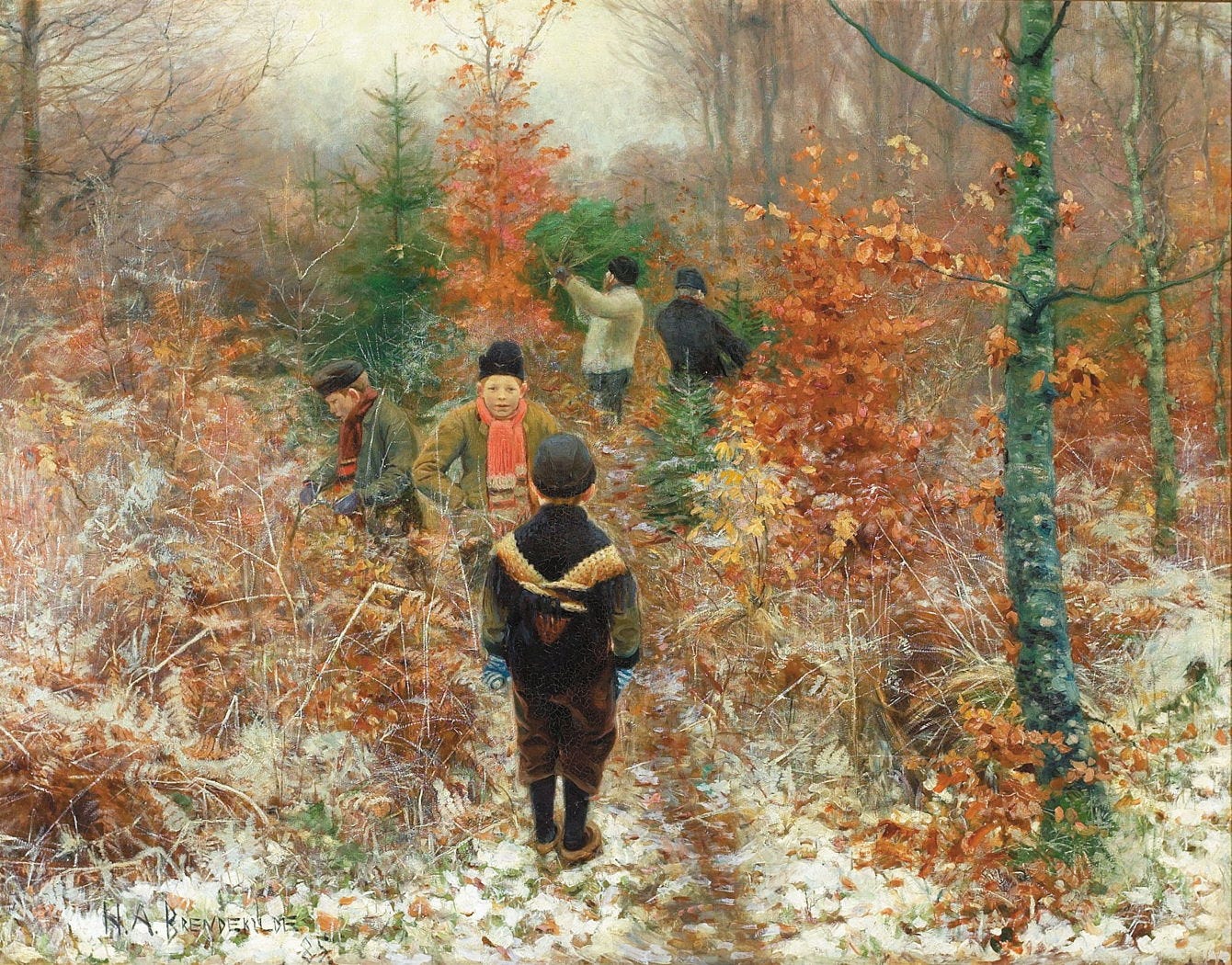
This is why evergreens were recognized as sacred long before Christianity.
Ancient people weren’t stupid. They could see that these trees possessed something the others didn’t. They took part in a life that transcended the normal cycle.
Christianity didn’t invent this recognition.
It revealed what that transcendent life actually was: the eternal Logos, who would enter the realm of death and darkness without being conquered by it.
Light in Darkness
The decorated Christmas tree combines two essential elements: the evergreen tree and lights.
Again, this isn’t arbitrary.
In the darkest time of the year, the winter solstice, we illuminate trees. We place light where the darkness is deepest. We adorn the symbol of life persisting through death with candles and shining Christmas bulbs, like stars piercing the longest night.
This is the pattern of the Incarnation in visible form.

Christ enters the world at its darkest point. Not just winter but human history’s midnight. The eternal Light enters temporal darkness. The Life that was with God from the beginning enters the realm of death.
And nobody conquers Him. Like the evergreen that stays alive through winter, like the light that shines in darkness, the divine life maintains itself even when surrounded by death.
The Christmas tree enacts this pattern. Every decorated tree is a visible proclamation:
Light has entered darkness
Life has invaded death
Heaven has touched earth
This is why the tree resonates even for people who don’t understand the symbolism. They’re recognizing a pattern that’s true whether or not they can articulate it. Something about the Christmas tree itself invites us to gather around it.
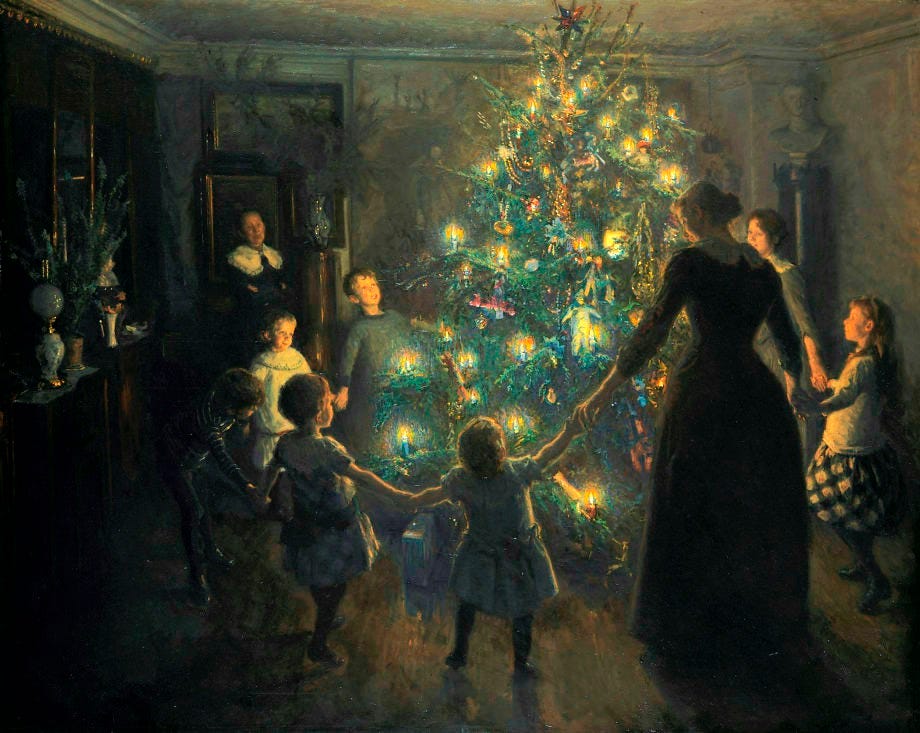
Even the gifts beneath the tree follow this pattern. They lie in the shadowed space below: hidden, waiting, full of possibility not yet revealed.
At the center of everything is Christ’s own descent and rising: He goes down into death and returns in glory. Creation then echoes that movement. The year sinks into winter and rises into spring. Each day falls into night and rises again at dawn.
And on the turning point of the year, on Christmas morning, we step into that same pattern. We rise with the sun, gather at the tree, and lift the gifts up from below into the light. What was hidden is revealed. What was waiting is received with joy.
In doing this, we’re not just following a cozy tradition. We’re joining Creation in echoing Christ’s descent and ascent, letting our small family ritual harmonize with the way God has already patterned the world.
What the Christmas Tree Tells Us About Christmas
The tree reveals the essence of Christmas: the meeting point of heaven and earth.
Christmas isn’t primarily about nice feelings or family gatherings or gift-giving, though these participate in its truth. Christmas is about the impossible junction: the place where the infinite enters the finite, the eternal enters time, the Creator enters creation.
The Incarnation is the ultimate cosmic tree. Christ is the axis that reconnects what was severed. In Him, heaven and earth are ontologically, permanently joined.
He has roots in earth - truly human, born of a woman, subject to hunger and pain and death.
He has branches in heaven - truly divine, begotten of the Father, possessing the fullness of divine nature.
And He bridges the two. He overcomes the separation at the Fall. As we gather around the tree, something bridges the gap that kept humanity exiled from Eden.
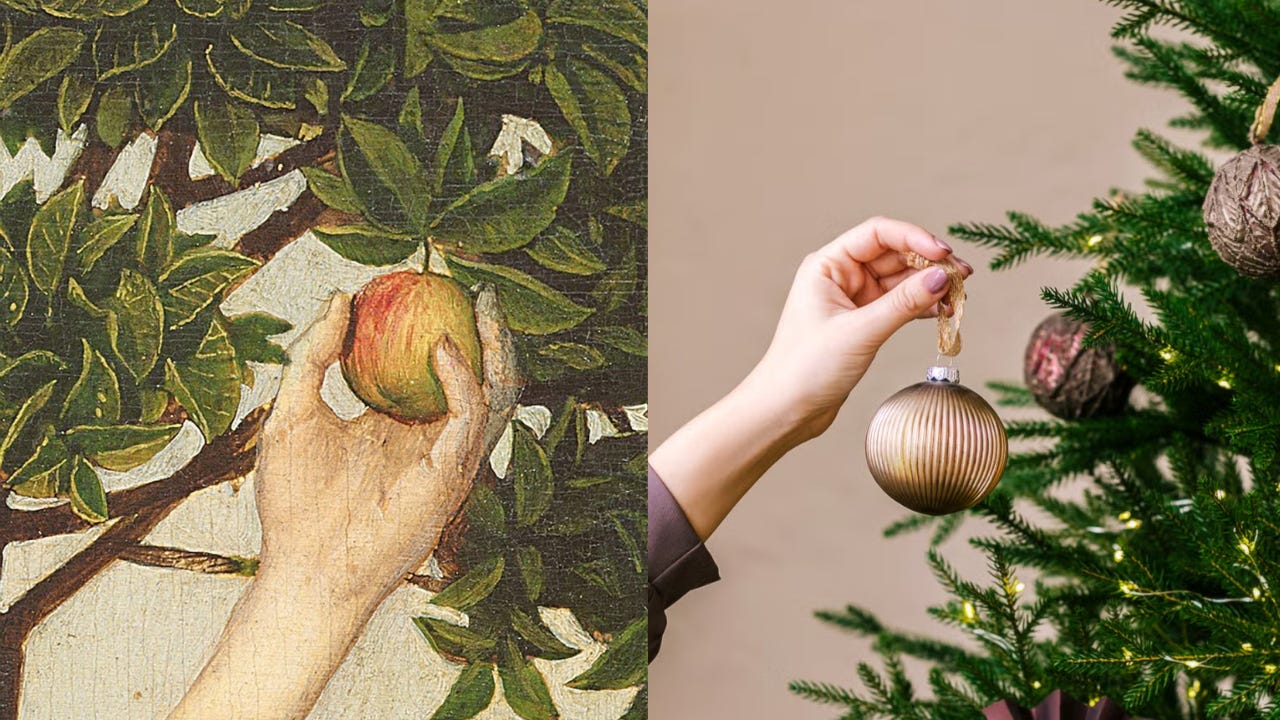
This is why the angels announce His birth to shepherds in fields at night. Light breaks into the darkness. Heaven declares itself to earth. The message comes to those watching in the dark - not to the powerful in lit palaces but to the lowly in nighttime fields.
The star the wise men follow is the same star we place atop the Christmas tree. It symbolizes the source of reality descending into the world and sending its light outward. So the tree itself, rising in a cone shape, is the cosmic hierarchy, widening from heaven’s point of origin down into the world we inhabit.

Christmas is the moment the pattern fulfills itself. Every sacred tree, every cosmic axis, every ritual connection of heaven and earth - all of them were pointing toward this.
The Christmas tree participates in that fulfillment. It’s not a distraction from Christmas. It’s an embodiment of it.
What Christmas Tells Us About the Cosmos
If Christmas is the cosmic tree made flesh, what does this reveal about reality itself?
It tells us that heaven and earth were always meant to be united. That the separation isn’t final or absolute. That the material world isn’t a prison to escape but a realm to be transfigured.
It tells us that life is stronger than death. That light cannot be overcome by darkness. That the eternal isn’t distant from the temporal but can enter it and transform it from within.
It tells us that the highest descends to the lowest not to remain there but to raise the lowest to the highest. Christ descends like roots into dark earth so that humanity can ascend like branches into heaven.
The cosmic structure is a dynamic relationship that finds its fulfillment in union. Heaven and earth are meant to meet, to interpenetrate, to become one without either losing its distinct nature. This is the pattern the Christmas tree enacts:
Heaven’s light adorning earth’s living wood. Eternal life expressed through temporal form. The divine touching the material without destroying it.
And this union isn’t only for Christ. It’s the destiny of all creation. The tree in your living room is a sign of what’s coming: when heaven and earth fully unite, when the Tree of Life is restored, and when everything is illuminated by the Light that darkness cannot overcome.
The Symbol Speaks Truth
The Christmas tree wasn’t invented by Germans or stolen from pagans. It emerged because humans recognized a pattern so fundamental that it shows up everywhere. In Scripture, mythology, nature, and ritual. When Christians decorated evergreen trees and placed lights on them during the darkest days of winter, they were participating in the same truth that the tree in Eden represented, that the Cross enacted, that the Incarnation fulfilled.
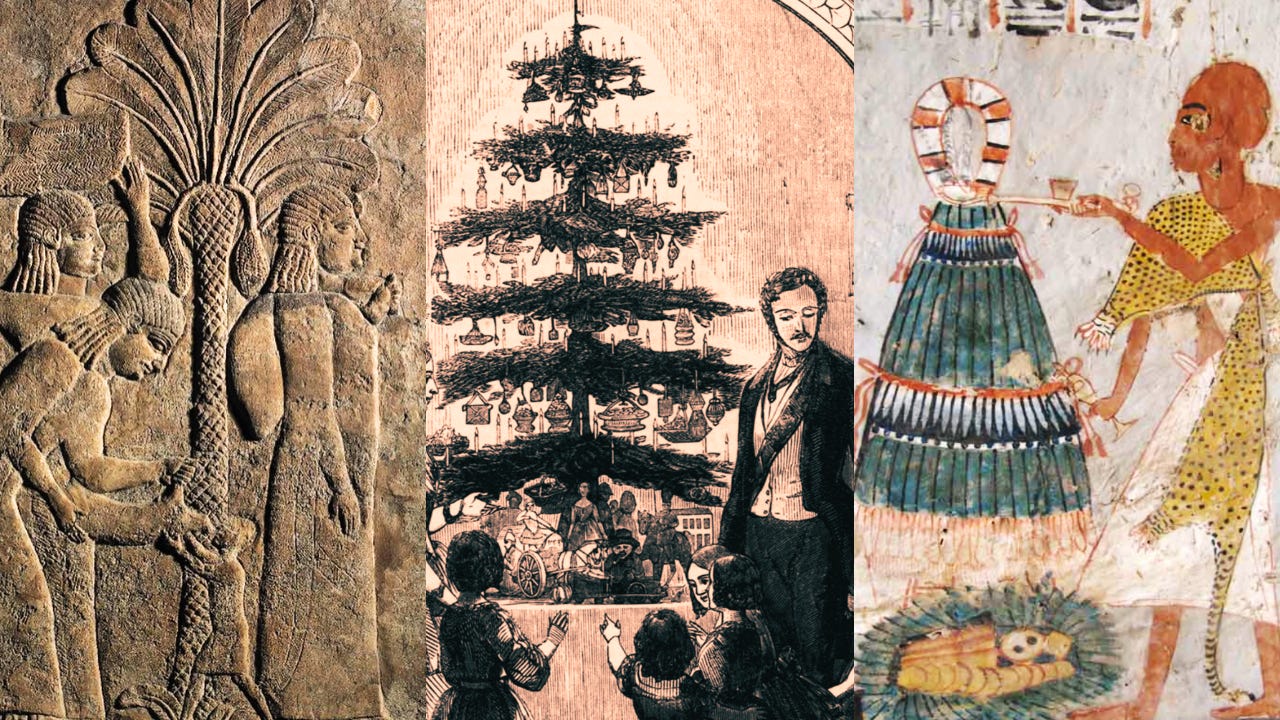
The Christmas tree is the cosmic axis made domestic. The connection of heaven and earth made visible in your home. The promise that life conquers death and light overcomes darkness made tangible.
That’s not pagan superstition. That’s reality speaking the language of symbol. And once you see it, you can never look at a Christmas tree the same way again.


If you want threads, essays, or posts written for your brand, I take on a small number of ghostwriting clients each month. I help creators and founders craft viral content, build authority, and grow faster on X, LinkedIn, Beehiiv, and Substack. If you want your voice sharpened and your ideas turned into impact, reach out and let’s build something powerful together.
I loved the contrast between cold, death, and the evergreen tree. So symbolic and so powerful.
Awesome read! Quite educational and purposeful! I quite enjoyed your thoughtful and thought provoking words.