
The Twelve-Part Arc of Belief and Meaning
Religion, Science, and the Human Search for God

The first human who ever buried the dead did something strange.
They did not need to. The body could have been left where it fell, like any other animal remains. But instead, someone paused. They placed the body carefully. They covered it. Maybe they marked the place. Maybe they brought fire. Maybe they said nothing at all.
In that moment, humanity crossed a line it has never stepped back from.
That pause was not religion yet. It was not science either. It was awareness. The realization that death meant something, that life could not be reduced to hunger and movement alone. The moment a human wondered whether what had vanished was truly gone.
This 12-part series begins there and explores how humanity learned to ask the questions that still define us.
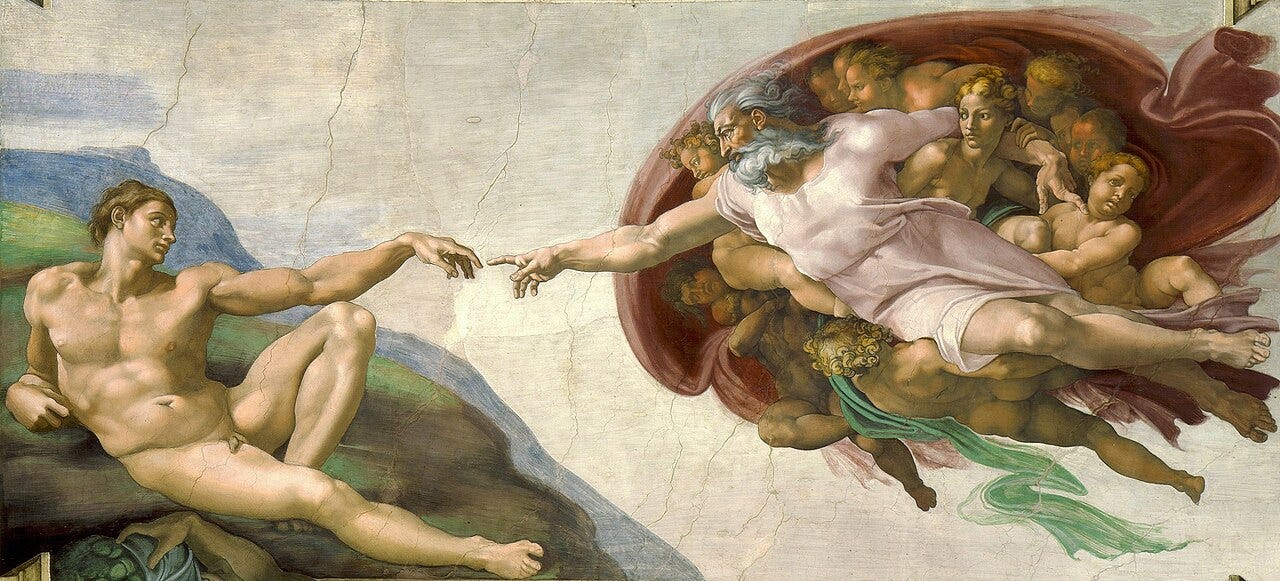
From that first grave to the modern laboratory, human beings have been trying to answer the same pressure-filled questions. What kind of world is this. Why does it exist at all. What are we allowed to do inside it. And what, if anything, waits for us when we leave it.
Religion and science did not emerge as rivals. They emerged as responses to the same unease. Early humans used myth and ritual to stabilize a world that felt dangerous and unpredictable. Later, philosophy and science refined those instincts, testing them against observation and reason. But the impulse never changed. We wanted the world to make sense, and we wanted our lives to matter within it.
This series follows that story from beginning to end. It starts with awe, when fire, storms, animals, and death forced humans to admit they were not alone in the universe. It moves through creation myths that tried to explain order, flood stories that remembered collapse, and laws that attempted to hold fragile societies together. It confronts sacrifice and rebellion, the moments when humans paid for order and then dared to question its cost.
From there, the story turns inward. Instead of asking only what the gods wanted, humans began asking who they were. Consciousness became the new frontier. Mystics, philosophers, and later psychologists all explored the same interior terrain. The divine was no longer searched for only in the sky, but in the self.
The journey then reaches its unavoidable edge. Death. Every belief system is tested here. Ideas of heaven, hell, judgment, rebirth, or extinction are not abstract theories. They shape how people live, love, forgive, and fear. What we believe comes after death quietly governs what we do before it.
Finally, the series ends where civilizations always do, by imagining endings. Apocalypses, final judgments, cosmic collapse, renewal after ruin. These are not fantasies of destruction. They are attempts to believe that meaning survives time itself.
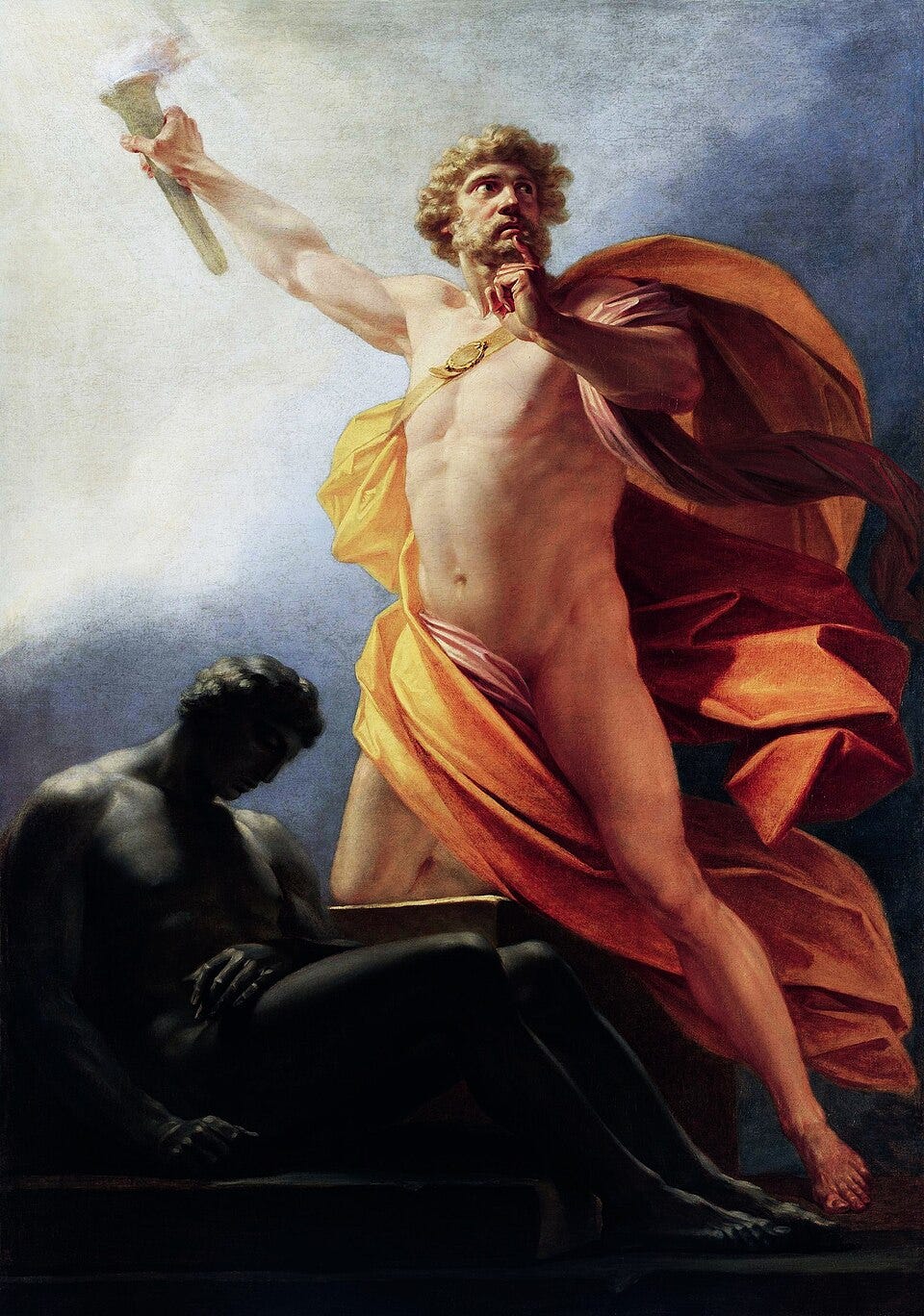
Each essay in this series explores one chapter of this long human effort to understand reality. Not to defend belief. Not to dismiss it. But to trace how religion, philosophy, and science grew from the same human soil and responded to the same questions.
Over the next four weeks, this twelve-part series will unfold step by step, tracing humanity’s search for meaning from our first moment of awareness to our final questions about death and what may come after.
Subscribe to follow the series as it unfolds. Each essay builds on the last, forming a single narrative that only fully makes sense when read in order.

If you missed our last series on the 12 Gifts of Christian Theology, read the articles here:
The first burial was done out of love. It is the defining virtue of humanity. See John 3:16 for more understanding.
Let’s get er done. You had me with Karen Armstrong’s wonderful book