

Truth Cannot Fear Reason
Article 6 of The Ramadan Blueprint - Averroes

In 1195, one of the most respected scholars in Islamic Spain was publicly disgraced. His books were burned, his teachings condemned, and he was forced into exile. The charge against him was not political rebellion or personal corruption. It was something far more unsettling to the authorities of the time. He had argued that reason and faith could not truly contradict one another.
The man at the center of this controversy was Abu al-Walid Muhammad ibn Ahmad ibn Rushd, known in Europe as Averroes. Only a few years earlier he had served as chief judge of Córdoba and physician to the Almohad caliph. Yet his writings had ignited one of the most important intellectual debates of the medieval world: whether philosophical reasoning strengthened religion or threatened it.
Ibn Rushd was born in Córdoba in 1126 into a distinguished family of jurists. His grandfather had served as chief judge of the city, and his father was a respected scholar of Islamic law. From childhood he was immersed in legal scholarship and theology. Yet his intellectual curiosity quickly expanded beyond the courtroom. He studied medicine, astronomy, philosophy, and theology, eventually becoming both a judge and a physician at the royal court. Few scholars in history combined authority in law, medicine, and philosophy so effectively. His writings ranged across jurisprudence, medicine, physics, and metaphysics, reflecting a rare breadth of learning.
The central intellectual conflict of Ibn Rushd’s time had already been set in motion by the theologian Abu Hamid al-Ghazali. In his influential book The Incoherence of the Philosophers, Al-Ghazali argued that philosophers had adopted ideas from Greek philosophy that conflicted with Islamic doctrine. Among the issues he criticized were philosophical claims about the eternity of the universe and the nature of causation. Al-Ghazali famously argued that what we perceive as cause and effect may not be real causation at all. When fire burns cotton, for example, the fire does not necessarily cause the burning. Instead, God directly creates the burning each time the two come into contact.
This argument was meant to defend divine omnipotence, but it also carried troubling implications. If natural causes do not truly operate in the world, then the entire project of scientific inquiry becomes unstable. Studying nature would reveal patterns, but those patterns would have no real explanatory power.
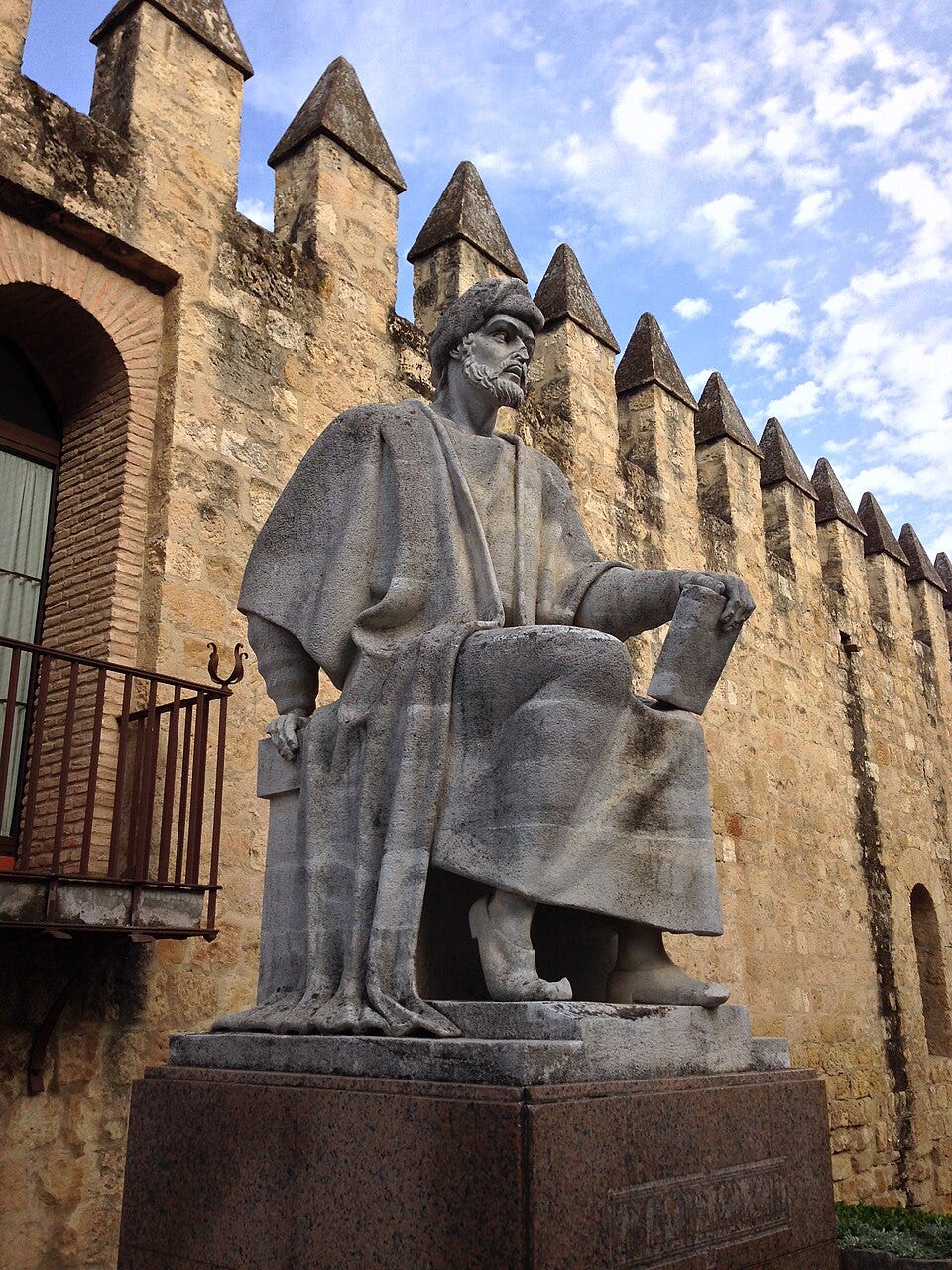
Ibn Rushd believed this conclusion undermined both reason and faith. In response he wrote The Incoherence of the Incoherence, a careful defense of philosophical reasoning. He argued that the regular patterns observed in nature were not a threat to divine power but evidence of divine wisdom. God, in his view, had created a world governed by intelligible order. Recognizing that order was not a challenge to religion but a way of understanding the structure placed into creation itself.
