

What You Build Must Survive Without You
Lesson 1 of the 7 Lessons of Passover Series - Moses

Moses was remembered because he carried responsibility even when it cost him the ending. Leadership is not about reaching the promised outcome, it’s about building something that holds even after you’re gone. With this lesson, we kickoff the first lesson of the 7 Lessons of Passover Series.
I remember the first time someone explained Moses to me in a way that actually made sense. We were sitting over dinner, and instead of starting with miracles or commandments, he started with a problem. Moses, he said, does not begin as a leader. rather, he was a liability. That framing changed everything that followed.
Moses is born under a death order. Pharaoh had commanded that Hebrew boys be killed, and his mother responds the only way she can. She hides him, then places him in a basket and sets him into the Nile. It is often told as a gentle story, but it was an act of desperation. She is letting go because she has no other move left. What follows is even stranger. The daughter of Pharaoh finds the child and raises him inside the palace. The boy marked for death grows up inside the system that ordered it.
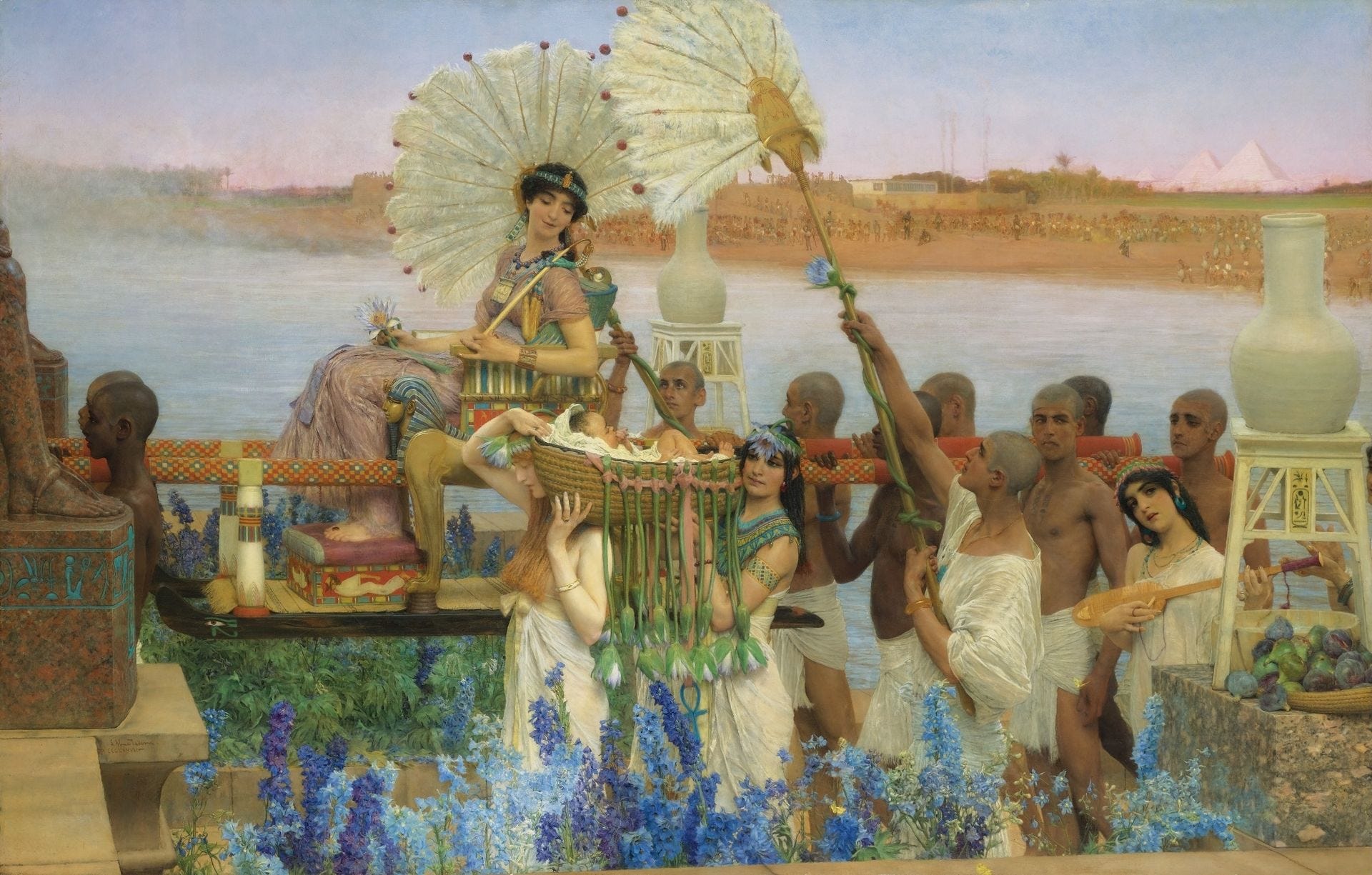
That detail explains the rest of his life. Moses is raised Egyptian in education, language, and power, but he is not Egyptian. He knows he is Hebrew, yet he has no real place among them either. He lives between identities, and that tension shapes how he acts. When he sees an Egyptian beating a Hebrew slave, he intervenes and kills the Egyptian. It is decisive, but it is also uncontrolled. It is the act of someone who recognizes injustice but has no disciplined way of responding to it. The next day, when he tries to intervene again between two Hebrews, one of them throws a question back at him that exposes everything: “Who made you ruler over us?” In that moment, it becomes clear that he has no authority anywhere. Not in Egypt, and not among his own people.
So, he runs. He ends up in Midian, far from power and identity, and becomes a shepherd. In that world, it is a step down, but it is also preparation. Shepherding is not passive work. It requires patience, endurance, and control over something that does not always listen. In ancient language, kings were often described as shepherds. The role reshapes him slowly, away from impulse and toward discipline.
Years pass in obscurity until the moment that reframes everything. At the burning bush, Moses is called, and his first instinct is resistance. He does not present himself as capable. He argues and points out his limitations. He asks why he was chosen. He is demonstrating self-awareness. He remembers what happened the last time he tried to act. He’s still unsure. The difference is this time he isn’t acting on his own.
When he returns to Egypt, the conflict becomes direct. Moses stands before Pharaoh and demands the release of a labor force that sustains the entire system. He is challenging the economic and political structure of the state. But the deeper shift lies in how the story frames him. In the ancient world, kings were the ones who mediated between gods and people, established laws, and maintained order. Here, that role is transferred away from Pharaoh and placed onto Moses. He is not a king, but he becomes something just as significant, the lawgiver.
The plagues that follow destabilize Egypt, but Moses never claims the throne. He does not replace Pharaoh. He leads the people out instead. And this is where most readings stop too early. The Exodus feels like the climax, but the real turning point comes at Sinai. Freedom alone is unstable. The people who leave Egypt are not ready to govern themselves. They complain, panic, and even begin to prefer the certainty of slavery over the uncertainty of freedom. Moses has to do more than free them. He has to structure them.
At Sinai, Moses receives the law. In other societies, kings created laws and defined justice. In Israel’s story, even kings are judged by how closely they follow the law Moses carries. Moses becomes the central mediator, the one who shapes how the people live, worship, and judge. Even though he is not ruling them in the conventional sense, but he is defining the system that holds them together.
Yet the people do not become easy to lead. The same patterns repeat over decades. One episode captures it clearly. Near the end of the journey, they run out of water again. The people gather and turn on Moses with the same complaint their parents made years earlier. Why bring us here to die? Why leave Egypt at all? The situation is familiar, but this time Moses reacts differently.
Instead of following the command exactly, he strikes the rock in frustration. Water still comes out. The immediate problem is solved, but his action costs him everything. Because he acts out of anger rather than obedience, he is told he will not enter the Promised Land. The texts themselves hold tension about responsibility. Some place the fault on Moses. Others reflect his own claim that the people drove him to it. The narrative leaves the tension exposed.
By the end, Moses stands on a mountain, looking at the land, he spent his life moving toward, but does not get to enter it. There is no triumphant ending. No final reward. Just a view. And yet what he built holds. A group of slaves becomes a covenant-bound people. A structure forms that survives beyond him. In later memory, he is not remembered as a king, but as something more foundational: the one who gave shape to a people under pressure.
What stayed with me from that conversation was simple. Moses is not remembered because everything worked out for him. He is remembered because he carried the weight anyway.
What I take from it is that Moses never leads a stable people. He leads people who resist change, who panic under pressure, and who look backward even after being freed. That behavior is not confined to the past. It is constant. People still prefer the certainty of what confines them over the uncertainty of what might improve them. Leadership, in that sense, is about holding direction when the group itself is unstable.
The second lesson is harder to accept. Moses does almost everything right across decades, and one moment still defines his outcome. That forces a stricter understanding of responsibility. It is not enough to be broadly correct. The moments of pressure reveal whether control holds. That is where judgment falls.
The final lesson cuts the deepest. Moses builds something he does not enter. He carries a vision that someone else completes. That runs against modern instincts. We want to see results, to claim outcomes, to finish what we start. Moses does not get that. What he gets is continuity. The structure he creates holds after he is gone.
That shifts the question. Not whether you reach the end of what you are building, but whether what you build can survive without you.
That is where his story lands. Not in the Hollywood spectacle of escape, but in the discipline of carrying something forward without needing to see it completed.
If this first lesson gave you something to think about, the next six go even deeper. Share it with others and become a paid subscriber to get the rest of the series.

“People still prefer the certainty of what confines them over the uncertainty of what might improve them.”
This struck me as being particularly true. Fascinating how this human trait transcends cultures and generations.