

While The West Abandons Plato, China Finds a Use for Him
Why China is Studying Plato to Understand How Power Works

Plato helped shape the intellectual foundations of the West. Today, some of his most serious readers may be sitting in classrooms in Beijing.
Something strange is happening in the world of ideas. Across much of the Western world, universities are quietly shrinking classics departments and questioning whether ancient Greek texts belong in modern education at all. Meanwhile in China, students are learning Latin and ancient Greek in growing numbers, translating Plato, and building new institutes devoted to the study of the ancient world.
A few blocks from Tiananmen Square last summer, a group of Chinese schoolchildren sat in a classroom singing Old McDonald Had a Farm… in Latin. “Donatus est agricola, Eia, Eia, Oh!” Their teacher, Austrian classicist Leopold Leeb, had given each student a Roman name. Gaius. Flavius. Monica. Augusta. For three hours each morning they practiced the language of Cicero and Virgil, thousands of miles from the civilization that created it.
The irony is difficult to miss. The civilization that produced the Western canon is increasingly unsure about it. Another civilization is studying it with growing curiosity.
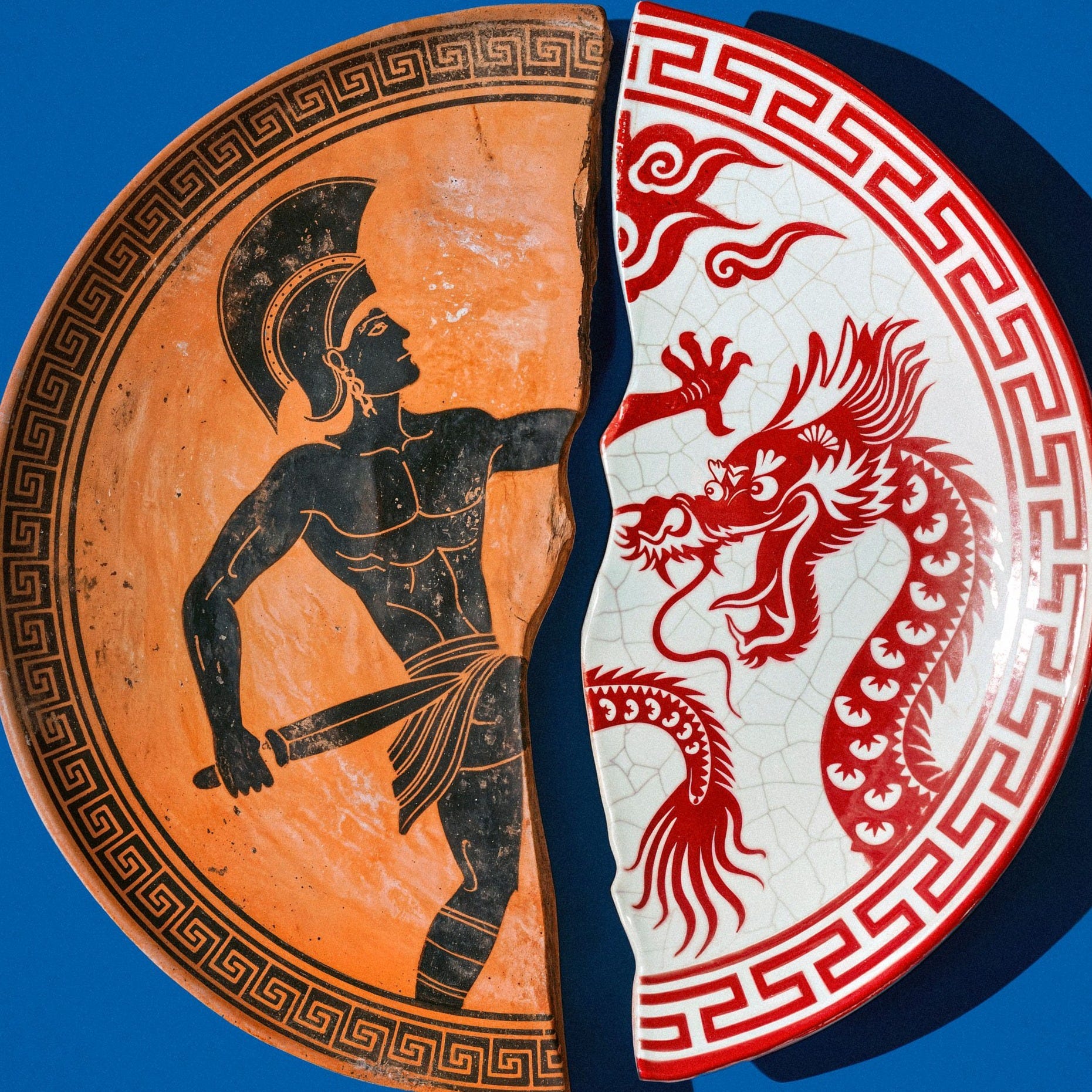
The contrast became unmistakable in November 2024. On the same day Americans were voting in their presidential election, the Cambridge classicist Tim Whitmarsh arrived in Beijing expecting to attend an academic conference. Instead, he found himself inside something closer to a geopolitical summit. Hundreds of diplomats, scholars, and officials filled the vast Yanqi Lake convention center while a letter from Xi Jinping was read aloud.
Xi’s message framed ancient Greece and China as two civilizations standing at opposite ends of Eurasia that together shaped humanity’s development. He announced the creation of a Chinese School of Classical Studies in Athens and called for deeper cultural exchange between the two traditions. It was an extraordinary moment. China was placing itself within the civilizational conversation that those ancient texts began.
For centuries the works of Plato, Aristotle, and Thucydides formed the intellectual spine of Western education. Students encountered questions about justice, power, virtue, and the nature of society through their writings. Today those same texts often struggle to justify their place in Western classrooms.
China, meanwhile, is translating them, debating them, and introducing them to a new generation of students. But the most interesting question is not why China is reading Plato. It is what Chinese readers find in him.
No work illustrates this better than Plato’s Republic. In that dialogue Plato asks what a perfectly just society would look like. His answer begins with a theory of the human soul. He divides the soul into three competing parts: reason, spirit, and appetite. Justice exists when reason governs the other two.
From this psychological model Plato builds a political one. A just society, he argues, must mirror the structure of the soul. Those guided by reason should rule. Those driven by courage should defend the state. Those motivated by material desire should produce its goods. The result is a hierarchical city called Kallipolis. Philosopher-kings govern it. Guardians defend it. Farmers, merchants, and craftsmen sustain it.
For modern readers raised on the language of equality and popular sovereignty, this vision can feel unsettling. Plato’s ideal city is not democratic. It is ruled by a small intellectual elite whose wisdom qualifies them to govern. Yet the most controversial idea appears when Plato confronts a practical question.
How can such a society remain stable? His answer is what later readers called the Noble Lie. Plato suggests that citizens should be taught a founding story about their origins. They must believe that all people were born from the earth itself and are therefore siblings of the same land. But the gods mixed different metals into their souls. Those with gold are destined to rule. Those with silver defend the city. Those with iron or bronze labor and produce. This myth would encourage unity while persuading citizens that social hierarchy reflects natural differences rather than arbitrary power.
To many modern Western readers, the idea sounds disturbing. Critics argue that Plato’s vision resembles the ideological machinery of authoritarian regimes. A society built on hierarchy, myth, and controlled breeding seemed dangerously close to the political experiments of the twentieth century.
Others have tried to soften the passage, arguing that Plato meant something closer to a national myth rather than deliberate deception. Some even suggest that Plato was exposing the dangers of political ideology rather than endorsing it. The West has spent decades debating what to do with the Noble Lie. Condemn it, reinterpret it, or rescue Plato from his own argument.
In China, the reaction often unfolds differently. Many Chinese readers approach the passage less as a moral scandal and more as a political observation. Human beings differ widely in talent, judgment, and ability to govern. Not everyone possesses the wisdom required to guide a state. Societies therefore rely on shared narratives strong enough to align individual behavior with collective stability.
Seen from this perspective, Plato’s argument can appear less shocking and more realistic. Some commentators treat the Noble Lie as an allegory for meritocracy. If individuals differ in ability, then political leadership should reflect those differences. Others argue that modern democracies possess myths of their own. Ideas about national destiny, moral superiority, or universal democracy can function as powerful stories that bind societies together.
The debate reveals something deeper than a disagreement about Plato. It reveals a contrast between two civilizational instincts. Western political thought since the Enlightenment has emphasized individual freedom, equality, and suspicion of authority. Plato’s hierarchical state therefore appears threatening. Chinese political tradition developed under different historical conditions. For centuries governance drew heavily on the teachings of Confucius, who emphasized social roles, hierarchy, and harmony within an ordered community. In that framework the state often resembles an extended family in which authority flows from wisdom and responsibility rather than popular vote.
When readers from these traditions encounter the same ancient text, they notice different things. Western readers often see the danger of authoritarian power. Chinese readers often see the challenge of maintaining order in large societies.
Meanwhile another irony emerges. While Western universities debate the future of the classics, Chinese institutions continue expanding their study. Hundreds of Greek and Latin works have been translated into Chinese. New research centers compare Greco-Roman thought with Chinese philosophical traditions. Students who train in Western classics abroad often return to China to teach them.
For many Chinese scholars the ancient world does not belong exclusively to the West. It belongs to the shared intellectual inheritance of humanity. One Chinese philosophy student once summarized the lesson he drew from studying the classics in a single word. Modesty.
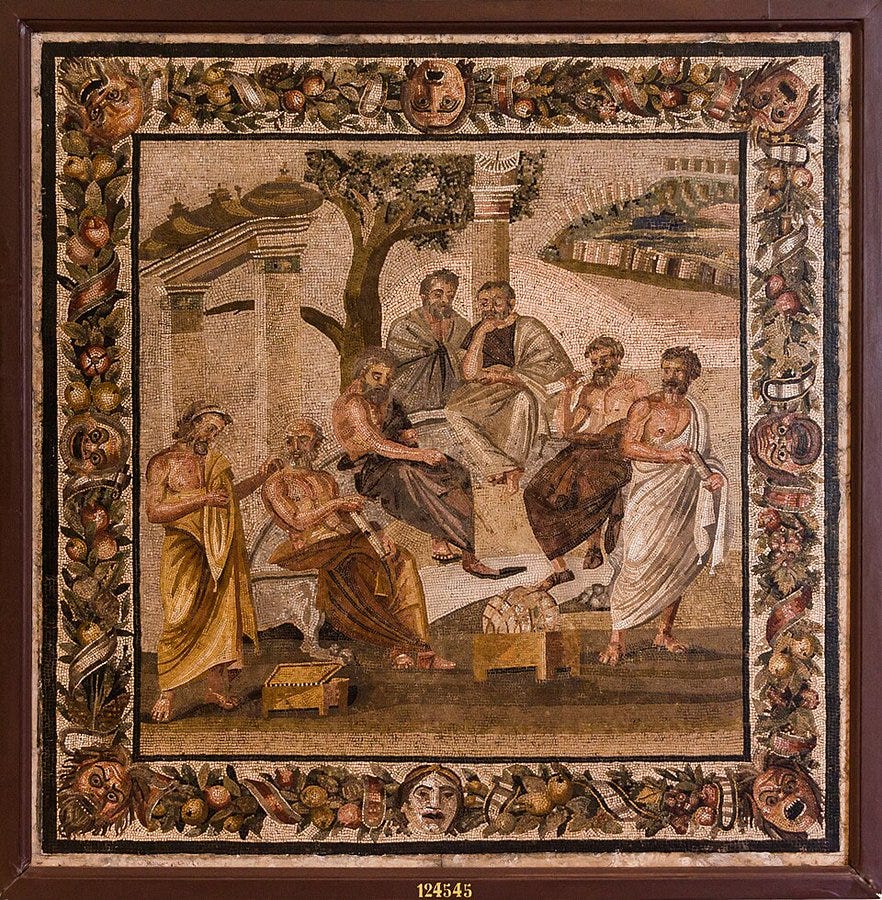
Ancient texts remind modern readers that human beings have wrestled with the same political and moral questions for thousands of years. Studying Plato or Cicero is not about celebrating one civilization over another. It is about recognizing how small we are within the long history of human thought.
Yet the civilizational contrast remains difficult to ignore. Some cultures treat ancient books as embarrassing relics of a less enlightened past. Others treat them as laboratories of human experience filled with uncomfortable insights about ambition, power, and the structure of society.
Plato understood something many modern societies prefer not to confront. Politics rarely runs on truth alone. It runs on stories, symbols, hierarchies, and shared beliefs strong enough to hold a civilization together.
Twenty-four centuries later his ideas are still traveling the world.
The strange twist of history is that some of Plato’s most attentive readers today may be sitting in classrooms in Beijing.
If you found this perspective valuable, subscribe for more insights on civilization, history, and the ideas that continue to shape our world.
For Ramadan and Lent, I’m offering 15% off a full year of The Culture Explorer.
These seasons are about discipline and renewal. That is what this newsletter is built on. Each week, you receive deeply researched essays on art, theology, architecture, and the civilizational ideas that still shape us.
As part of this special, paid subscriber will also receive a downloadable copy of “12 Life Lessons From 2000 Years of Christian Theology.”
If you have been thinking about joining, this is the time. Lock in 15% off annual subscription forever and step into a year of serious cultural exploration.

Join Content Academy, a 3.5-day live writing workshop starting March 26th, designed to help creators turn their ideas and life experiences into powerful essays, stories, and long-form content that builds real authority online. Over one intensive weekend, you’ll learn the skills and systems needed to produce compelling content that attracts and grows an audience and your brand.
On March 28th, I will be holding a community group writing session as part of the workshop.

Not for me that Plato chap.
Cool cats follow Cyrus the Great of Persia, Aristotle, Aquinas, Juan de Mariana, Thomas Jefferson (Cyrus's biggest fan, actually), CSA, Mises, Rothbard, Hoppe.