

Why Civilizations Fall?
A recurring pattern that destroyed Rome will destroy us


A guest article by Modern Caesar…
Rome conquered the Mediterranean, outlasted Hannibal, Pyrrhus, and turned their Empire into a civilization unseen before. But then it handed its own empire to the people it once discarded as barbarians.
Without a last stand or total war.
In 476 A.D., a barbarian general named Odoacer walked into Ravenna and removed the last Western Emperor Romulus Augustulus from power.
What has fascinated people for centuries is why a civilization that once refused to surrender, even when Hannibal stood at its gates, stopped caring about its own survival?
The answer, written by a Roman who watched it happen, makes you realize why civilization begin to rot.
Ammianus on How Romans Abandoned Virtue
There is no better way to understand Rome’s decline than to read what Romans who lived through it wrote about their own civilization.
Ammianus Marcellinus was a Roman historian of the 4th century. But unlike most ancient writers, he wasn’t just a scholar sitting in a library, but also a soldier. He served in the Roman army, fought on the eastern frontier, and witnessed firsthand the military and moral collapse of the empire he served.
In his historical work Res Gestae, Ammianus doesn’t blame bad luck or invincible enemies for Rome’s troubles. He points out at something far closer to home: the Romans themselves.
He opens with a passage that captures everything:
At the time when Rome first began to rise into a position of world-wide splendour, in order that she might grow to a towering stature, Virtue and Fortune, ordinarily at variance, formed a pact of eternal peace… And now, declining into old age, and often owing victory to its name alone, it has come to a quieter period of life.
Rome had coasted on its reputation for so long that it forgot what built that reputation in the first place. The virtues, discipline, courage, civic duty, sacrifice. Qualities that forged the empire had been quietly abandoned.
What remained was the name, the monuments, and the memory. But memory alone cannot hold a border.
What made this decline so cunning was that it didn’t happen through conquest or catastrophe. But through prosperity.
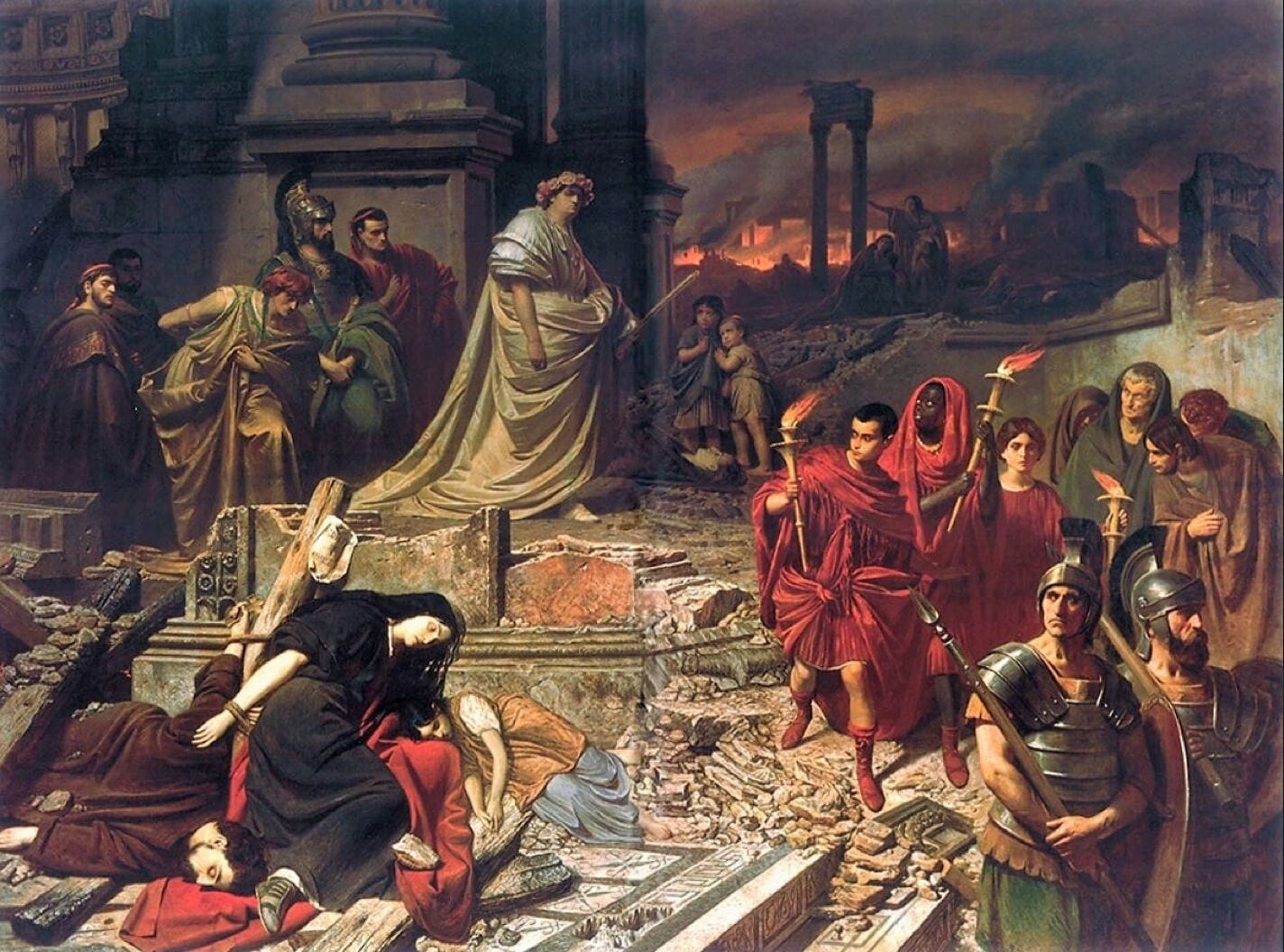
The Romans who inherited the empire looked at everything their ancestors had built and concluded that it had always been this way. Their wealth, stability, and supremacy were simply the natural condition of being Roman. The struggle that produced those gifts was forgotten and left for history books.
And so, the virtues that had once defined what it meant to be Roman, as frugality, martial discipline, service to the state, became inconvenient relics.
Ammianus writes that nobles of his era had convinced themselves that their inherited wealth was personal achievement and admired quality:
“Other men… greatly exaggerate their wealth, doubling the annual yield of their fields… they are clearly unaware that their forefathers, through whom the greatness of Rome was so far flung, gained renown not by riches, but by fierce wars, and not differing from the common soldiers in wealth, mode of life, or simplicity of attire.”
The ancestors of these men had lived like their soldiers; they fought like them and refused to let comfort separate them from the people they led.
That shared hardship was not just a lifestyle choice, but the source of Rome’s unity and strength. Their descendants inherited the wealth those men created and mistook the inheritance for the virtue.
They kept the gold and discarded everything that had produced it.
The Romans Ammianus describes no longer resemble the men who destroyed Carthage, crossed the English channel, the Tigris river or built aqueducts across three continents.
They are something different. And their ignorance corrupted every Roman.
How Comfort Made Destroyed Romans
Ammianus describes the Roman nobility, the class that was supposed to lead and defend the empire, parading through the streets in silk garments, surrounded by swarms of slaves, as if returning from a victorious campaign.
Their great boasts were not of battles fought or laws passed. They competed over the length of their togas and bragged about the weight of their rings.
Some of these men eagerly strive for statues… Others, taking great pride in coaches higher than common and in ostentatious finery of apparel, sweat under heavy cloaks… they lift them up with both hands and wave them… in order that the over-long fringes and the tunics embroidered with party-coloured threads in multiform figures of animals may be conspicuous.
Their grandfathers had governed provinces and commanded legions. Now their greatest ambition was to make sure their tunic was seen from across the street.
The chariot races had become their entire world.
Ammianus writes that news of a favored charioteer losing a race caused more alarm among the Roman elite than news of a lost battle. Their homes, he says, “buzz with idle flatterers” while banquets weigh fish and birds on scales to show off their excess. The great concern of the Roman noble was not the state of the empire, but the freshness of his bathwater or the cut of his evening robe.
Meanwhile, learning became seen as a sin. The great libraries, once the pride of Roman civilization, stood shut like tombs forever.
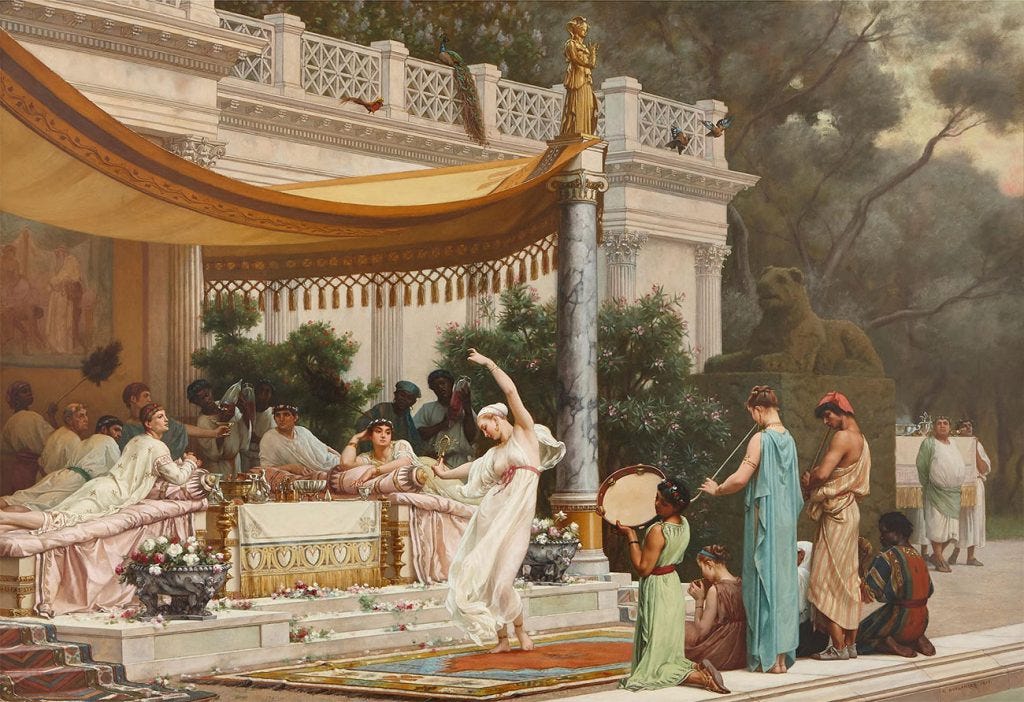
In their place, the wealthy imported entertainers and musicians. The singer replaced the philosopher, the performance coach replaced the orator. The nobles, Ammianus notes, “shun learning like poison”. Their literary diet reduced to light satire and celebrity gossip, read in idleness.
When a food shortage hit Rome the city had to choose who to expel. Without hesitation elites expelled the scholars, but allowed singers and entertainers to remain.
When Rome had to choose between the people who preserved its intellectual tradition and the people who kept it entertained, it chose entertainment. Without doubt or discussions.
What does it tell about them?
That Rome became a civilization that had lost the will to take itself seriously.
The nobles were not alone. The common people mirrored them perfectly:
Idle and slothful… live with wine, dice, low haunts, pleasures, games. Circus Maximus as temple, dwelling, assembly, hope… Aged swear by hair/wrinkles that state perishes without favored charioteer winning.
The Circus Maximus had become a temple. A new religion which replaced their homes. The elderly, who should have carried the memory of what Rome stood for, had also surrendered. They threatened that Rome will perish sooner from wrong charioteer’s victory, than their ignorance.
The entire civilization, nobles and plebeians alike, had traded the virtues that built Rome for the pleasures and comfort.
The Consequences of Abandoned Virtue
A society that no longer values discipline does not remember it when it needs soldiers.
By the late 4th century, Rome was struggling to field armies that could match the threats along its borders. The defeats mounted. They suffered first major defeat at Adrianople in 378 AD.
Visigoths destroyed a Roman army and killed Emperor Valens himself. Comfort and lack of virtues materialised in the field. A symptom of an institution hollowed out from within by decades of neglect, corruption, and indifference.
Rome’s answer was to outsource the problem.
Rather than restore the Roman legions to their former glory, the empire hired barbarian mercenaries to fight its wars.
At first it worked.
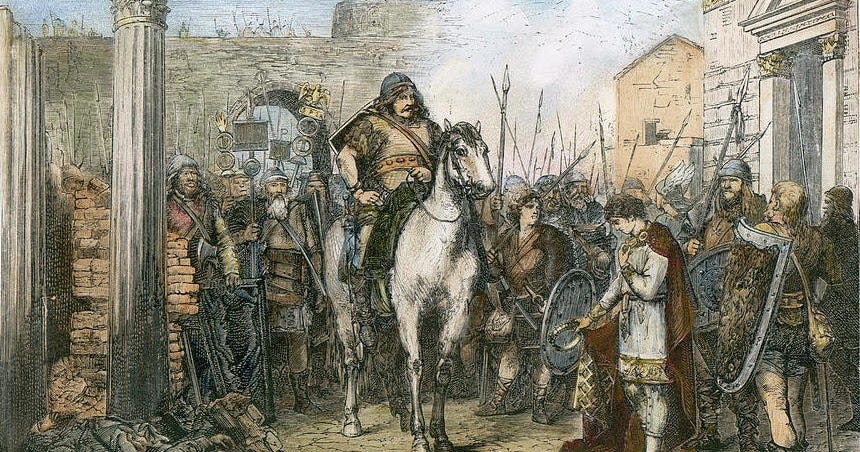
The mercenaries were effective, and the arrangement was cheaper than rebuilding Roman martial culture from bottom.
But an army loyal to money rather than to Rome had no particular reason to save Rome.
When the mercenaries were not paid the lands they had been promised, they did not protest. They did not negotiate.
They removed the last Western Emperor and took what they believed they were owed.
Rome did not fall to a superior civilization. It collapsed because it hired other people to do the hard things, then discovered too late that it had made itself unnecessary.
What This Means for Us
Civilizations fall, when people abandon their traditions, virtues and the past for comfort.
Virtues don’t fall from the sky. They are forged through struggle, handed down through tradition, and kept alive by people who understand why they matter. Every generation has to consciously choose to carry them forward. The Romans stopped choosing.
They assumed the good times were promised, rather than the product of everything their ancestors had built and sacrificed to create.
The lesson is that civilizations, like people, require constant, intentional care.
The moment you start treating your inheritance as destiny rather than responsibility, the foundation begins to crack.
The virtues that hold a civilization together don’t preserve themselves. Traditions don’t continue on their own. They survive only because people decide, generation after generation, that they are worth the effort.
Rome forgot that. And the empire that had outlasted every external threat it ever faced collapsed not under the weight of barbarian swords, but under the weight of its own indifference.
The fire doesn’t stay lit on its own. Someone has to feed it.
If this changed how you see civilizations, subscribe to The Modern Caesar. We write about power, discipline and leadership through Roman lense, breakdowns ancient strategies to apply them in modern life.

Great essay! As all know tradition is the preservation of fire so that this essay does what I always try to do with certain stories; warn people of certains dangers and wake them up to the need of honour.
Just added the penguin classics edition of his book to my Storygraph list, thank you.