

Why Civilizations Refused to Believe Evil Wins
Will History End with a Verdict

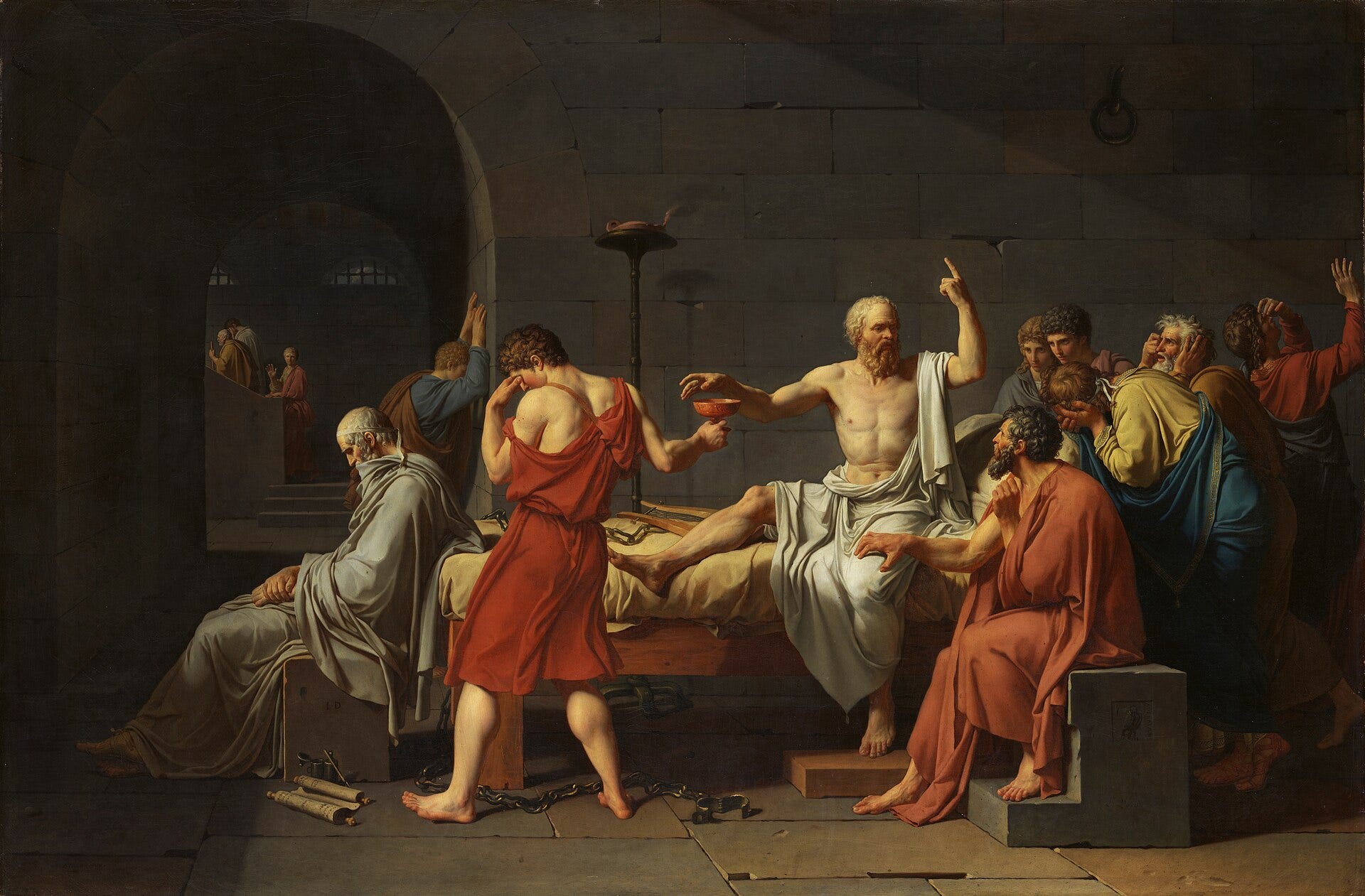
Socrates stood in a courtroom and listened as Athens sentenced him to death. He was old, poor, and had children. He could have saved himself with a few polite words. He could have promised to stop questioning people or left the city and lived in peace. Instead, he refused. He accepted execution as the price of refusing to lie.
That decision is not just an episode in Greek history. It is a clue to something far larger. It reveals what human beings have always sensed, even when they deny it: life does not feel like a random accident, and conscience does not feel like a social trick. We act, almost instinctively, as if the universe is watching.
This is why civilizations across the world built visions of the end of humanity. They disagreed on almost everything: gods, rituals, reincarnation, resurrection, paradise, liberation. But beneath the differences was a shared refusal to accept one terrifying possibility: that evil can win forever, and that death erases all meaning.
The final article of The Arc of Belief and Meaning is not about which religion has the best end of times story. It is about why so many civilizations, separated by oceans and centuries, were certain that history must end with a verdict.
Because if it doesn’t, then Socrates was not brave.
He was insane.
If we treat history like a courtroom, the real defendant is not any single religion. The defendant is a darker idea, one that modern people often accept without realizing its consequences. The idea that existence is accidental, morality is invented, and history is moving toward nothing at all. Even worse, the idea that the wicked can win, die comfortably, and vanish into oblivion with no accounting. Many people claim they believe this. Very few people actually live as if it were true.
A human being can endure poverty, war, hunger, and humiliation. But the one thing human beings cannot endure for long is the suspicion that nothing matters. That suspicion corrodes everything. It makes sacrifice stupid. It makes loyalty irrational. It makes justice a costume worn by the strong. And it turns love into a chemical accident. Civilizations do not survive long under that weight. They may function for a time, but they cannot breathe.
This is why the oldest stories are not primarily about comfort. They are about consequence. They are about invisible order. They are about the sense that the world is not neutral toward human behavior. Long before anyone wrote formal theology, the human imagination already behaved like a judge was present.
Greek mythology is often treated today as colorful entertainment, but it was never meant to be harmless. It was a civilizational language for warning people about the shape of reality. The Greeks were not optimistic about human nature. They were brutally honest about how quickly pride turns into ruin. Yet they could not accept a morally empty universe. Their gods were not always fair, but they were never indifferent. Their cosmos punished hubris the way a body rejects poison.
This is why their myths repeat the same pattern again and again. Arachne is talented, but her talent becomes arrogance, and arrogance becomes humiliation. Niobe mocks the gods and is shattered by grief. Prometheus defies Zeus and is chained to endless torment. These are not stories designed to soothe. They are designed to scare. They teach that the universe has boundaries, and crossing those boundaries awakens something terrible. Even in Greek tragedy, where fate often crushes the innocent, the world still feels morally charged. Wrongdoing does not dissolve. It stains. It calls down consequence like lightning drawn to a metal spear.
Even the Greek underworld carries the same instinct. The dead do not vanish into nothingness. They enter a realm where the moral shape of life still matters. Some drift as shades, some are punished, some are granted rest. The Greeks were not writing systematic doctrine, but their imagination was already doing something revealing. It was refusing to accept that death erases moral distinction. It was refusing to accept that the murderer and the saint dissolve into the same silence. Their universe might be tragic, but it was not meaningless. It had memory.
Hinduism takes this instinct and gives it architecture. Where the Greeks told stories of divine consequence, Hindu tradition speaks of moral consequence as law. Karma is not a vague idea about “good vibes.” It is a claim that reality itself responds to action. Every deed leaves a mark. Every intention carries weight. The soul moves through samsara, the cycle of birth and rebirth, shaped by what it has done and what it has become. Time is a wheel in Hindu thought. Not a straight road. Civilizations rise and decay. Ages turn. The world falls into darkness and returns again. But the wheel is not random. It turns according to a moral logic.
Even heaven and hell are not final in this framework. They are real, but temporary. A soul may rise into Swarga, enjoy reward, and then return to earthly life when its merit is exhausted. A soul may fall into Naraka and endure punishment before it returns again. This idea is unsettling because it denies the fantasy of easy permanence. It says reward exists, but reward is not the goal. Pleasure is not salvation. The goal is moksha, escape from rebirth. That means life is not random. It is formative. Your choices shape what you become, and nothing is wasted or forgotten.
Buddhism steps into the courtroom and changes the tone. It deepens moral order. Buddhism speaks in terms of suffering, craving, delusion, and awakening. It argues that the human mind is the place where bondage begins, and the human mind is the place where liberation must occur.
One of the most disturbing claims in Mahayana Buddhism is that samsara and nirvana are not ultimately separate realities. At first this sounds absurd. Samsara is suffering, repetition, the wheel of rebirth. Nirvana is freedom. Yet Buddhist philosophy insists that the difference is not in reality itself, but in perception. When the mind is trapped in craving, fear, and ignorance, that same reality feels like samsara. When the mind sees clearly and stops clinging, that same reality is experienced as nirvana.
This is why Buddhist texts can speak with such strange confidence. They do not claim that history will eventually save you. They claim that history cannot save you. Only truth can. And truth is not something you inherit through progress. Truth is something you see when the mind becomes silent enough to stop lying. Buddhism’s moral structure is therefore more internal than external, but it is no less severe. It still insists that actions matter. It still insists that the world is not meaningless. It simply claims that the deepest prison is not society, or fate, or divine wrath. The deepest prison is ignorance.
Christianity then enters the courtroom with a claim that feels explosive precisely because it is so linear. Christianity does not see time as a wheel. It sees time as a story. The universe has a beginning. Human beings fall. History becomes a long drama of rebellion and rescue. And in the end comes judgment. The dead rise. The record is opened. The truth is spoken. History does not simply fade out. It reaches a conclusion.
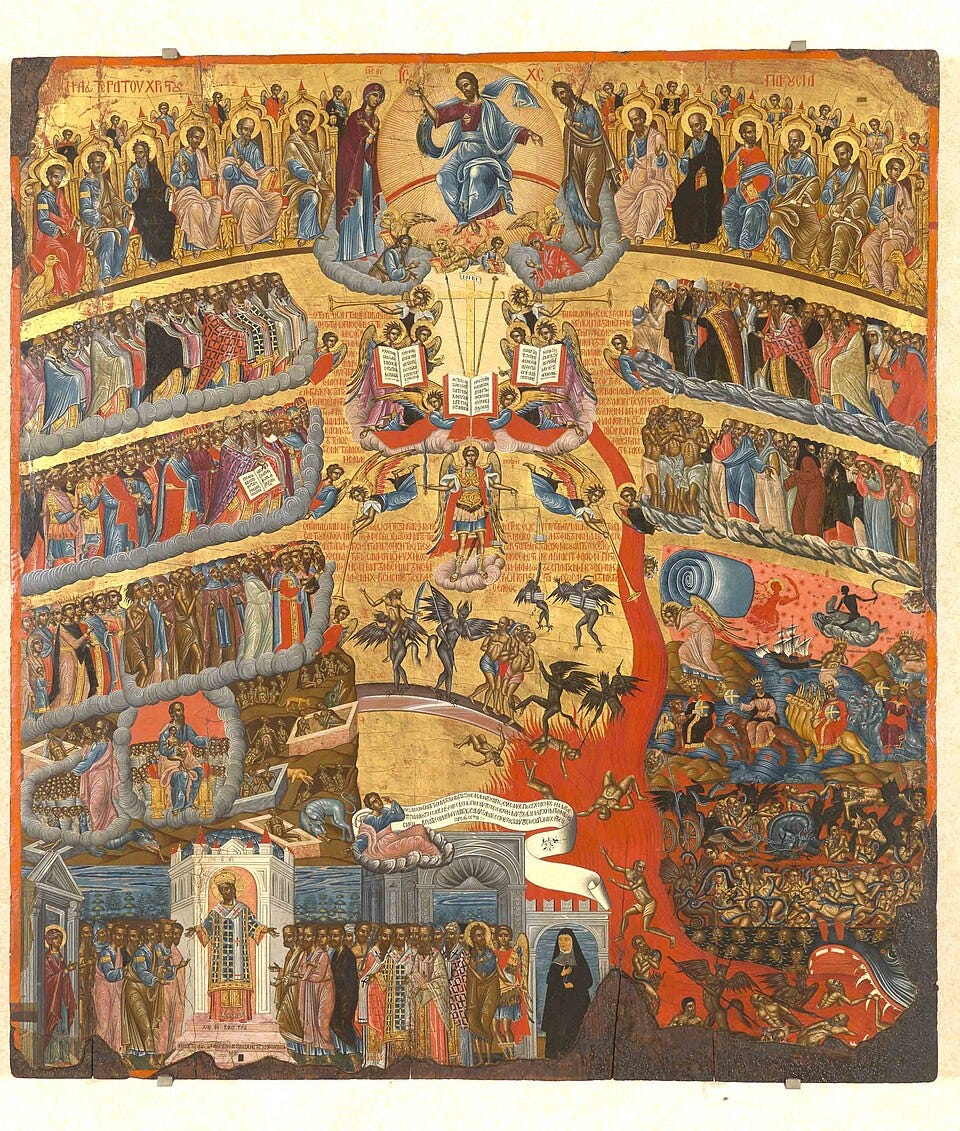
But Christianity also adds something more complex than simple reward and punishment. In much of Christian tradition, the soul may still need purification. Justice is not only about condemning evil. It is also about burning away what is corrupt inside the person. This is why purgatory became such a powerful idea: it suggests that even the saved are not instantly perfect. They must be made whole.
The power of Christianity’s vision is not that it offers comfort. It is that it insists the moral drama of life is real. Evil does not escape forever. Suffering is not wasted. And the world is not drifting toward silence. It is moving toward an end where truth is finally revealed, and what is broken is either healed or judged.
Islam carries the same moral seriousness but expresses it with striking clarity. Islamic eschatology is not vague. It treats judgment as certainty. The Quran describes the Last Day in courtroom language: deeds are weighed, records are opened, witnesses testify, and excuses collapse. Human beings may deceive each other, but they cannot deceive God.
Paradise is tied to belief, repentance, and moral struggle. And hell is not described as mere symbolism. It is real punishment. But Islamic tradition is also clear that punishment is not always eternal. Many classical scholars held that sinful believers may enter hell temporarily and later be removed by God’s mercy, while eternal punishment is primarily tied to outright disbelief and rebellion.
Islam also delivers one of the sharpest civilizational warnings ever articulated. Power is temporary. Wealth is temporary. Status is temporary. Even empires are temporary. And the human being, who so often behaves like a small god, will be reduced to complete helplessness before the only Judge who cannot be bribed, distracted, or manipulated. That is why Islamic eschatology has always carried force. It is not merely about the afterlife. It is about the arrogance of men who think history belongs to them.
Now step back and notice what has happened. These traditions disagree on almost everything. They disagree about cycles and endings. They disagree about the soul. They disagree about liberation and resurrection. They disagree about the nature of God, the nature of reality, the nature of salvation. Their metaphysics clash. Their rituals clash. Their sacred texts clash. Their cosmologies are not interchangeable.
But they converge on something deeper than doctrine. They converge on the idea that reality has moral structure. They converge on the idea that actions echo beyond the moment. They converge on the idea that the universe is not a dead machine. They converge on the idea that the human being is accountable. They converge on the instinct that evil cannot be allowed to have the final word. Meaning does not always win quickly, but meaning must win in the end. That is the shared heartbeat.
This is where the modern world becomes exposed. Modern society often speaks as if it has outgrown these ancient visions. It treats apocalypse as primitive superstition. It treats judgment as medieval fear. It treats heaven and hell as childish fantasies. It claims that science has replaced these ideas with mature realism.
But modern life does not behave like that. Modern people still hunger for judgment. They still demand accountability with almost religious passion. They still want villains exposed, punished, destroyed. They still speak as if history owes them justice. They still treat moral failure as something close to damnation. They still create public rituals of condemnation and purification. They still burn heretics, only now they do it with headlines and algorithms instead of fire.
In other words, the modern world did not escape eschatology. It simply removed God from the courtroom and pretended the courtroom disappeared. It did not. It merely replaced divine judgment with human judgment, which is often crueler because it has no mercy and no final closure. It replaced eternal meaning with temporary outrage. It replaced the hope of redemption with the hunger for humiliation. And then it called this progress.
Socrates would not be surprised. He would recognize the same old pattern. People deny the existence of moral order, but they cannot stop living as if it exists. They mock the afterlife, but they cannot stop demanding justice in this life. They dismiss religion, but they still behave like creatures who expect a verdict.
This is why Socrates’ death still matters. He could have saved his life by saying what the court wanted to hear. Instead, he refused and chose truth over safety. That choice only makes sense if truth matters more than comfort, and if some things are worth dying for.
The final question of The Arc of Belief and Meaning is this: is there a God who is watching, and will history end with a verdict?
If this instinct is false, then it is the greatest delusion humanity has ever shared.
But if it is true, then the real question is whether we are living in a way that could survive the verdict.
The Arc of Belief and Meaning was written as one long journey through the deepest questions human beings have always asked. It began with how early humans first tried to explain the world, then moved into creation myths, flood stories, and the rise of divine law as the foundation of civilization. It explored sacrifice as the price societies believed was needed to hold order together, and the recurring figure of the rebel who risks everything for forbidden knowledge. It then turned inward, showing how the battle for meaning shifted from the heavens to the human soul, and how ideas of heaven, hell, and rebirth shaped moral life. From there it followed the universal pattern of descent and renewal, traced the shared experiences of mystics across religions, and finally confronted apocalypse and the belief that history itself must end in judgment and transformation. This final article closes the arc by asking what all of it was pointing toward: whether humanity’s hunger for meaning is illusion, or evidence that a verdict is coming. Thank you for reading. If you missed the other articles, you could read the entire 12 article series here:
Deeply satisfying eschatological summary!
Thank you for this! Beautifully and powerfully written! Writers such as yourself help me to keep my belief in the goodness of humanity despite all that is happening in the world today. I live my very ordinary existence always with an eye to helping others who need help. And, for me, those actions are satisfying because I manage to make a tiny part of our world a better place.