

Seek Knowledge, Not Praise
Article 1 of The Ramadan Blueprint Series - Al Ghazali

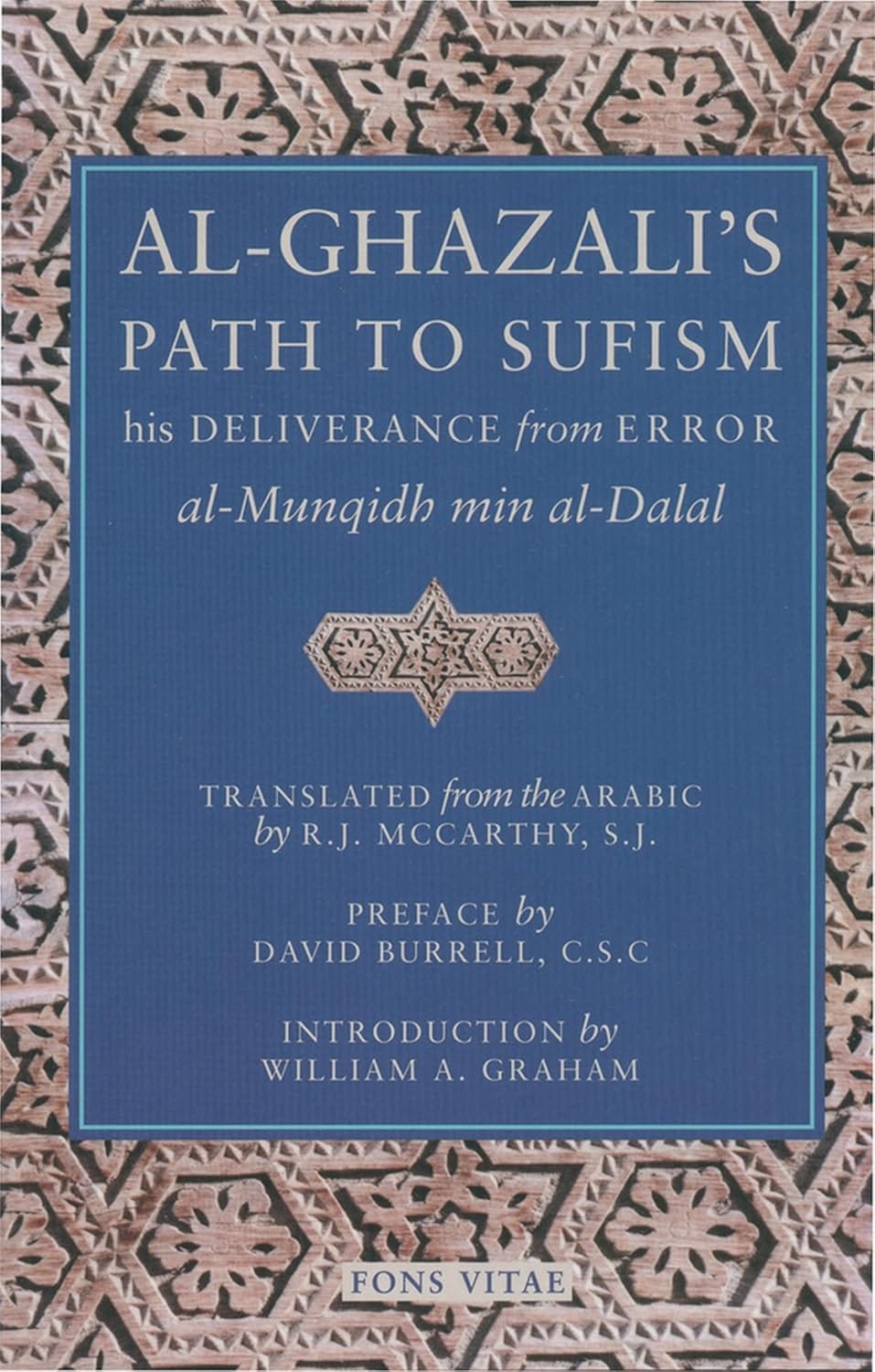
In 1095, Abu Hamid al-Ghazali stood at the summit of intellectual life in the Muslim world. He held the most prestigious teaching position in Baghdad at the Nizamiyya, an institution supported by the Seljuk state. He had achieved what most scholars never even approach: influence, security, recognition. And then, without warning, he found himself unable to continue. In Deliverance from Error, he explains that his tongue would not move during lectures and that he could not swallow food. Physicians searched for a physical cause and found none. Ghazali realized his problem was spiritual. He had become successful on the outside, but unsure and unsettled on the inside.
His crisis did not start with doubting God, but with doubting how we know anything at all. He realized that our senses could fool us… the sun looks small though it isn’t, a shadow looks still though it moves. He concluded if reason depends on the senses, then reason can fail too. He followed that thought so far that even basic truths felt uncertain, and for a time he admits he trusted almost nothing.
Rather than hide from this collapse, he examined the main intellectual currents of his time. In Deliverance from Error, he classifies seekers of truth into four groups: theologians, philosophers, those who rely solely on authoritative teaching, and the Sufis. He did not dismiss any of them casually. He mastered philosophy before criticizing it. His later work, The Incoherence of the Philosophers, targets specific doctrines of figures like Ibn Sina and al-Farabi, arguing that some of their metaphysical conclusions contradicted revelation. He knew their arguments well enough to reconstruct them before challenging them.
But dismantling philosophical systems did not resolve his personal unrest. The deeper issue was motive. Ghazali admits plainly that he loved prestige and feared losing his status. His crisis was intellectual and moral. He realized that knowledge pursued for reputation subtly reshapes the heart. Teaching about God while craving admiration creates a fracture in the soul. That fracture eventually made him ill.
In many ways, Ghazali’s crisis mirrors that of Augustine of Hippo. Both were brilliant men who achieved fame early, only to realize that knowledge pursued for recognition leaves the heart unsettled and divided.
So, he left Baghdad. Publicly, he framed it as a pilgrimage. Privately, it was a retreat from ambition. He spent years traveling through Damascus and Jerusalem, practicing seclusion, prayer, and disciplined simplicity. He reduced his possessions. He distanced himself from applause. This period was not an abandonment of scholarship but a recalibration of intention. He believed that certainty cannot be rebuilt unless the heart is reformed.
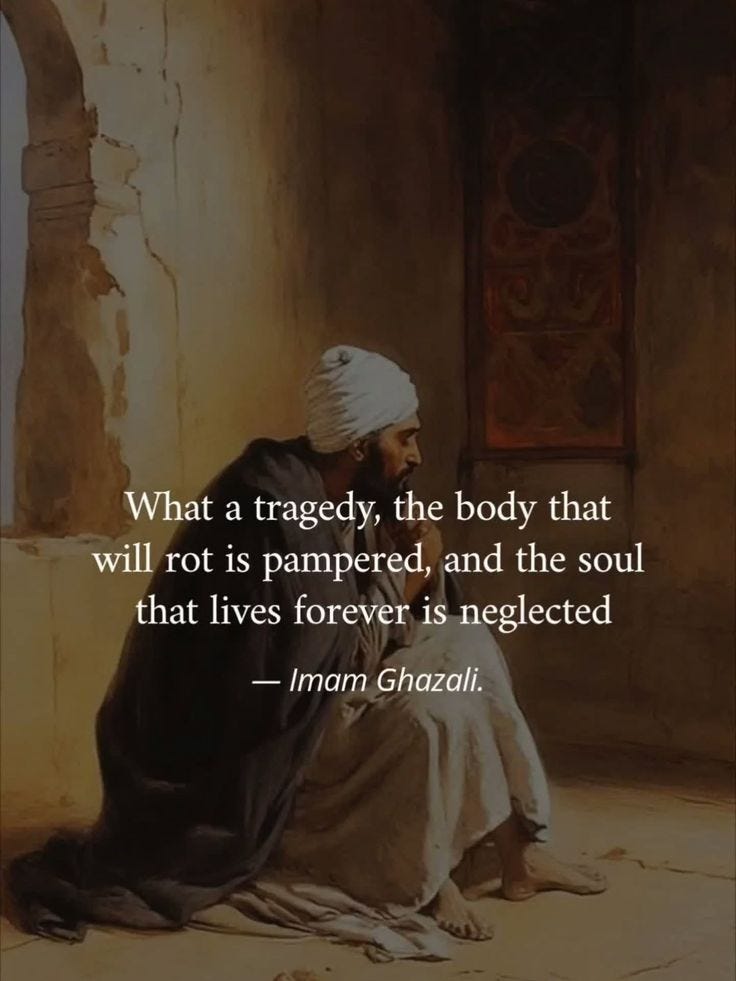
Ghazali eventually reached a simple conclusion. Winning arguments does not fix your heart. You can prove a point and still be restless, proud, or dishonest with yourself. That is why he was drawn to the Sufis. They did not treat knowledge as something to debate. They treated it as something to live. They fasted, prayed, practiced self-discipline, and examined their intentions.
For Ghazali, knowledge was real only when it changed your behavior. If learning made you arrogant, something was wrong. If it made you calmer, more honest, and less attached to praise, then it was doing its job.
Today, we are surrounded by information. Podcasts, debates, clips, books, threads. People talk about religion, politics, and philosophy all day. But hearing ideas is not the same as living them. You can read constantly and still feel scattered. Ghazali’s life shows that the real danger is not knowing too little. It is knowing a lot without letting it shape you. A person can understand complex systems and still feel torn inside.
What stands out to me is that Ghazali did not wait for a public scandal or total breakdown before changing course. He saw something was wrong inside him and acted early. He already had fame, respect, and a powerful position. Most people would have stayed and protected their reputation. He chose to walk away because he knew that continuing in that state would slowly damage him from within. That decision shows what mattered most to him.
The lesson is simple and uncomfortable. Before you speak, teach, argue, or build an audience, ask yourself why you are doing it. Is it to serve the truth, or to be admired? Is your learning making you more honest and disciplined, or just more confident? Ghazali believed that even correct beliefs can harm you if they are driven by pride instead of sincerity.
This is Gift #1 for Ramadan: the reason you seek knowledge matters more than how much you know. The fast trains the body. Ghazali reminds us that the intellect also requires fasting from pride.
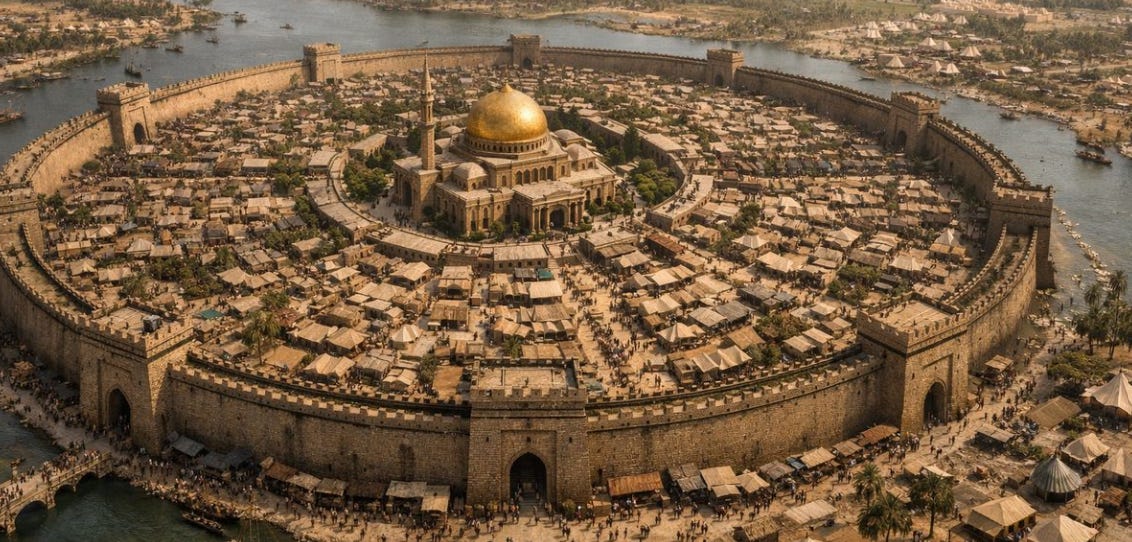
Over the next 25 days of Ramadan, I’ll be walking through the lives of seven other Muslim thinkers who wrestled seriously with faith, reason, doubt, power, discipline, and the human heart. Each day will focus on one scholar and one clear lesson, something practical you can carry into your own life.
These lessons are about slowing down during Ramadan and asking harder questions about sincerity, purpose, and integrity. I’ll be sharing what I’m learning as I study them where they were right, where they struggled, and what their lives reveal about us.
This coming Tuesday, we move to the next thinker. Al-Farabi didn’t just ask “What is truth?” He asked, “What is a good civilization?” If you’re walking this Ramadan journey with me, stay with me for the next reflection.
For Ramadan and Lent, I’m offering 15% off a full year of The Culture Explorer.
These seasons are about discipline and renewal. That is what this newsletter is built on. Each week, you receive deeply researched essays on art, theology, architecture, and the civilizational ideas that still shape us.
As part of this special, paid subscribers will also receive a downloadable copy of “12 Life Lessons From 2000 Years of Christian Theology.”
If you have been thinking about joining, this is the time. Lock in 15% off for 12 months and step into a year of serious cultural exploration.
Fantastic read! Really enjoyed, immersive and with some really interesting insight
Very interesting. It would seem Islam and Christianity have some common ground when it comes to emphasizing the value of humility.