

When Civilizations Chose Descent Over Effort
Article 9 of Arc of Belief and Meaning Series

One of the oldest stories we have begins with a queen walking into the underworld and being told to undress. Not metaphorically. Literally.
At the first gate, she is ordered to remove her crown. At the next, her necklace. Then her breastplate. Then her robe. By the time she reaches the throne below, she is naked, judged, and killed.
The people who told this story believed it described something ordinary and unavoidable in human life. They believed that at some point, what gives you standing in the world will be taken from you piece by piece. Not because you failed, but because it cannot go where you are going next.
That belief appears again and again, in places that never spoke to one another. A poet who walks into the land of the dead to retrieve his wife and returns alone because he looked back. A god who is murdered, cut apart, and installed as ruler of death instead of escaping it. A pilgrim who is told he cannot see heaven until he has walked through hell slowly enough to understand why souls end up there.
These were instructions left by ancient cultures trying to explain what happens when identity collapses, when the story you tell yourself about who you are stops working, and rushing forward only makes things worse. Long before therapy or self-help, they had already named the danger. If you refuse to go down when life demands it, you do not stay whole. You harden. You fake it. Or you carry your unfinished self into everything that comes next.
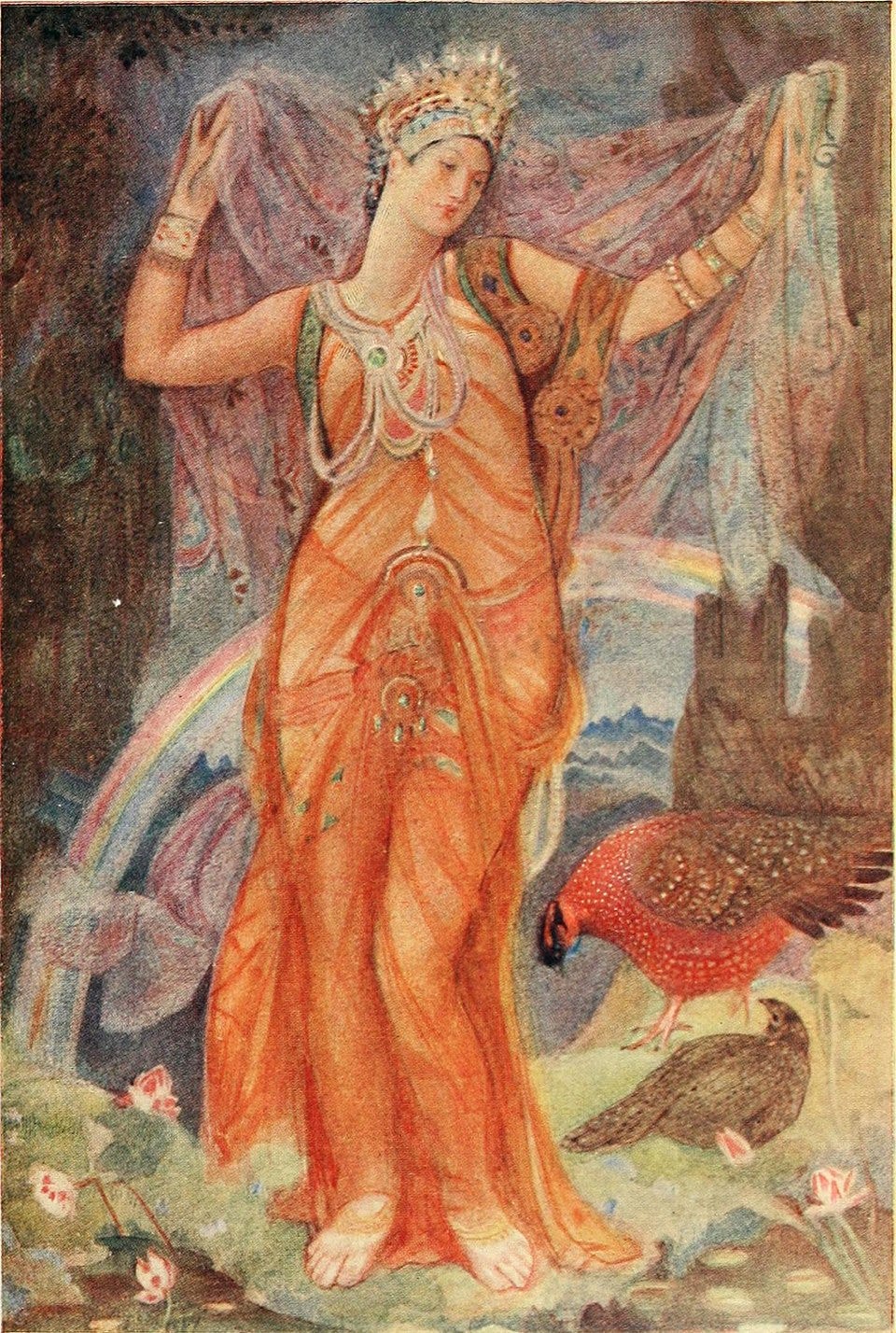
Inanna, the Sumerian queen of heaven and earth, was not imagined as reckless or naïve. She enters the underworld deliberately, knowing what it will cost her, because the people who told this story believed that descent was not an accident of life, but a condition built into it. The meaning of this scene was never subtle. Her stripping is not a lesson in humility or punishment. Early Mesopotamians believed that power could not survive descent, that what ruled the world above could not pass into death intact.
Inanna’s death is not framed as failure, but as the necessary crossing into a different order of reality, one where identity is undone before anything new can take shape. Inanna does return, but not by force of will or moral improvement. Someone else must take her place. Renewal requires substitution. Descent costs something real, and the price cannot be avoided.
Greek myth sharpens this lesson in a different direction. Orpheus descends not as a ruler or a god, but as a lover, and his music softens even the lords of the dead. He is granted a single condition: he must not look back. The failure that follows is quiet and almost understandable, rooted not in arrogance but in doubt. He turns, and Eurydice is lost forever.
What the Greeks preserve here is a severe honesty about loss. Descent does not guarantee restoration. Love does not override consequence. Orpheus returns with knowledge rather than reward, carrying absence instead of resolution. Greek tragedy insists that wisdom often arrives hand in hand with what cannot be recovered.
Orpheus shows the Greek answer to descent. You may go down, but you are not promised return. Some losses are final, and wisdom comes at that cost.
Other civilizations refused to stop there. They did not see death as a boundary you fail against, but as a domain that could be entered, structured, and ruled.
The story changes from here.
Continue reading below.
