


During the Roman proscriptions of the first century BC, a man escaped death through the intervention of someone who subsequently took every opportunity to remind him of it. Eventually, the man grew so tired of hearing how his life had been saved that he cried out:
“Give me back to Caesar!”
Seneca recounts this incident in De Beneficiis (On Benefits), a work he wrote sometime between AD 56 and 64. We know little about the man or the circumstances of his rescue. But his response interested Seneca because it revealed how a person could come to resent even the greatest kindness he had ever received.
Imagine a friend who helped you financially during a difficult period in your life. Years later, during a disagreement over an entirely unrelated matter, he brings up the money he gave you. Until that moment, you had remembered his generosity with affection. Now you find yourself reconsidering the terms under which you accepted it.
Seneca devoted seven books to the difficulties that arise between people when they give and receive. Addressed to his friend Aebutius Liberalis, On Benefits is the only complete work devoted to the ethics of gift exchange to survive from classical antiquity.
He begins by identifying ingratitude as the most common of our great vices. Curiously, he spends much of the opening book examining the conduct of the people who give.
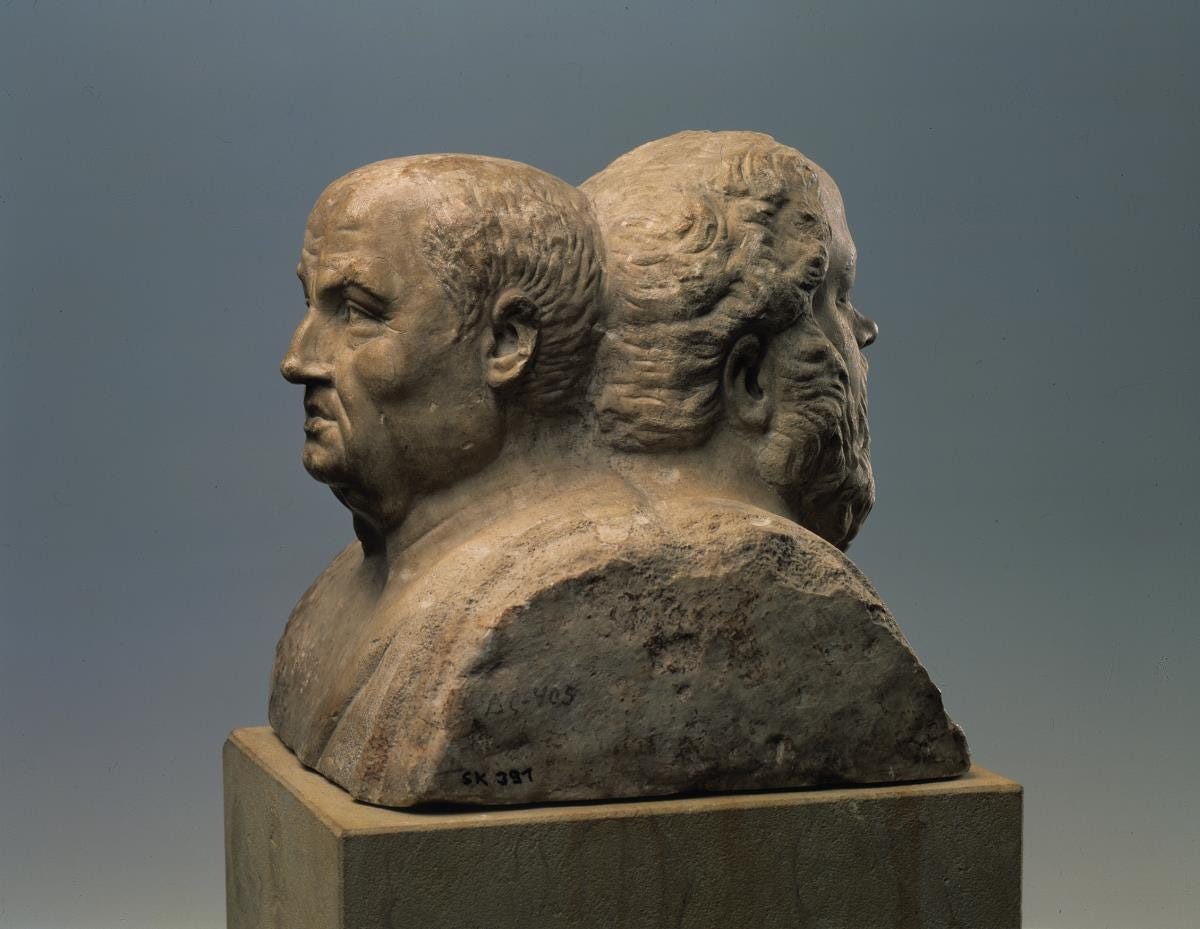
What are we actually giving?
Seneca lived in a society where personal favors could determine the course of a man’s career. A wealthy Roman could secure a public appointment for an acquaintance, intervene in a legal dispute, or introduce someone to the emperor. The recipient might subsequently be expected to offer political support or perform services for his benefactor.
Seneca knew these arrangements well. In AD 49, Agrippina secured his return after eight years of exile in Corsica and arranged for him to become the tutor of her son, Nero. When Nero became emperor five years later, Seneca found himself in a position to dispense the kinds of favors upon which his own career had depended.
In the opening chapter of On Benefits, he writes:
“Let us bestow benefits, not put them out at interest. The man who while he gives thinks of what he will get in return, deserves to be deceived.”
The severity of that last sentence is worth considering. Seneca places some responsibility for ingratitude upon the person who expected a return when he offered his assistance.
He makes a distinction between the object we give and the kindness involved in giving it. Gold and silver have a value that can be measured. The goodwill of the person who gives them requires an entirely different judgment.
A poor man who shares what little he possesses may confer a greater benefit than a wealthy man who distributes considerable sums to secure political influence. Judging their generosity by the amount exchanged would tell us very little about either man.
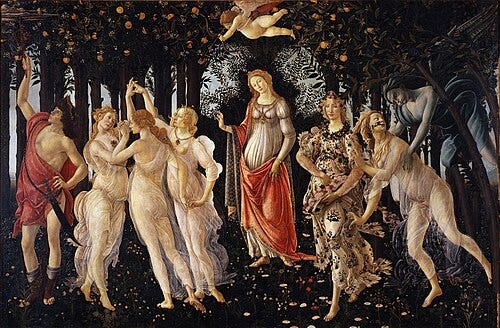
Seneca found an interesting representation of this relationship in Greek mythology. Three sisters, forever young, danced with their hands joined. Each had a different part to play in an act of generosity, and the significance of their dance depended upon the conduct of all three.
The meaning of the Three Graces
Among the Roman frescoes recovered from Pompeii are representations of the Three Graces, the Greek goddesses Aglaia, Euphrosyne and Thalia. Their figures also appear in ancient marble sculptures and, centuries later, in the paintings of Raphael and Botticelli.
Look closely at the three women in Botticelli’s Primavera. Their hands are joined above their heads, their bodies turned toward one another. The translucent garments allow us to follow the movement of their figures. The position of each woman makes sense in relation to the other two.
The Stoic philosopher Chrysippus, who lived roughly two centuries before Seneca, offered a moral interpretation of the three sisters. One bestows a kindness, another receives it, and the third returns it.
Seneca describes their dance in Book I:
“What is the meaning of this dance of sisters in a circle, hand in hand? It means that the course of a benefit is from hand to hand, back to the giver; that the beauty of the whole chain is lost if a single link fails, and that it is fairest when it proceeds in unbroken regular order.”
Even their appearance carried philosophical meaning. They remained young because the memory of a kindness ought never to grow old. Their loose garments represented the freedom with which benefits should be exchanged.
Seneca was somewhat impatient with Chrysippus’s enthusiasm for interpreting every feature of the goddesses. He thought the Greek philosopher had devoted too much attention to poetic details when there were more pressing questions of conduct to settle. His own interest was in the relationship between the three participants.
Why should a philosopher devote so much attention to the exchange of favors?
In Book IV, Seneca considers the physical disadvantages of human beings. Other creatures possess natural defenses against danger. Human beings, individually, are comparatively weak. Much of our ability to survive comes from our willingness to assist one another.
“It is by the interchange of benefits alone that we gain some measure of protection for our lives, and of safety against sudden disasters.”
There is a distinction here between cooperation based upon mutual advantage and the kind of assistance Seneca is describing. A merchant has a commercial reason to supply food to his customers. But what happens when one of those customers becomes ill and can no longer afford to pay? The merchant’s willingness to extend help under those circumstances depends upon considerations beyond his immediate financial interests.
Much of our security comes from people whose assistance we could never have secured in advance through a contract. A teacher takes a particular interest in a struggling student. A neighbor notices that an elderly man living alone has stopped coming outside and goes to check on him.
Seneca understood how much human society depended upon such decisions. Ingratitude threatened that arrangement because it weakened the relationships through which people learned to trust one another.
His concern extended equally to the behavior of the benefactor.
Forget what you gave
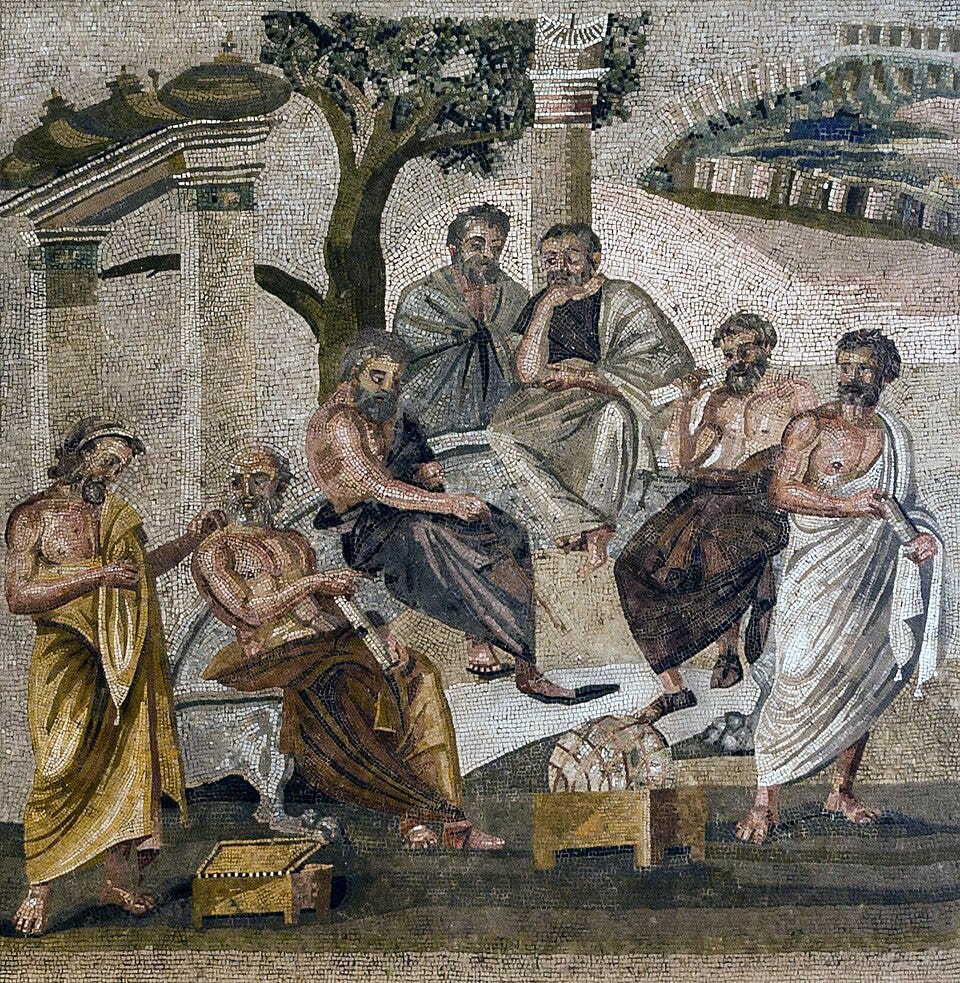
In Book II, Seneca recounts an incident involving Arcesilaus, the Greek philosopher who headed Plato’s Academy in the third century BC. Upon discovering that a friend was ill and struggling financially, Arcesilaus secretly placed a purse beneath his pillow.
He understood his friend’s character well enough to anticipate the embarrassment that accepting financial assistance might cause him. Giving the money discreetly allowed his friend to retain some privacy during a difficult period of his life.
Seneca uses the episode to establish a principle that I find particularly compelling:
“The rule for the giver and receiver of a benefit is, that the one should straightway forget that he has given, the other should never forget that he has received it.”
The two people have very different responsibilities. Arcesilaus had gone to considerable trouble to spare his friend the discomfort of accepting money. Imagine how much of that effort would have been wasted had he subsequently told their mutual acquaintances about his generosity.
Seneca even considers repeatedly reminding someone of a kindness a form of asking for repayment.
“We ought not to speak of the benefits which we have conferred; to remind men of them is to ask them to return them.”
We can now better understand the Roman who grew to resent the man who had saved his life. His benefactor had acquired a permanent claim upon him. Every reminder returned him to the circumstances in which he had been powerless and dependent upon another man’s intervention.
Forgetting a kindness, in Seneca’s sense, means relinquishing that claim.
The responsibility of the recipient is more difficult to examine because ingratitude often develops gradually. Someone who receives financial assistance during a period of hardship may feel sincerely grateful at the time. Years later, having achieved some success, he may remember his accomplishments primarily in terms of his own decisions and hard work. The contribution of his former benefactor becomes less important in his account of how he succeeded.
Seneca considers forgetting a benefit even more disgraceful than failing to return one. A man may lack the resources to repay a kindness for the rest of his life. Remembering it remains within his power.
Can gratitude be required?
Seneca raises an unusual legal question in Book III. Given the importance of gratitude to human society, why had almost no nation established laws against ingratitude? He identifies Macedonia as an exception.
A Roman creditor could bring a debtor before a judge and demand repayment. Extending the same legal principle to voluntary acts of kindness would introduce considerable difficulties. How would a judge determine the value of a favor? Would the cost to the giver matter more than its importance to the recipient? How could anyone establish whether sufficient gratitude had been shown?
Seneca’s strongest objection, however, concerns the freedom of the recipient.
“There is no credit in being grateful, unless it is safe to be ungrateful.”
A person who has been compelled to repay a kindness may fulfill every expectation of his benefactor while privately despising him. Seneca believed that gratitude had moral value precisely because the recipient remained free to withhold it.
This understanding also led him to examine a difficult question within Roman society. Could an enslaved person confer a genuine benefit upon his master?
The Stoic philosopher Hecaton had questioned whether this was possible. Roman slavery placed extensive obligations upon enslaved people, and their masters could compel them to perform services. Seneca nevertheless argued that an enslaved person could act generously of his own accord, exceeding what his master had the authority to demand.
“The path of virtue is closed to no one, it lies open to all.”
Seneca accepted the institution of slavery, as did most members of the Roman elite. His argument nevertheless recognized a form of moral agency that Roman legal distinctions could scarcely accommodate. A master could own an enslaved person’s labor and still find himself indebted to that person’s freely exercised goodwill.
The discussion acquires further significance in Book IV, where Seneca asks what would happen if the expectation of repayment became our principal reason for helping others. The sensible course would be to direct our generosity toward wealthy and influential people. The poor would have comparatively little to offer us, and those in greatest need might become the least attractive recipients of our assistance.
For a Stoic, the decision to act honorably had value in itself. A person could therefore have good reason to help someone whose circumstances made repayment practically impossible.
The difficulty of remembering
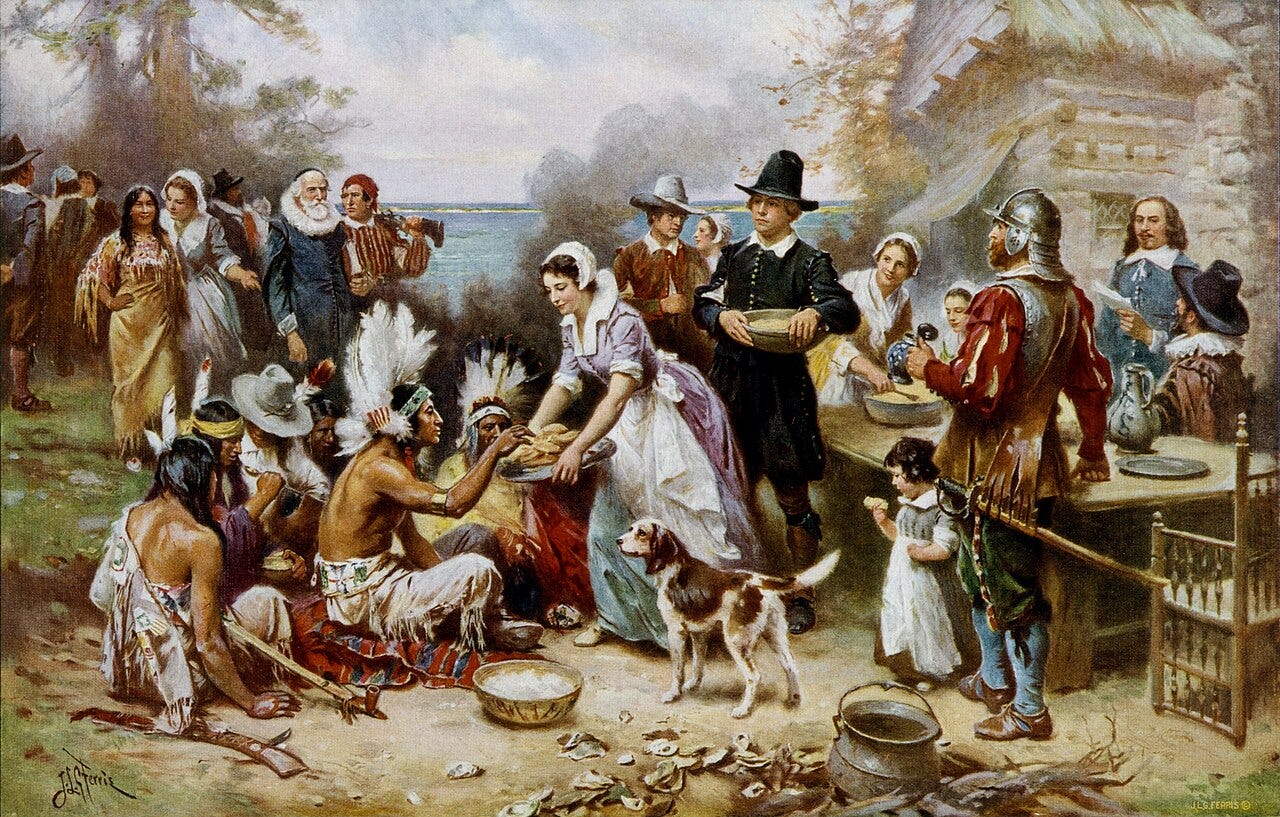
On December 11, 1621, Edward Winslow wrote a letter from Plymouth describing a recent harvest celebration. Massasoit, the Wampanoag leader, had joined the English settlers with approximately ninety of his men. During the three days of feasting, the Wampanoag hunted five deer, which they brought to the settlement and, in Winslow’s words, “bestowed on our governor, and upon the captain, and others.”
Winslow expressed a wish that those reading his letter in England could share in their abundance.
The subsequent history of relations between European settlers and Indigenous peoples makes the account uncomfortable to read. Within little more than half a century, the descendants of those who participated in the gathering would find themselves on opposing sides of King Philip’s War, a devastating conflict involving Massasoit’s son Metacom.
The generosity recorded in Winslow’s letter belongs to a particular moment in that complicated history. Remembering it requires acknowledging the people who helped the settlers survive, including those whose descendants would suffer as English settlement expanded.
More than two centuries later, on October 3, 1863, Abraham Lincoln issued his Thanksgiving proclamation while the United States was fighting a civil war. He drew attention to the country’s agricultural abundance and the continued productivity of its mines and industries despite the conflict.
Among the opening lines of his proclamation is an observation that deserves more attention:
“To these bounties, which are so constantly enjoyed that we are prone to forget the source from which they come…”
Lincoln was speaking of divine providence. His proclamation also asked Americans to remember the widows, orphans and others who had suffered during the war.
His observation about forgetfulness has an interesting connection to Seneca’s understanding of gratitude. The benefits we receive most consistently may be the ones we find hardest to recognize. Their regular presence makes them part of our expectations.
Consider the years of care that go into raising a child. Much of it takes place before the child is capable of forming lasting memories. Even as an adult, that person may never know the extent of the financial difficulties his parents endured, the opportunities they declined, or the nights they spent attending to him when he was ill.
How could he possibly calculate what he owes them?
Seneca’s understanding of gratitude accommodates this difficulty. The value of those years cannot be established through an accounting of expenses, and the relationship would suffer considerably if the parents attempted one.
The philosopher and his fortune
There is an uncomfortable dimension to Seneca’s philosophy of generosity. The man who warned against using wealth to secure influence had himself acquired an enormous fortune under Nero. In AD 58, his political opponent Publius Suillius accused him of amassing three hundred million sesterces within four years of imperial favor.
According to Tacitus, Seneca approached Nero in AD 62 and requested permission to retire, offering to surrender his wealth to the emperor. Nero refused.
It is difficult to know how much of Seneca’s fortune he could have declined while retaining his position, or how freely he could have withdrawn from the obligations that accompanied it. His experience at the imperial court gives his discussion of gifts a personal dimension. He had reason to understand the dangers of accepting generosity from someone whose power over him was almost unlimited.
I find it interesting that Seneca, despite his severe judgment of ingratitude, asks his readers to exercise considerable restraint when they encounter it in others. In Book I, after discussing some of the worst forms of human misconduct, he writes:
“Be sure that you guard against this as the greatest of crimes in yourself, but pardon it as the least of crimes in another.”
He could have demanded that people become more diligent in acknowledging their benefactors. Instead, he places the greater burden upon our judgment of ourselves. We should remember what others have done for us while exercising patience with those who have forgotten what we did for them.
There is something worth preserving in this understanding of Thanksgiving. Much of what we have received in life came from people who had little assurance that their efforts would ever be recognized. Some died before they could see what became of us. Others probably never understood how much difference a small kindness made at a particular moment in our lives.
The teacher who encouraged a child forty years ago may have forgotten the conversation entirely. The child, now a grown man, may still remember the exact words.
Seneca would have considered that a beautiful arrangement.
Happy Thanksgiving to all our readers!
Five essays you may have missed!
How to Read a Book

The first time I tried to read War and Peace, I felt stupid. I’d read a page, turn it, and realize nothing had stuck. The names blurred together. The conversations felt like they were happening in a room I wasn’t invited into.
12 Biographies That Everyone Should Read Once

Most biographies are sold as stories of success, but the best ones do something deeper. They take famous names out of marble and return them to danger, fatigue, doubt, hunger, pride, faith, failure, and decision. A civilization is carried by lives of great men. These twelve biographies should be read because they train the reader to study human beings a…
12 Must-Read Books from Eastern Literature

The Western canon often teaches us how to admire the individual who stands against fate, law, empire, or God. The Eastern canon asks a more unsettling question: what if the self is not the hero of the story, but the thing that must be disciplined, stripped, humbled, or overcome?
5 Russian Novels That Will Change How You See the World

Few literary traditions have asked more difficult questions about human existence than Russian literature.
Beauty Didn’t Vanish — We Buried It

“Art moves us because it is beautiful, and it is beautiful in part because it means something. It can be meaningful without being beautiful; but to be beautiful it must be meaningful.” - Robert Scruton
Give me back to Caesar…haha. I'd rather owe a guy who never brings it up. A fine read for Thanksgiving morning : )